
Early Moves

The term early moves is abstract on purpose. It can mean so many different things in entrepreneurship. Early moves are actions that brew progress. Initiative is rewarded with positive energy infused into moments that help us climb the mountain toward momentum.

The term early moves is used throughout this book. To get thinking, sharpen the sword with these tactical examples of early moves that keep leaders building:

listen
be honest
read a book
explore current markets
attend local community events
participate at hackathons
connect others
practice the pitch
discover resources
form the company
organize accounting
compete in pitch events
seek accountability
travel to learn
mentorship
create
do

Early moves are exhilarating, but there’s value in being efficient as you decide if something is going to work. When we say yes to something, we say no to something else. It’s tempting to say, “Let’s gooo,” but this is opportunity cost. Be strategic with early moves. As you build, collect feedback like a scientist. Use feedback as data, because an early and proper no is much better than a long, wrong yes.

To avoid swinging at a bad pitch, take time alone. Along with your experience and honest thoughts, the internet is too powerful not to research online. Don’t hope something doesn’t exist; try to find it. Run some numbers. Talk with people to begin customer discovery. Think about ways to prototype something worth testing. Practice storytelling and see if you can snag a pre-order. Will strangers buy in?

If enthusiasm remains genuine, talk with others who may be interested in collaborating. Think about your own real skills to identify where you’ll need help. Attend related events to further qualify early concepts. Even if you’re not ready to share details, the readiness to show up often links to new allies who can connect dots. Stay organized and see how it feels to create and post content online as you continue working through the early stages of any idea maze.

Before you go much further, take a pit stop with your future self. Is this a quest and environment you want to work in for the foreseeable future? Perhaps this should remain a hobby? For instance, if you like pinball, it doesn’t mean you should start a pinball business. The hardships that come with being a business owner can compress, divert, and decrease passion. At first, the allure of new-made things is fun and exciting, but pressures add up. If the dance remains motivating, positive tension is relieved by executing early moves that help sustain a sensation of growth.

Extra Shot

“Inspiration is perishable—act on it immediately.” –Naval Ravikant

Determining which actions to take when is a juggling act, but as early moves are blended and strategically sequenced, they collide to jolt a business idea forward. 

You Don’t Need This Book: Entrepreneurship in the Connected Era prompts diverse types of early moves that guide an idea toward commercialization. Here’s a reminder of that book’s table of contents for readers to revisit.

You Don't Need This Book: Entrepreneurship In The Connected EraChapter 1 – Ideation
Chapter 2 – Community
Chapter 3 – Team
Chapter 4 – Side Hustles
Chapter 5 – Research
Chapter 6 – Testing
Chapter 7 – Marketing
Chapter 8 – Sales
Chapter 9 – Results
Chapter 10 – Persistence

If this evolving business idea continues to touch your heart after internal and external analysis, you may have something ready to pursue. Yes!

Inspiration is perishable, so when this happens, be ready to take action. It’s not how fast you move; it’s that you find ways to get started and keep moving.

Extra Shot

Things you dedicate time to will grow.

As you make early moves, stay nimble. Agility is one of the best advantages to being small. It often takes many versions to land on something ready for the wild. Remain sustained by timing early moves based on personal bandwidth, the environment, things you do well, and things that make you uncomfortable. Leverage educational support, accelerator programs, and resources. Stay intellectually humble, work with others, and continue executing more early moves.

By Ben McDougal, ago

Slide Deck Design

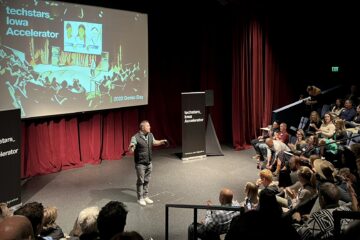
Ready to inspire an audience? Maybe you’re looking to host a meaningful meeting? Let’s explore translating your transmission with a supportive slide deck.

Before we dive in, why are slides needed? Building a slide deck highlights your key points while establishing the tone, cadence, and flow for your storytelling. Think of a slide deck as the visualization of a story, which supports what you say when expressed in a natural way. The unconscious objective is to deliver impact in the least amount of time.

There are endless templates that will help you format the look of a slide deck, but find creative ways to make it your own. You can customize your slide deck with colors that match your brand, icons, and other graphics that add character beyond the status quo.

When every slide matters, it’s tempting to overload slides with too much text. This is a common mistake, but if the audience is tasked with reading, they’re unable to listen. One hack is to remove punctuation. This eliminates paragraphs, full sentences, and lengthy bullet points. Good storytelling, short titles, eye-catching images, and concise key phrases are all you need to guide the audience.

Make your slide deck stand out with bold imagery and less text coupled with simple transitions and creative movement of the content on each slide. Subtle animations will keep your audience curious, while graphs, charts, and other data visualizations keep things informative and easy to digest.

As content comes to life, include specific details related to any themes, goals, or requirements. For example, pitch competition judges often use a rubric to score each participant. Creatively addressing these details will answer questions before they become a distraction.

As you bring a presentation to a close, design the final slide with intention. The last slide is often on screen longer than any others, so combine heroic imagery, branding, calls to action, and simple contact information to finish in style.

Extra Shot

Pitches are built to impress.

Presentations are meant to share.

After you glide through your impressive slide deck, are questions allowed? If so, consider including back slides. Back slides live behind the final slide. They are used to highlight material not included in the main presentation. Handy back slides include detailed pricing, competitive analysis, marketing strategies, research data, testing results, and intricate financial information. People who understand what they’re talking about use fewer words and optional back slides allow you to simplify your storytelling. This reduces the numbing effect of information overload.

With back slides in place, you can be more concise. This makes for a more impactful tone. It can even be good to purposefully leave out a curious topic from the main presentation. When the inevitable question is asked, you can use the sneaky back slide to share a focused response. If your presentation includes back slides, memorize their order and you’ll soon be leading a more authoritative exchange. In short, back slides prove you’re a pro.

Extra Shot

When your story and slide deck resonate, the audience nods, laughs, asks questions, and takes action to connect with fellow attendees.

Being prepared is obviously important when all eyes are on you. With a striking slide deck in place, practice what you plan to say and sync the narrative to the timing of each slide. Whether you use animated content or not, it’s best to have a single click to move between each slide. As you speak, you should focus on connecting with the audience, not on the slide deck or the handheld clicker.

Memorization is also a trap. A more genuine tone comes from the heart. We’ve all seen people lose their place in a memorized script or fumble through notecards. Avoid this by practicing what you plan to say out loud. Memorize the order of your slides but not exactly what you plan to say.

As you practice, move around and find ways to keep track of where you’re at without reading from the slides. Further challenge yourself by introducing distractions. A small audience throwing ping-pong balls, starting from random slides, and practicing with strangers are a few ways to get past the ease of speaking in front of a mirror.

Extra Shot
Watch this presentation and notice the slide deck.

To complete your slide deck preparation, export everything into one PDF and create a JPG file for each slide. The richest presentation will come directly from the software your slide deck was built with (Apple Keynote, Microsoft PowerPoint, Google Slides, etc.). These flat formats can be used as marketing materials, but they also provide a quick answer to unplanned technical issues. Deliver the digital assets on time, and organize everything on a backup flash drive.

When clarifying visuals become part of the equation, slide deck design will spark the imagination, guide storytelling, earn that pitch competition win, keep attention focused, seal the deals, and invite more inspired collaboration. As you tell your story, take feedback seriously. Feedback from people you don’t know will sharpen the business, your slide deck design, and your presentation overall.

By Ben McDougal, ago

Slow & Fast

Slow is smooth, and smooth is fast. This sounds like a contranym, but when we slow down, it’s easier to find a rhythm that activates kinematics to add elegant speed.

Extra Shot

Accuracy sparkles within rhythm.

This concept serves founders who are building with a turbulent sense of urgency. For example, startup life in an accelerator is a compressed environment for ideas to flourish. When mentors and investors are dedicated to helping founders succeed, milestones will be achieved, but growing too fast can leave the team feeling hollow.

With decisions at every turn, relationships still take time. Early hires are delicate. Financial modeling is complicated. Sometimes the product isn’t even fully baked. This is when slowness adds a healthy thickness. Patience leads to deeper understanding, which bonds to the urgency. Momentum is not only then accelerated; it’s also geared to scale.

By Ben McDougal, ago

Pain Relievers vs. Vitamins

In agony, we reach for pain relievers made to kill the torment. When everything feels normal, we may pop vitamins to support a healthy lifestyle, but missing a day is not a problem. For every vitamin, the medicine cabinet has just as many intentions collecting dust.

As we study a team/product/service, is true pain for real customers being relieved, or it a nice-to-have idea that may (or may not) provide unquestioned value?

When people like the idea but hesitate to buy, you have a vitamin. If you always have to explain why someone needs it, you have a vitamin. If it’s unclear what you have, you have a vitamin. Pain killers are easy to spot. They sell as fast as supply can keep up with demand.

Ongoing customer discovery keeps a pulse on demand and helps us build with product-market fit. As we ease true pain, stories that sell (marketing) should highlight the results that target customers desire without question. Forget the jargon, impressive features, and pretending to be passionate. Lean into the pain.

By Ben McDougal, ago

#1 DAD

Startups that pay in love are a blank
canvas that comes to life through us.

By nature, parents want to provide the means for children to go beyond their potential. Family requires immeasurable resources, but the love from our kids unlocks more hours in the day. The added productivity comes from seeing the best of ourselves in someone we care so much about. Purpose is renewed and the heart we put into our creative work can make our presence as parents even more interesting.

Summon Stories

Children grow up fast, so we stay in the moment. Everyone tells us to cherish the simple joys of life, but it may be worth getting a little extra creative. One way to enhance your family’s ability to relive memorable moments, is by using multimedia marketing skills to summon family stories.

Every moment is special. As creation becomes second nature, handpicked memories can be stitched together to revisit interactively, any time, with or without you.

Most of us have an endless collection of photos and video on our smartphone, but scrolling around on a digital device doesn’t translate into something a group can enjoy together. It’s easy for good things to get lost in so much noise and spoken storytelling is always merry too, but why not paint more stories with a few added brushes?

Quiet relics like photo slideshows, something printed that sits beautifully on the shelf, a mix of audio recordings, art on the wall, or a cinematic feature film that highlights your adventures. You’re the creator with endless ways to create.

We all do a form of this, because family is our favorite, but the time required is real. A rigid cadence is not required, since any day is a good day to ship this type of of art. In the early days of photos and video, it was only birthdays and Christmas — now everyday is a holiday. No need to rush, but keep producing new surprises. Everyone will love the end result and as more come together, the growing playlist becomes a sequence of stories that follow kids growing up. With our constant collection of content, a good story is always ready to tell, but at a minimum, why not share an annual gift with your kids, partner, and other loved ones?

Along the way, attentive and controlled organization will make a growing collection of relics easier to craft. This takes an ongoing commitment, but file management is easy and helps bring life to life with shared memories.

Your future self will then thank you for an effort to organize this heartfelt content. Share in public if you want, but that can alter the art if it becomes a show. Do it for yourself and your favorite people first. Organize what will be a massive library offline, then, if you want play with the transitory channels of social media, that’s a personal choice.

No matter who resists whatever it may be, time compiling legacy projects will rarely feel wasted. It’s using our real skills to commemorate those we love. Scanned memories may give us content without capturing it in the future. For now, it’s up to us to trap time for personal storytelling.

Compensation is not money, but this does enhance your content creation skills for other areas in life. Technology also makes editing content more productive, but this is not your average task. This is the type of sincere storytelling you enjoy spending time with.

As kids grow up, these projects will have the lowest view counts, but always be your very favorite. Looking ahead, it’s crazy to imagine being a child right now, then receiving such a gift from my parents someday!

You’ve Got Mail

Consider setting up an email for your little one. This inbox can be used as a communication channel to write to your child as they grow up. Whether you start writing before they are born or later in their life, imagine what a gift this inbox will be in the future! This email address can be shared with family and used for online accounts if you want, but at a minimum, this curates a personalized time machine full of thoughtful updates.

Extra Shot

What’s your favorite parenting tip? Share it as a comment or hit me up!

Along with sentimental content, your kids will appreciate an email address that can be used after childhood. First and last name with your preferred email provider should stand the test of time. This is also a good chance to register a URL using their first and last name. This can connect to their email or support a personal website someday.

Avoid Routine

“Time flies” and “they grow up so fast” is accurate, but avoiding routine may slow down time.

The freedom to be spontaneous is a privilege and everyone will define such flexibility differently, but a proven path to explore such a reality is entrepreneurship. Boundless hard work, dedication, and resiliency are what this lifestyle takes, but suffering provides a stronger sense of purpose.

As this purpose is layered in later stages of life, experiential wisdom can be channeled into more treasured time doing things that make us happy. While hardship is part of the deal, children make their parents happy. Perhaps a reward for parents who lead by example, is the opportunity to share everything with those who matter most.

By Ben McDougal, ago