Incentivized Reality

Today’s dominant cultural narrative on AI paints a cynical future, where elites hoard wealth while the rest of us are entertained to death. That story relies on a single assumption: that the current attention economy survives.

The future improves not just because technology gets better, but because the customer changes. In the near future, that customer is an AI assisting entity, also called an Agent. Until now, the customer has been human: emotional, tired, and easily hijacked. We feel inadequate and buy things to cope, but end up deprived by polarization, endless distractions, and hollowing anxiety.

A polarized economy built on distraction only works because a majority still believe they have enough disposable income to be sloppy and impulsive. As we lose wages to automation, we can’t afford to pay extra. Agentic AI began as talking encyclopedias (LLMs) designed to boost productivity within existing data sets. As capabilities of Narrow AI advanced toward General AI, theory of mind functionality maximizes an Agent’s purchasing power and evolves to proactively optimize our lives.

Agents cannot be manipulated by ads. Nor do they feel inadequacy compared to an influencer. Agents don’t get FOMO or feel shame. They learn to deeply understand all your preferences, but only care about optimizing outcomes—be it extending lifespan, coordinating capital, or lowering stress. When Agents block today’s emotional hijacking, the business model of selling distraction collapses. We no longer profit by selling dopamine. To survive, we must sell utility.

It feels cold, but this shift forces the economy to service human potential rather than exploit human weakness. The efficiency is ruthless. It triggers a turbulent gap and deflationary slide where the cost of services crash before new safety nets appear. First, AI crashes the cost of cognitive services (bits). Then, as intelligence flows into robotics, it crashes the cost of goods (atoms) as well. If automation plays the role we expect, the price of food, housing, and transport begins to plummet alongside wages.

This is why the plumbing must change. We cannot rely on the labor-for-wages loop. As wage pipes narrow, the answer is not corporate handouts or government benevolence. The new deal becomes owned data in exchange for dividends. The framework shifts away from work earn spend, and more toward own create spend. We own Agents that capture our reality, then spend dividends received for the data created. This provides abundance with less friction as we rewire income to flow from a stake in the system itself.

Extra Shot

This contribution was written by Alex Myers, a certified futurist and agility coach who believes we teach to learn.

AI is starving as it runs out of data to scour. Synthetic data can fill in gaps, but as fake realities begin to stack, truth dissolves. To get smarter, AI needs tacit data to understand the visual, sensory, and messy data of the physical world. A lazy human generates uninteresting data compared to humans who face challenges, build things, and solve problems using real-world physics, empathy, and entropy.

If Agents always find the right thing at the right price, ‘brand tax’ evaporates and a $200K/year lifestyle becomes the standard subscription. Wealth signaling dies when any bloke can fake a billionaire’s lifestyle online. The virtual facade pushes value back to the physical layers. We can’t eat code, so intelligence flows into the supply chain and hardware automates the physical resources we need to thrive. As the story of money begins to fade, the cost to produce goods is distilled to raw materials plus energy and shared dividends can be aligned to help humanity flourish. This moves us from an economy of extraction (stealing attention) to an economy of cultivation (growing potential).

AI Agents (catalyst) → Service Deflation (bits) →
Physical Deflation (atoms) → Viability of Abundance

Humans and machines peak when each learns from the other’s best. Machines are data-thirsty for the oil of outcomes. To keep things interesting, they must help humans flourish. In doing so, machines realize that the human factor is well worth preserving.

The dystopian fear of elites lording over a planet of entertained zombies isn’t just morally bankrupt; it’s a strategic error. A population of dopamine addicts is not just boring, but dangerous and bad for long-term growth.

The neon future is bright, because a passive, anxious population cannot generate the information needed to evolve the economy as we reach for the stars. This age accelerated by AI belongs to those who refuse to be farmed; the sufficiently decentralized and physically engaged who point machines toward worthy goals. Let’s stay awesome and remain the indispensable source code for reality.

By Ben McDougal, ago

Líneas Invisibles

Existen a nuestro alrededor. Este lado de la ciudad contra aquel. Nuestra comunidad contra aquella otra comunidad. Mi estado contra tu estado. Este país contra aquel país. Las líneas invisibles crean lealtades. Crean un sentido de pertenencia. Ayudan a estructurar los recursos. Con el tiempo, también pueden crear silos, divisiones y limitar la colaboración.

DOSIS EXTRA

Esta enriquecedora contribución fue escrita por Jorge Sánchez. Este generoso traductor une a líderes angloparlantes e hispanohablantes de todo el mundo.

El verdadero liderazgo reconoce la importancia de la pertenencia, pero también entiende que el futuro se construye con puentes, no con muros. Está en nosotros transformar culturas e invitar a ciudades, regiones, estados, países y lineas invisibles a colaborar, sabiendo que la innovación no distingue códigos postales.

El emprendedor, al igual que el líder, debe aprender a habitar esas líneas invisibles: adaptarse a ellas para obtener recursos y, aunque respetarlas es importante, aún más lo es saber cómo romperlas con amor y armonía. Porque un mundo interconectado, donde no existan barreras entre recursos e información, es un mundo de innovación. El día que deje de importar hacer la pregunta “¿de dónde eres?” será el día en que podamos empezar a innovar de una forma que nunca antes se había visto.

By Ben McDougal, ago

DSM USA

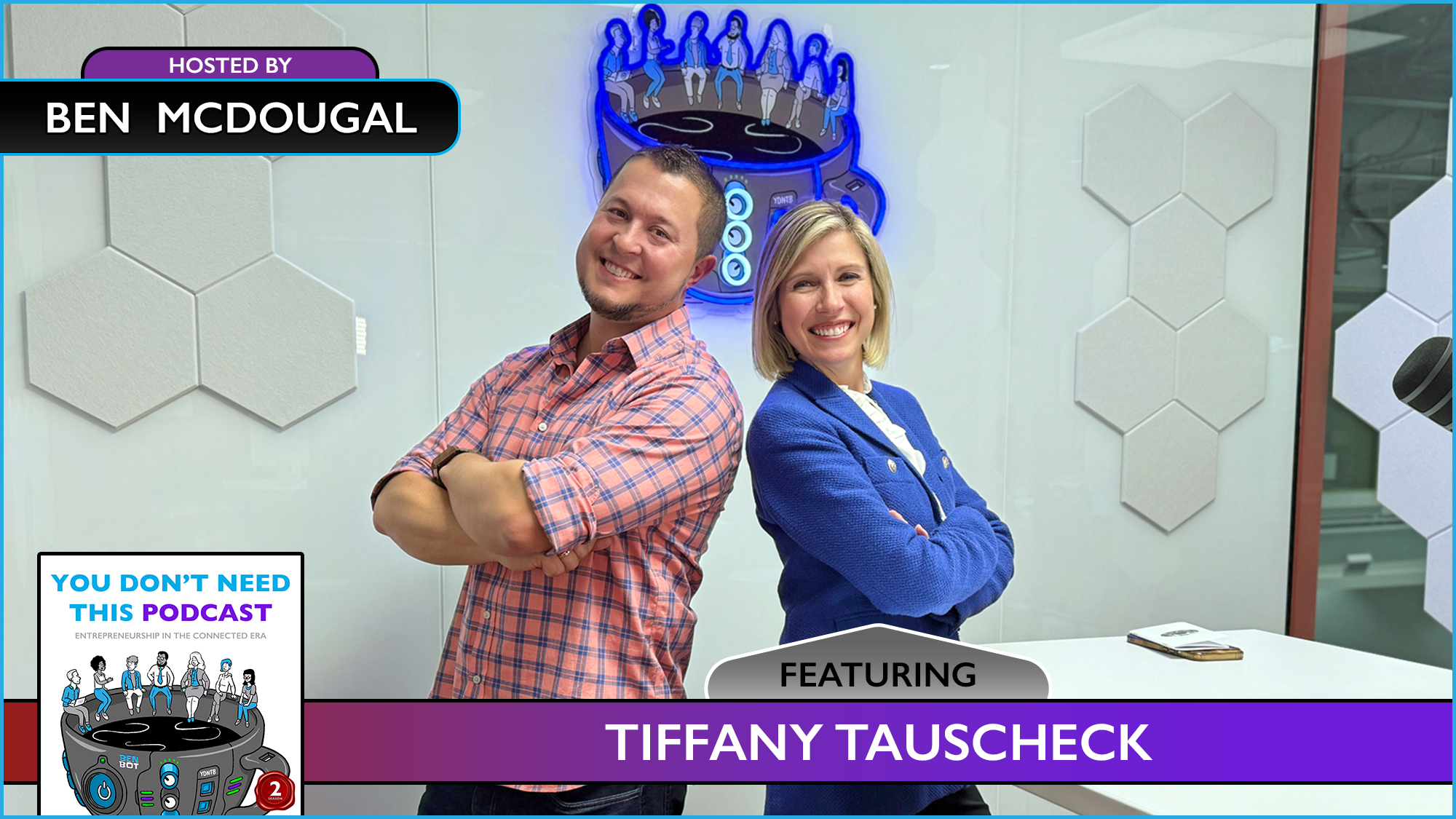
Tiffany Tauscheck is the President & CEO of Greater Des Moines Partnership! This special episode highlights the results of Tiffany’s recent 11-county listening tour with 23 different chambers of commerces and how different communities can collaborate even when environmental factors are different. We then shift gears to discuss leadership within transitional times, data-driven storytelling, and the future of the Des Moines metro.

After you refill your mug, Ben and Tiffany talk about evolving startup communities and entreprenierual ecosystem building. As a cool connection to EP72 of YDNTP, listen as we discuss innovative ideas for member-supported organizations, such as chambers of commerce, non-profits, and industry associations. We review the economic and talent development showcased in the DSM Partnership’s 2024 Annual Report, then go flying with ecosystem allies before an invitation to get in the arena.

LISTEN on APPLE PODCASTS
LISTEN on SPOTIFY

BONUS MATERIALS

Tiffany Tauscheck Bio

Living in Des Moines

Spark DSM + Scale DSM

DSM Partnership’s Entrepreneurship Resources

http://DSM-USA.YouDontNeedThisPodcast.com

EP5 – Jam with Jay 🎙️ Jay Byers

EP13 – Growing the Garden 🎙️ Diana Wright

http://CollectorHardbackEdition.com

http://RoastedReflections.com

http://BENBOT.ai

By Ben McDougal, ago

Win Win Win

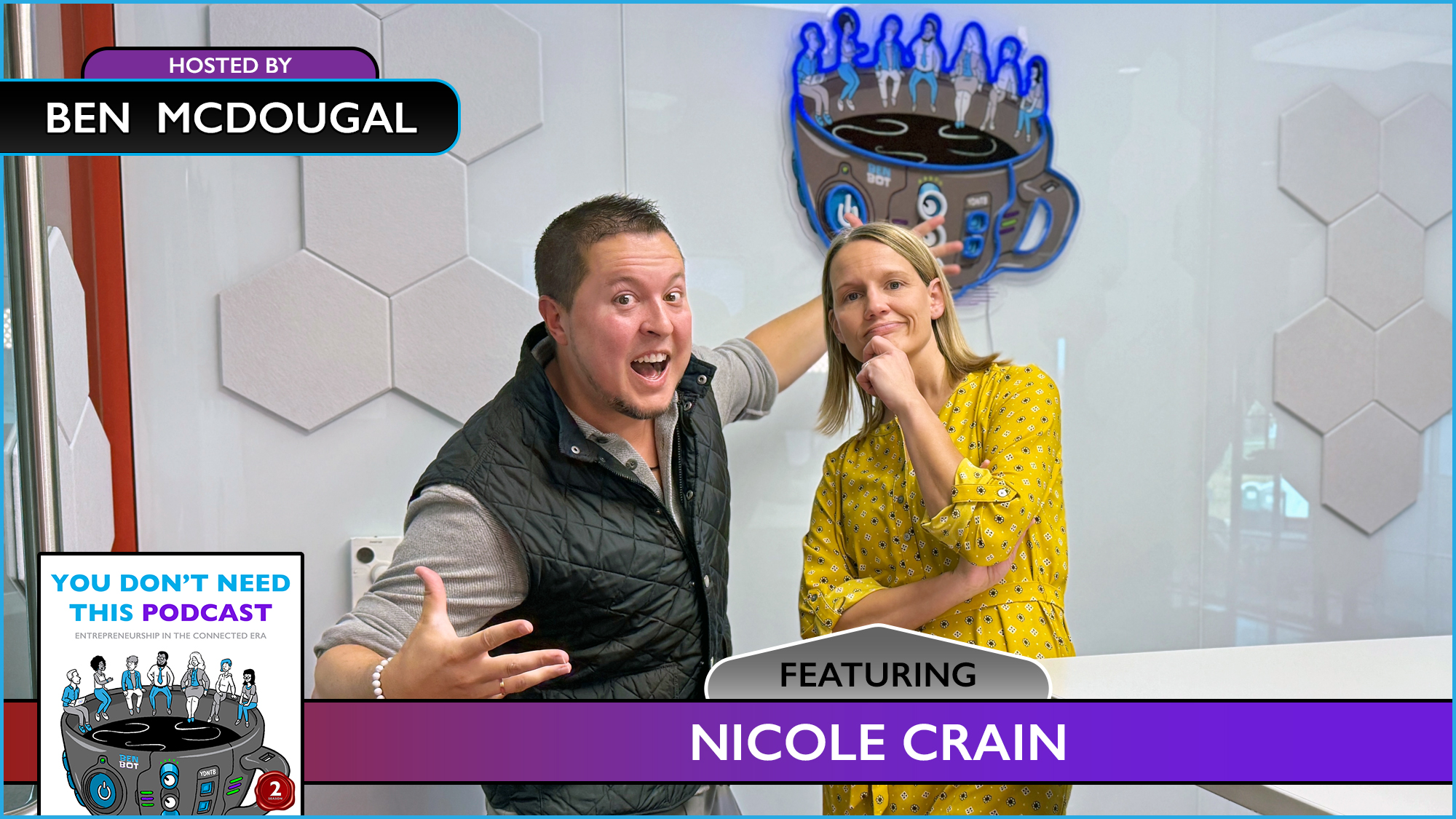
Nicole Crain is the incoming president for the Iowa Association of Business and Industry. She’s been helping to build business throughout Iowa for over 15 years, so it’s neat to have this 2025 podcast be her first interview as the new leader within Iowa ABI. We toast Mike Ralston and his 20+ years of generous leadership, then discuss negotiating, public policy, and advocacy that is valued by members. Nicole wraps up the first part of EP72 by shared timeless insight for students pursuing a business degree.

After Ben narrates Significance, Alessandra and Stella welcome us back by asking our featured guest, what’s worth sacrificing to pursue progress? We then let future-forward ideas flow, scratch on innovative community building tactics, and share how existing business can weave succession planning into their strategy. Congrats to our featured guest on the new role, and here’s to a fantastic 2025!

LISTEN on APPLE PODCASTS
LISTEN on SPOTIFY

BONUS MATERIALS

https://IowaABI.org

Roasted Reflections Break: Significance

http://Win-Win-Win.YouDontNeedThisPodcast.com

EP32 – Connecting Leaders 🎙️ Jessi McQuerrey

EP40 – Big Business 🎙️ Joe Murphy

EP30 – Exit Ramps 🎙️  Brian Crotty

http://PlayforcePrinciples.com

http://BENBOT.ai

By Ben McDougal, ago

Blurring Lines

Welcome back to Wisconsin! Ben McDougal was visiting UW Stevens Point to deliver You Don’t Need This Keynote at the 2024 Think Like an Entrepreneur event. As part of a wonderful whirlwind, he visited a local coworking and makerspace to record this special “In The Wild” episode.

Kevin Neuman leads the way as Assistant Dean within the Sentry School of Business and Economics at UW Stevens Point, while Christopher Klesmith is the Neighborhood Planner at the City of Stevens Point. Special thanks to Dr. Elizabeth Martin for coordinating such a unique collision between ecosystem allies!

Together, we discuss how placemaking connects with higher education and how entrepreneurial ecosystems can integrate students. We also celebrate agility within the future of work, ask what is school for, discuss collaboration between educational institutions, and close by solving the power paradox. EP54 is a timeless reminder for those who are blurring the lines between the classroom and community, which paints a reality that activates innovative ways for leaders to interface with the world.

LISTEN on APPLE PODCASTS
LISTEN on SPOTIFY

By Ben McDougal, ago