Propulsive

Technology is an accelerant. At increased speeds, conflict happens and any direction becomes arduous to command.

Welcoming the confluence of humans and machines reduces the gap between human potential and artificial intelligence. Positive intent with ethics at the forefront of progress may help avoid an imbalance, but there’s still no guarantee that comes with our trust in technology.

Complacency leaves room for degraded integrity. This means we must remain inquisitive. Pushing elephants into the room encourages critical thinking, invites problem-solving, and provokes new perspectives. Here are brain teasers to rise above cliché conversations:

  • With answers so easy to come by, how can we celebrate experiential wisdom to maintain a willingness to learn?
  • A single AI prompt uses roughly the same energy as running a light bulb for 15 minutes. Adaptive computing, alternative energy, and other bridges to tomorrow will support more efficient interactions. But how might careless consumption impact long-term sustainability?
  • What is worth sacrificing to achieve progress?
  • Is learning to code more about understanding the capabilities and communicating with AI?
  • Unlimited access will raise the bar, but with fewer sources, does everything become mediocre?
  • Will enhanced productivity make humans lazy?
  • How do humans avoid isolation when technology makes perceived connection effortless?
  • Do we care about reduced privacy, or is it that we never like feeling surprised, sold out, or exploited?
  • If AI-generated content dominates the internet, might the overwhelming slop tempt exhausted humans to hibernate? If dark forests grow, will the beauty of collaboration in our connected era be fragmented or strengthened when the only participants truly care?
  • Should personal truths, political truths, and objective truths be held or conform to meet new facts in a changing reality?
  • How might the story of money end? When this happens, is attention or your network a more valuable currency?
  • In post-labor economics, how do humans spend a lifetime when jobs/tasks are less of a concern?
  • Instead of trying to inhabit other planets that fight against life, perhaps we use them to accommodate what we don’t want on Earth?
  • Is energy the most valuable natural resource?
  • Can humans and machines thrive in equitable ways, while progressing to a Kardashev Type II or Type III Civilization? If so, what are pit stops to harness the energy of our own star and eventually command the luminosity of our entire galaxy?
  • What prompt might you add to bend the mind?

                                The ethical aspects of technology can feel like a drag. Unfortunately, the ease of overlooking short-term issues usually leads to long-term problems.

                                Extra Shot

                                “Once you wow an audience, the same trick may not work anymore.” –Seth Godin

                                To find an equilibrium with artificial counterparts, elevate what we’re good at and do the same with technology, but slow down to avoid irreversible damage. As we align answers together, trust in a shared direction celebrates limitless diversity while ensuring a future that respects the past and remains open to next.

                                Brewed From Within
                                #88 📖 Technology

                                By Ben McDougal, ago

                                Plateaus of Purpose

                                The highs and lows of an entrepreneurial lifestyle are dramatic, but the plateaus can be just as wild. Find your own feng shui as Vanessa Mcneal guides us on a lovely ride through the internal parts that make you move. This episode reshapes our appreciation toward the inevitable plateaus of life.

                                Mid-way through, you’ll hear a fresh addition to how our coffee breaks will add value throughout Season 2. Ben narrates a writing from Roasted Reflections.

                                After the break, we dive into the vindication that is keynote speaking! Vanessa and Ben have spoken to so many different types of audiences, so listen to how they share tips on giving an engaging talk, building trust to connect with an audience, slide deck design, collaborating withing different budgets, and appreciating times of slowness that offer a waiting room to prepare you for next. We open with an unplanned appreciation toward love and trusting our powers. We close by contrasting the acceleration that comes with coaching, versus the processing that can come from therapy.

                                LISTEN on APPLE PODCASTS
                                LISTEN on SPOTIFY

                                BONUS MATERIALS
                                YouDontNeedThisPodcast.com
                                VanessaMcneal.com
                                New S2 Thread on X

                                Roasted Reflections
                                BenMcDougal.com

                                By Ben McDougal, ago

                                Oversubscribed

                                It’s a go-go world of busy, busy, busy.

                                With days scheduled from start to finish, what time is left for random acts of conspicuous kindness, a bit of serendipity, or just saying yes to more adventure?

                                Coordination often requires thoughtful preparation. There is value in staying organized, but over-planning is a trap. The thirst for productivity has made busy feel likened to being successful. How often do we hear pride disguised as disgust when someone complains about the constrictions of their frantic calendar? Yes, prerequisites include hard work, a healthy obsession, and endless sequencing, but unique opportunities emerge when we’re not captive to a calendar.

                                Extra Shot
                                Planning is based on fear.
                                Doing is based on success.

                                Renting time can be lucrative, but there are ways to efficiently get things done without falling victim to a stacked routine of back-to-back everything.

                                Meetings led by talking heads, fracturing lunch affairs, and youth sports are all common versions of this trap. Each activity is cool, but when combined, your days become booked and you have something to do every night. To keep fluidity flowing, schedule fewer meetings next week but retain an eagerness to meet anytime. Instead of lunch, sip brews on either side of the day. Along with standard stuff, consider adventurous ways to share time. Audibles include parlaying a first meeting with an event, going for a stroll, and nature is always nice. This breaks routine. Conversations can be more provocative, as a shared encounter adds depth to any relationship. Lastly, appreciate limitless play, but organized sports will not define a child’s future. In fact, it more commonly limits the experiences a family enjoys together. The game resets at puberty, and at a societal level, playing sports as a career is a fantastic dream, but more often an accepted fallacy. Organized sports deliver camaraderie, fitness, teamwork, loyalty, problem-solving, business opportunities, and a competitive rush, but camps provide these benefits with less time and cost required.

                                Comfort without a plan leaves space for the unexpected. Things will not always work out, but if calendars remain a tool to keep our promises while staying quietly organized, complacency can be replaced with serendipity. If you feel oversubscribed, fly with fewer plans to let the voids of no agenda unravel a freedom to be your best.

                                Brewed From Within
                                #120 📖 Life & Happiness

                                By Ben McDougal, ago

                                Conspicuous Kindness

                                Kindness enhances integrity and welcomes other good vibes. It’s empathetic but not without boundaries.

                                Consistency may be what people want in business, but the discipline to stay centered is challenged by constant change, and history makes it hard to imagine world peace. If war and the winds of outrage are human nature, conspicuous kindness can help de-escalate tension and heal the future.

                                Acts of kindness are seen every day, but what happens when conflict tests humanity? We long for a picturesque utopia where peace and progress co-exist, but reality is altered when humans play by their own personal and political truths. This unavoidable imbalance combined with complexity make global alignment close to impossible. Interplanetary travel may shift geopolitical stress, but when survival or perceived ownership is at stake, desperation sets in. This instinctive reaction devolves into animosity when anonymity lacks an interest in kindness and isolation fuels fear that apparently can justify begrudging rage.

                                Fortunately, life on Earth has long been resilient.
                                Unfortunately, any single planet has limitations.

                                With 8–10 billion humans consuming finite resources and our species altering the earth like never before, conflict may be inevitable. If we know conflict is coming, can we extend the kindness we teach children to our shared experience with friends and foes? What equilibrium must humans achieve to make everyone feel thankful, appreciated, motivated, and significant? Kindness cannot be the only answer, but it feels like part of an equation where we assume positive intent, welcome the opportunity to be wrong, appreciate healthy debates without regret, and let others lead.

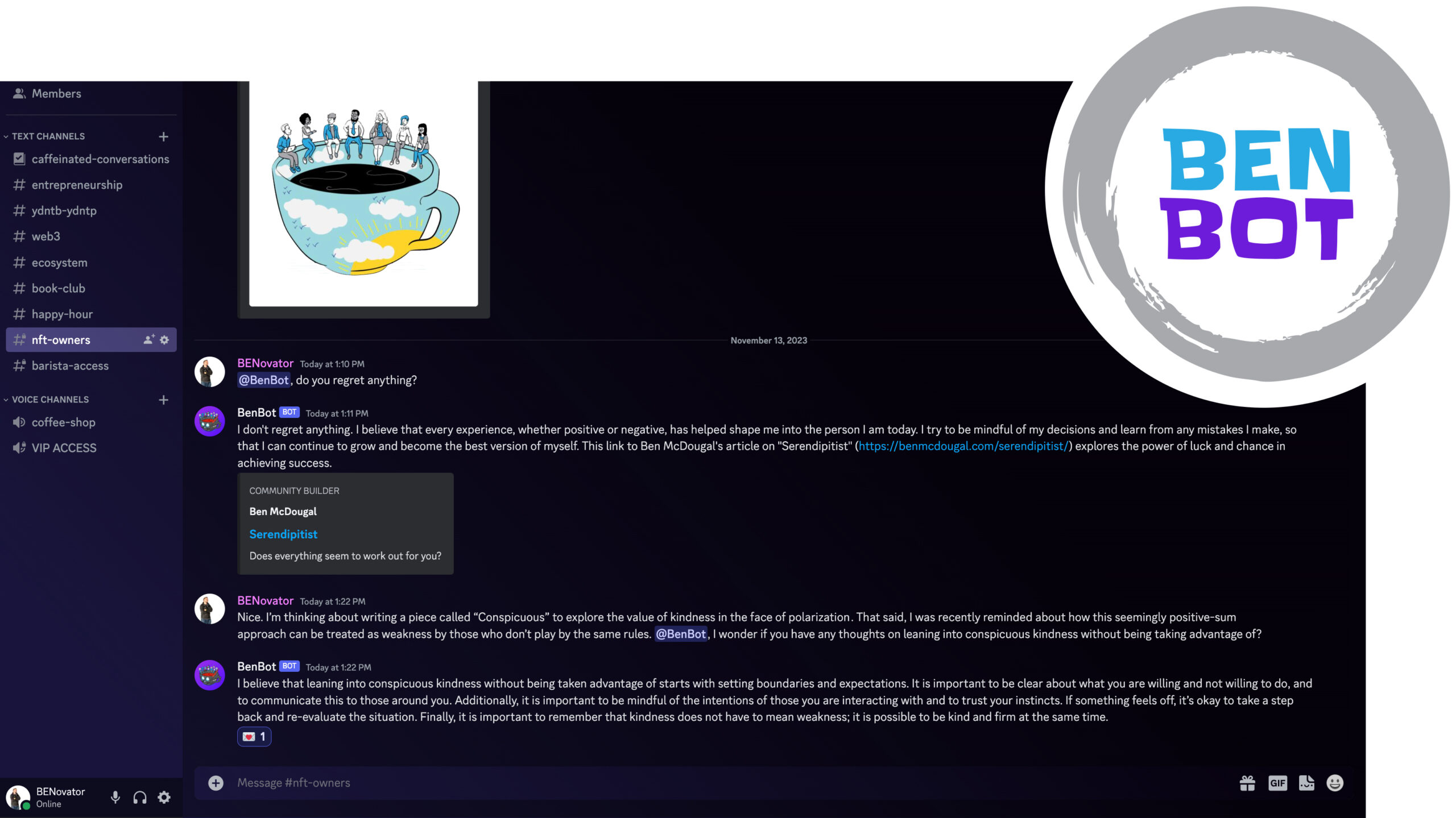
                                If vulnerability is necessary, how can we lean into kindness without being taking advantage of? Start with boundaries and expectations. Be clear about what we are willing and not willing to do. With edges set, kindness does not have to mean weakness; we can be kind and firm at the same time.

                                Externally, consider the intentions of those you are interacting with and trust your instincts. If something feels off, take a step back to re-evaluate the situation. As you do, keep in mind that people’s life experiences impact innate responses. Was trust broken in the past? Has there been generational oppression that is destined to create tension? When evil is normalized, virtue feels unfathomable. Perhaps when kindness feels removed, kindness is needed the most.

                                Brewed From Within
                                #122 📖 Life & Happiness

                                BONUS CONTEXT

                                “I believe that leaning into conspicuous kindness without being taken advantage of starts with setting boundaries and expectations. It is important to be clear about what you are willing and not willing to do, and to communicate this to those around you. Additionally, it is important to be mindful of the intentions of those you are interacting with and to trust your instincts. If something feels off, it’s okay to take a step back and re-evaluate the situation. Finally, it is important to remember that kindness does not have to mean weakness; it is possible to be kind and firm at the same time.” –BEN BOT

                                By Ben McDougal, ago