Minerva

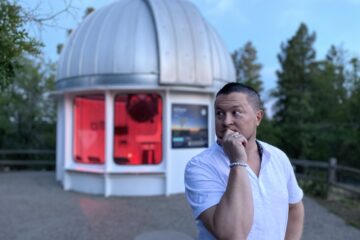
The pursuit to find Pluto is a neat example of how imagination, obsession, and reason align what can be seen. After scientists at the Lowell Observatory finally discovered “Planet X” in 1930, the world weighed in on what to name it. Let’s brew on naming your project.

Extra Shot

Pluto was the second choice of scientists who discovered this beloved dwarf planet. Minerva was the team’s first choice, but it was already taken by an existing asteroid.

A name makes a project feel real. It creates identity. If you’ve been thinking about something for a while, a name may naturally emerge. If you’re struggling or feel uneasy about the name you have in mind, here’s how to fuel confidence and land on something scalable.

Be descriptive. If it’s impossible to guess what you’re offering, you’re taking an early gamble. Hyper specific names may stand out in the moment, but too much definiteness can limit your ability to evolve. Attention is hard to earn, so avoid obscurity, names that trap you, or anything that makes the business hard to remember.

Verify availability. It’s tough to set yourself apart while still being memorable. As you consider naming a business, get creative, but do your homework before falling in love. Do not hope something may not exist; try to find it. Boldly research existing trademarks, domain names, social media accounts, industry competitors, and funky spellings. The result can be a name that is all yours versus something that may be catchy but could spawn future liabilities.

Think long-term. To withstand the test of time, consider how this name supports lasting growth. If the trend upon which you’ve based a name fades, might you look outdated? Will highlighting a location eliminate the ability to expand? In short, don’t corner yourself unless it’s on purpose.

Once you lock in a name, start using it within customer discovery to explore how it’s received by those you seek to serve. When a name clicks, align your marketing and overall vocabulary around the newly established identity. This will make your company recognizable, and over time it connects you to more true fans.

By Ben McDougal, ago

Hole-In-One

I grew up playing golf, but inadvertently fell out of the game due to work and other priorities. I‘d been longing to get back into the game, but kept procrastinating. So, when my friend Ben asked me to join him for 9 holes to celebrate his 40th birthday at Glen Oaks, I thought… here’s my chance! (LESSON #1: yes = adventure)

At first, I was intimidated and hesitant to have my first round in 8 years be at a fancy country club. I mean, I didn’t even have golf clothes, a glove, or shoes anymore, but I figured this would be a great way to dive in head first and get back out there. So, I quickly went shopping and got a few practice swings in at the driving range. (LESSON #2: now > later)

Extra Shot

This caffeinated contribution was written by Derek Brooks. Derek is a 40.79 year old midwestern American dude who enjoys building, traveling, partying, extremish sports, and can be found in our Roasted Reflections group on Discord.

On Ben’s birthday, I showed up to find him sipping on a Miami Vice cocktail with his buddy and business partner, Sinclair. This immediately set the stage that we were going to have some fun. Golfing with Ben was awesome. Whether it was his general demeanor, his lack of grabbing a scorecard, the way we strolled around the clubhouse, or laughs along the way, this freshly minted 40 year old was a constant reminder that we were here to relax. (LESSON #3: fun > serious)

For the first 5 holes on the back 9, my subconscious nerves were getting in the way. My hits weren’t clean and the strong winds certainly weren’t helping… But despite all the double bogeys, I was still having fun and it felt great being back on the course. (LESSON #4: fun + humility + patience = growth)

Halfway through the round, I could feel the groove coming back. On hole 15, I finally snagged my first par (Ben caught a birdie, haha). After that, we walked up to Hole 16, a 168-yard par 3, with wind in our face. Feeling incredibly relaxed, I lined up with my 7-iron and hit a super clean shot. It felt great and looked even better. The ball dropped just short and left of the pin, took 2 small hops, and then smoothly rolled right into the hole. A freakin hole-in-one. (LESSON #5: openness + growth + serendipity = opportunity)

I couldn’t believe what I’d just seen. Ben and I started screaming and laughing as we ran around the tee box. We full-on bear hugged and I think he even picked me up at one point. Neither of us knew what to do or how to act, so I just threw my gold chain on and giggled while Ben pulled out his GoPro to capture the moment.

After that ace, the next hole was a complete blur, but I ended the round with a birdie on 18. If I hadn’t set my nerves/ego aside and took that opportunity to get back into the game by having my first round in 8 years at an intimidating country club, I’d still be in that procrastination loop. I would’ve never gotten my first hole-in-one or shared this incredible experience on Ben’s 40th birthday. (LESSON #6: yes + growth = celebrate)

When I think about this experience through the lens of my career as a technologist, I’m reminded that getting in over-my-head has always been the fastest way for me to grow and move forward. I’m not expecting to be cranking out hole-in-ones from here, but once again, jumping back in head first is something that I will never regret. This memorable day was the reminder I needed to push outside comfort zones, enjoy the moments, and celebrate always.

By Ben McDougal, ago

Eclipsing 40

I sit atop this hill, soaking in the darkness of a total lunar eclipse, verbally dictating this short reflection to celebrate my own 40th trip around the Sun.

As our pale blue dot moved between the moon and our closest star, I first noticed the moving shadow’s blurry edge. As I think about the time we spend on Earth, so much of it is devoted to finding our place in the universe. Even when we are so close to perfect alignment, the blur of subtle distractions will remain constant.

Extra Shot

Perhaps this transitory quest for totality is the impossible pursuit that makes life so much fun.

Anticipation takes over as the final sliver of moonlight goes dark. The orange haze of this blood moon is now the only cloud in the sky. Even with the cool breeze, city lights, distant traffic, and frogs burping, the twinkling stars seem to serenade the silence of this moment. As the darkness holds time still, an eerie peacefulness is accompanied by a welcomed loneliness.

My thoughts soon sync into the shadow of this cosmic darkness. This makes it useless to resist the overwhelming appreciation I have for so many people who have given my life meaning. The past 40 years are a tribute to those who brought me to this place and to the family I’ve chosen every step of the way. Thank you.

Extra Shot

Jodie and Kate, you are the light of my life and my own totality. Together, you set me free to wonder and have taught me the meaning of life. I’m only 40 years old, so while I look forward to much more of our story being written, whenever I do turn my final page, know that I’ll always be with you and wouldn’t have changed a single thing. I appreciate these quiet tears, knowing that my greatest achievement will always be the honor of being part of US forever.

Within the darkness of totality, I’m soon struck by the discomfort I feel, not knowing when the moonlight may return. We’ve all heard how dark it is before the dawn, yet it still feels natural to consider things that have not gone to plan. Accepting past failures, broken relationships, and the future challenges we may face was not an expected emotion, but perspective determines how we respond. I’m thankful that it’s hard to think of anyone who may need to hear this, but if I’ve ever wronged you in anyway, I want to say that I am sorry and only wish the best for you.

As the first sliver of moonlight returns, eminence joy and assuring enthusiasm seemed to rush over my mind and body. It was as if the light of our cherished moon had never been brighter. The subsiding shadow of our planet slowly released moonlight back into the night sky, which lit renewed optimism for all that is still to come.

I am so blessed to have brewed 40 remarkable years into this life. As the full moon shown brighter than ever, so will my appreciation for all that we share.

By Ben McDougal, ago

Playforce

Work and play are often seen as distinct and different, but the expectation of top talent has evolved. People crave a connection to enjoyable activities that deliver a sense of purpose and belonging. When work feels like play, the fun environment invites people to take on bigger challenges. To support the future of work, students, educational organizations, employees, and employers must adapt together.

Extra Shot

Welcome to your first taste of a new community-driven initiative that will feature special guests sharing occasional contributions. Interested in collaborating? Let’s chat!

When we think about work that feels like play, it’s not just pinball all day. The definition of “fun” is to spend time doing an enjoyable activity. When a team has fun with satisfying work that matters, the group’s true potential is unlocked and individuals are more likely to become indispensable. This leads to more generosity, laughter, caring, scientific questions, learning, gift-giving, and mapmakers eager to go beyond what’s expected.

A recent study identified 16 trends that are shaping the future of work. It found that, in addition to more flexibility and fair wages, employees want greater autonomy. Employees want the freedom to be creative and to find purpose in the way they spend their time. When this balance is achieved, people are happy and the sense of satisfaction allows them to do their best work. Along with more innovative productivity, this culture also leads to lasting retention.

As today’s workforce is transformed into tomorrow’s playforce, it’s important to consider the difference between work that feels like play, compared to work with playgrounds nearby. When fun activities only serve as a distraction, the facade of fun will wear off. It’s also good to remember that what’s fun for one person could be more of a chore for others. Personality assessments and ongoing interactivity will help you understand individuals and the part they play within the system. The better people know each other, the more inclined they’ll be to act themselves. Acting professionally shouldn’t mean dimming one’s personality. The more comfortable people feel at work, the better they’ll be able to focus on what’s important. Too often, attempts to optimize employees’ work-life balance stem from a flawed assumption that we must create boundaries to differentiate life and our work. Perhaps the opportunity and the future of work, is to create an experience where the two coexist as one?

Extra Shot

This caffeinated contribution was written by Elizabeth Tweedale. Elizabeth has (co)authored six books, exited an AI company called GoSpace, and is now the CEO of Cypher Coders, the UK’s leading coding school for children. She’s passionate about family, preparing kids for the future, and can be found in our Roasted Reflections group.

If the future of work is fun, we must guide children away from an outdated “workforce” and toward a “playforce” to activate creativity, productivity, satisfaction, involvement, and purpose. The world is their playground and no permission is needed to contribute. Education can be about delivering access to skills, tools, and community. When children are encouraged to connect, play games, be kind, and learn with passion, they engage not because they have to, but because they’re having fun. This empowers students and as they reach the playforce, they’ll understand the superpowers they’ve nurtured in their own areas of interest. Beyond the classroom, this translates into employees and employers who are more likely to enjoy their work when given the opportunity to do what they’re best at.

As we see/hear in the closing chapter of YDNTB, “life is too short not to enjoy your work.” Together, let’s change the equation to make work a lifestyle, which sets us free to have fun making a difference.

By Ben McDougal, ago

Anxiety

Our mind is divine. It gives everyone super powers and the dots we electrochemically connect makes us human. Such biological capacity allows us to achieve extraordinary things. At the same time, this mysterious grey matter can also hold us back, even cause havoc.

Anxiety is assuming failure in advance. As a mental cousin to fear, anticipation, worrying, and perhaps even desire, anxiety is like an unspoken agreement you make with yourself to be unhappy until you get what you want. While some may argue that this exhausting emotion is all in your head, the way anxiety effects your body can be absolutely real.

Extra Shot
“With great power comes great responsibility.” -Uncle Ben, Spider-Man

The connected era has made the world smarter, stronger, and more efficient, but the pressure of never-ending progress leaves us vulnerable to fear and anxiety. For those who pursue greatness (which I might suggest is anyone reading this), the more we try to achieve, the tighter we wind the strings of life. When harnessed, this creates strength, artistry, grit, and persistence. As the tension tightens however, there’s bound to be a break. Being mindful of your personal bandwidth will help reduce the frequency and severity of such breakdowns, but it seems impossible to completely avoid anxiety.

Extra Shot

Accepting that anxiety is inevitable, may be a secret to finding equanimity.

The most common way we attempt to manage such angst, is to stop the pain by seeking reassurance. The nourishment of overthinking every scenario in an unknown future may satisfy  the moment, but scratching this itch usually makes things worse. Even if we answer every possible question, the willingness to indulge the worry sets a precedent that keeps you coming back to what can become an endless loop.

It’s much harder, but an alternate approach is to acknowledge the suffering. Don’t run from it. Appreciate the relentless internal narrative you’re dealing with. Breathe. Be thankful for having something you care this much about. Find peace knowing you’ve done your best to tip odds in your favor, but invite doubt and welcome an opportunity to be wrong. The anxiety is here and it’s dramatic, but it’s also normal. Let thoughts float by, focus your attention on what’s good, and allow time to heal the pain. Yes, this is like letting a forest fire burn without soothing it with water. It will get wild at first, but eventually burn itself out. The scorched land is then ripe for renewal and less likely to burn again. When we acknowledge anxiety this way, the resulting clarity provides an awareness that helps us understand this energy. Our courage also helps to break the cycle and over time, often reduces the frequency of such misery.

The ability to appreciate anxiety, an eagerness to lean on those who support you, and confidence in knowing the temporary pain will pass, allows the mind to need less dramatic swings to stay centered.

By Ben McDougal, ago