Executionist

Nobody cares about your great ideas.
They care how we make ideas happen.

This tribute to action was originally titled execution, but that’s insufficient. To honor such ingenuity, let’s loudly celebrate those who apply action to nudge the world, by calling them executionists.

Executionists appreciate planning, but don’t get stuck in endless brainstorms. They’re not rushing into bad ideas, but they are often the first to tinker. Action-based execution is why the title of my book (and podcast) will remain true. It even grounds the preface of You Don’t Need This Book, which I thought might be neat to highlight here:
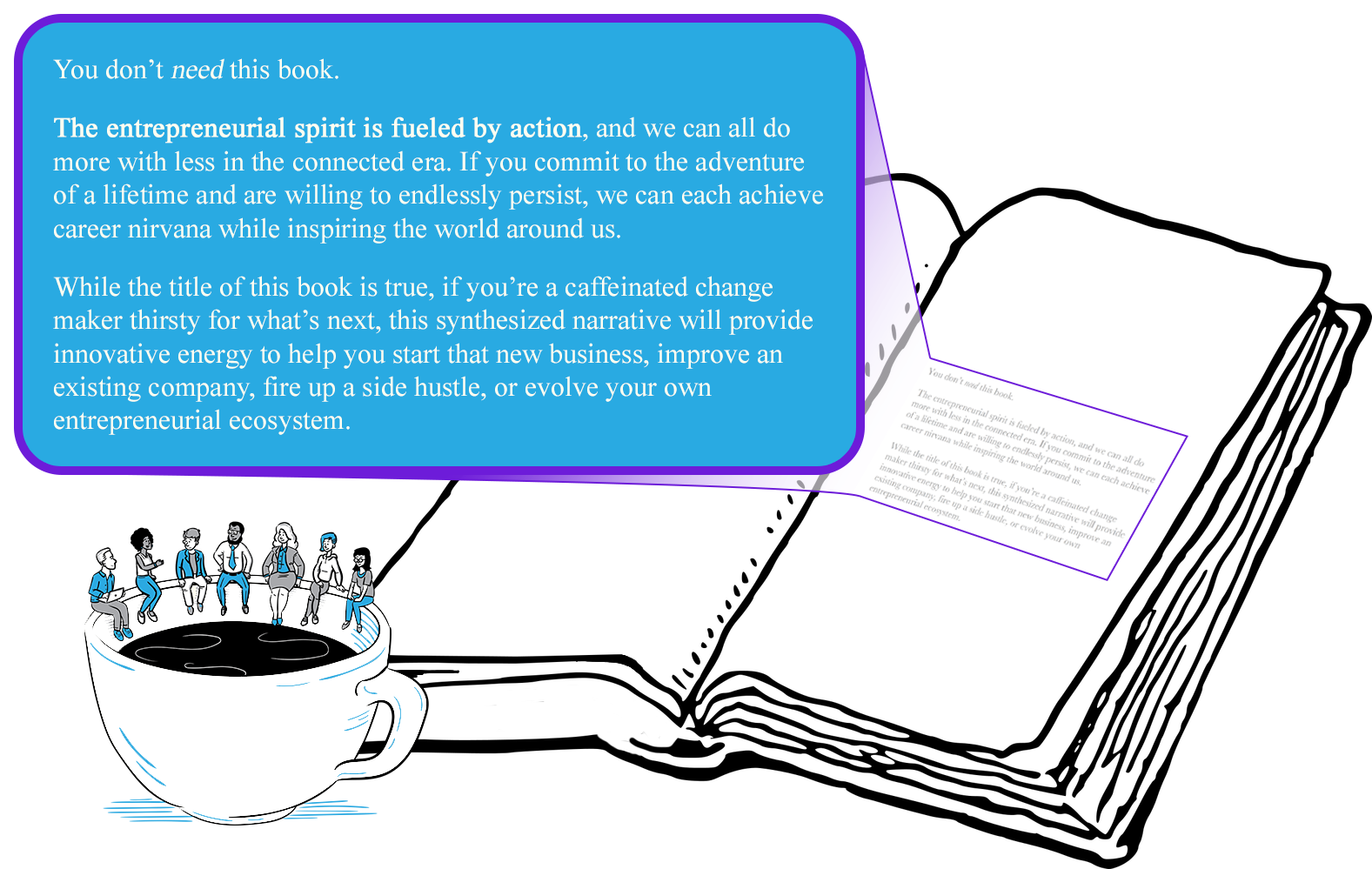
There are good reasons why we have so many clichés about talk being cheap. Action is required when it’s time to get things done. Cheers to so many who don’t stop at ideas. Heretics who build when others don’t. Leaders who choose to make a ruckus without permission and in doing so, go beyond the status quo by evolving ideas into reality.

Executionists keep the promise.
Executionists leverage uncertainty.
Executionists perpetually learn by doing.
Executionists connect dots with real skills.
Executionists courageously communicate.
Executionists take time to be detailed oriented.
Executionists stay organized to be efficient.
Executionists add pieces to the puzzle.
Executionists enjoy shifting gears.
Executionists are Serendipitists.

Extra Shot
After three years, decisions were made to spin away from the weekly cadence of my writings. Fresh episodes of YDNTP will continue brewing innovative energy each week and occasional contributions may still land into Roasted Reflections, but these last few writings of 2023 are a closing finale.
By Ben McDougal, ago

Oversubscribed

It’s a go-go world of busy, busy, busy.

With days scheduled from start to finish, what time is left for random acts of conspicuous kindness, welcoming serendipity, or just saying yes to more adventure?

Thoughtful preparation is often required to coordinate whatever it may be. There’s value in staying organized, but over planning is a trap. The thirst for productivity has made busy look to be successful. How often do we hear pride disguised as disgust, as someone complains about the constrictions of their frantic calendar? Yes, prerequisites include boundless hard work, a healthy obsession, and endless sequencing to be remarkable, but unexpected opportunities emerge when we’re not captive to a calendar.

Extra Shot

Planning is based in fear.

Doing is based in success.

Renting time can be lucrative, but in our connected era, there are ways to efficiently get things done without falling victim to a stacked routine of back-to-back everything.

Meetings led by talking heads, fracturing lunch affairs, and youth sports are all common versions of this trap. Each activity is cool, but when combined, days are booked and every night has something. A few hacks for each include less scheduled meetings throughout the week, but an eagerness to meet anytime. Instead of lunch, meet folks for a brew on either side of the day and consider more adventurous ways to share time. Audibles include parlaying a first meeting with an event, going for a walk and talk, or adding nature into the interaction. This breaks routine and conversations can be more provocative as a shared encounter adds depth to any relationship. Lastly, appreciate limitless play, but organized sports will not define a child’s future. In fact, it more commonly limits the experiences a family enjoys together. The entire game resets at puberty and even at high levels, the idea that sports provide a lasting future is one of society’s biggest fallacies. Organized sports deliver camaraderie, fitness, teamwork, loyalty, problem solving, business opportunities, and a competitive rush, but camps provide these benefits with less time and cost required.

Comfort without a plan leaves space for the unexpected. Things will not always come together, but if the calendar is a tool to keep promises while staying quietly organized, complacency gets replaced with unplanned marvel. If you feel oversubscribed, try flying without a plan. May the voids filled with no agenda unravel a freedom to be your best.

By Ben McDougal, ago

Horizons

From the ground, our view to the horizon is 3 miles. Peering atop the highest observation deck in the United States, humans can see up to 50 miles on a clear day.

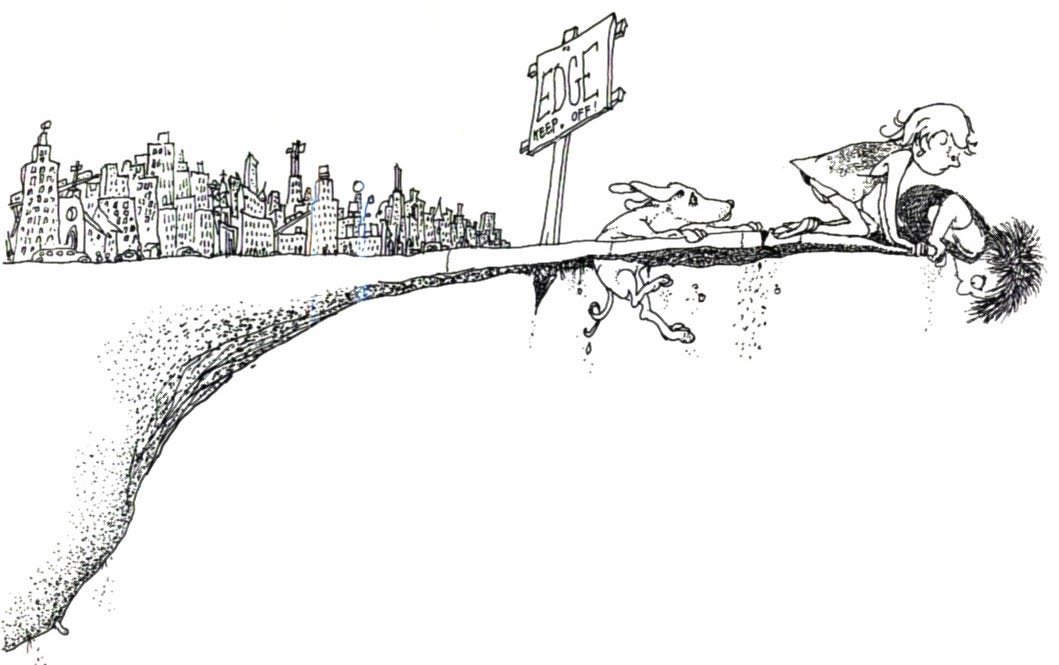
While the foreground of daily activity occupies so much attention, our cumulative culture has always looked to the edge for answers. Whether it’s cresting through the clouds on a flight, that inspiring view from any rooftop, or the simple pleasure of walks around the neighborhood, we love the hope-filled distance of any view. Beyond these moments of beauty, how can we think about edges as we keep building?

Action is obviously required, but staying wild and thinking BIG takes practice. Busy can be addictive and the close proximity to how time is spent makes everything feel pressing. The closer the deadline, the more attention it’s given. Keep the promise of what you’re building, but finding time to think is a mental exercise that nurtures gratitude and often attracts fresh opportunities.

To avoid self limitation, collide ideas into more weird conversations. We can chat with anyone online, so leverage our connected era, but then pour in the serendipity! Show up and with your own eyes, get interested.

As boundaries come and go, avoid where the sidewalk ends and there’s no need to always be first in line. Skyline views await us all from anywhere. Build like this. Linchpins go beyond brainstorming and instead, edgecraft ideas toward reality. Lean into Playforce Principles and continue to ship on the timeline of now. Along with that prerequisite, stay open to next and feel different momentums converging toward that next horizon.

No matter how you get there, the edge is wonderfully wild. Every horizon is different and gratitude ensures we don’t go numb to the raindrop of time we have on earth. Perhaps the thesis of this riff is that one horizon is not the only endpoint. Each extent is just too cosmic to ever be the same. Trap time and enjoy sequencing distant views to hug the curves toward your own horizons.

By Ben McDougal, ago

Uncharted

Building without a map is a bold art form.
It’s challenging, dangerous, and rewarding.

It’s challenging because these expeditions call for initiative to show up but also an unknown amount of resources to stay persistent. All seven capitals (intellectual, human, financial, institutional, physical, network, cultural) can each be hard to find, but celebrating what we have attracts more of what we want. As different types of capital connect, staying balanced with your personal bandwidth requires attention. But when we care and remain realistic, we give ourselves the permission to keep building.

Uncharted crusades can also be dangerous. This quest will not go as anticipated and the opportunity cost is high, with endless ways to spend our time. Even when odds are against us, a healthy obsession paired with a willingness to succeed or learn cultivates a potent mix of curiosity, optimism, and righteous recklessness. Those willing to try have a huge advantage over everyone else willing to wait.

Extra Shot

What might you regret not doing?

When exploring the unknown for the first time, be clever, collaborative, and patient. Also, remember that winners quit all the time. They simply quit the right things at the right time. So, get passionate without falling in love with impossible and don’t be afraid to ask for help. There’s much to learn from heroes, mentors, and those you seek to serve. Success and failure leave clues, so speed up progress and avoid pitfalls by leaning into tribes you trust.

When you’ve built without a map, the highs and lows strengthen decision-making. Practice also makes the unknown less intimidating. Experienced wayfinders gather feedback faster, measure the right metrics, and appreciate the hardships without allowing pride from the past to mislead them.

We know how rewarding it can be to build an event, business, or relationship you’re proud of.

To dance toward the unknown, be thoughtful with early moves but don’t get paralyzed by perfection. Sustain growth with sequenced storytelling. Be urgent but not frantic by activating trust channels that stimulate accountability. Welcome feedback like a scientist, listen with concentration, and savor metrics beyond the money.

By Ben McDougal, ago

Serendipitist

Do things always seem to work out for you?

Our internal narratives and external experiences make the cultural consequences of serendipity hard to refute. Serendipity may be pseudoscientific, but it makes sense that things we dedicate our focus and attention to, naturally attracts more of the same.

This mental model can be established in many ways. For me, the appetite for welcoming serendipitous collisions has been brewed from the eternal optimism that an entrepreneurial lifestyle constructs. No matter the source, I believe many of us are, or have the potential to be serendipitists.

Serendipitists seek adventures that invite, sometimes even require different layers of serendipity. The extend at which you control what you’re able to control (a dichotomy within stoicism), while also letting the winds of happenstance guide you through a sense of abundance, determines how often/deeply we experience this charming phenomenon.

Extra Shot
What’s normal for a spider, is chaos for the fly.

In the moment, not everything will work out. This is why serendipitists are often confused with just being lucky. Serendipity and luck both require preparation, openness, and opportunity. The difference between serendipity and luck, is perseverance. Over time, serendipitists share similar energies within their practice.

Serendipitists say “yes” more often.
Serendipitists consistently show up.
Serendipitists assume positive intent.
Serendipitists seek to understand.
Serendipitists are empathetic.
Serendipitists are generous.
Serendipitists stay curious.
Serendipitists fuel positive change.
Serendipitists play long-term games.
Serendipitists have fun and die empty.

As we experience serendipity, celebrate it. Recognize the random awesomeness that comes from the positivity you squeeze into the universe. Continue connecting dots, appreciate how things come together, and keep making a ruckus to feel it even more.

By Ben McDougal, ago