Creation vs. Consumption

Before the music, before the crowd, there’s one voice asking a simple question: Can you hear me? Creation starts here. Not with a perfect line or the finished song. But with the smallest test of presence.

EXTRA SHOT

This contribution was written by Corey Dion Lewis. Corey is a leader in healthcare who creates impact networks where care is equitable and shared far beyond the clinic.

Creation over consumption sounds like a slogan, but for most of us, it’s a balancing act. Consumption is how we learn from the world around us. It’s also a comforting remedy that helps us reset. This supplement for the soul keeps us tranquil, but in excess, consumption mutates into a drug devoured by a subconscious addiction.

We are all imaginative and being creative makes us happier, but we live in a world where algorithms reward spectators. This has us scrolling, watching, and absorbing everybody else’s thoughts, pain, and opinions before we check in with our own. This does something to our mind, and it’s not neutral. Consumption without creation leads to overload. The American Psychological Association reports that heavy, unfiltered exposure to news and digital content is associated with higher stress, anxiety, and burnout. There’s just too much coming in. This feeds unfair comparisons. Suddenly, everyone else’s life is your own measuring stick. We start to feel like our voice, our story, and our unique angles do not matter as much as the polished content we continuously consume.

As the emcee of your own life, there’s not time to hope someone hands you the mic. We must pick ourselves, make sacrifices to unite an audience, step into the light, and even when our voice is untested, speak to add energy into the room. This brings us to life as the thrill of creation is felt.

That is mental health in action. When we create, we regulate. When we speak, we release. When we name what we feel, it loses some of its power over us. Pressure turns into expression. More thoughts, often the hard and heavy ones, become art. The sounds, images, pages, and other multidimensional content become part of our creative practice. Creation is the path to descriptively understand systems, parts, processes, and how we make things better.

The beautiful thing is, it doesn’t have to be dramatic or impressive. Drawing, even badly, can reduce stress and ease anxiety. Gardening can do the same. Cooking with intention. Chopping, seasoning, tasting, it all pulls you into the present. They all ask your brain to be active, engaged, and creative. This produces positive emotions.

Creation builds a sense of mastery and progress. This strengthens self-esteem and resilience. It gives you a channel for self-expression so emotions and experiences are being worked with, not just numbed by distractions. Over time, crafted creations become the highlights of your stories. These bookmarks add depth to future moments and drive toward a joyful side of our own mental health continuum.

While consumption can bump our spirits more toward a depressive state, the goal is not zero consumption. Some of what you consume is nourishing. It feeds your ideas, your learning, and your rest. The balancing act is about spending more of your day making, expressing, and contributing than you do scrolling, binging, or buying.

We don’t have to change everything overnight. We don’t need a ten-step plan or a perfect morning routine. We need one small moment each day where we choose to create instead of consume—one page, one sketch, one idea voiced, one boundary set, one feeling named.

Creation over consumption is not a rule; it’s a relationship you build with your own voice. Today, you don’t have to build the whole thing. Just say one true thing, in your own way, and let that be enough for now. And remember, someone is waiting on the work you are creating.

By Ben McDougal, ago

Adaptability

As leaders prepare others for an unpredictable future, an interest in understanding answers and an eagerness to claim confidence is essential. A vital element to both qualities is an ability to constantly adapt.

When technology makes answers easy to find, adaptability makes the human touch unmistakable and more resilient. As students traverse problem-solving activities, they learn to appreciate what goes into the answer. This leads to deeper understanding and boosts adaptability as assumptions are tested and unplanned obstacles are conquered.

Extra Shot

This contribution was written by Nancy Mwirotsi. She is a leader from Kenya who empowers underserved youth through technology education.

Imagine a young student, standing in front of a packed room to pitch her first startup idea. Something unexpected is bound to happen. When it does, real-time adaptability keeps her calm and her voice grows stronger as the crowd responds to her ability to execute despite the disturbance. Outside the classroom, similar manifestations occur when leaders reward team members who adapt to stay ahead of innovation curves and we all know how unpredictable entrepreneurship is, which makes adaptability an ongoing requirement for founders building without a map.

Adaptability strengthens confidence as we then let students lead. When young people are trusted to take the stage, make decisions, or shape solutions, they begin to own their success and claim a confidence that can’t be taught.

As students claim confidence, adults stop underestimating their capacity. This fosters a two-way exchange for students that see themselves in leaders who motivate them to explore, make mistakes, and yet, always remain valued. A shared interest in how things work can then amplify potential as technology is introduced to create awareness, multiply real skills, and actuate ideas. This experience encourages students to go beyond just using technology to find the easy answer. It elevates those who understand how technology works, which continues to shape courageous innovators that avoid the temptation to be mediocre.

Within the unknowns of constant change, adaptability keeps us curious. Enduring curiosity can then activate initiative supported by real skills and expanded through lifelong learning. Leaders who create environments that help others build proficiency in the dynamic elements of playforce principles, prepare us all for the future of work.

By Ben McDougal, ago

Student Founders

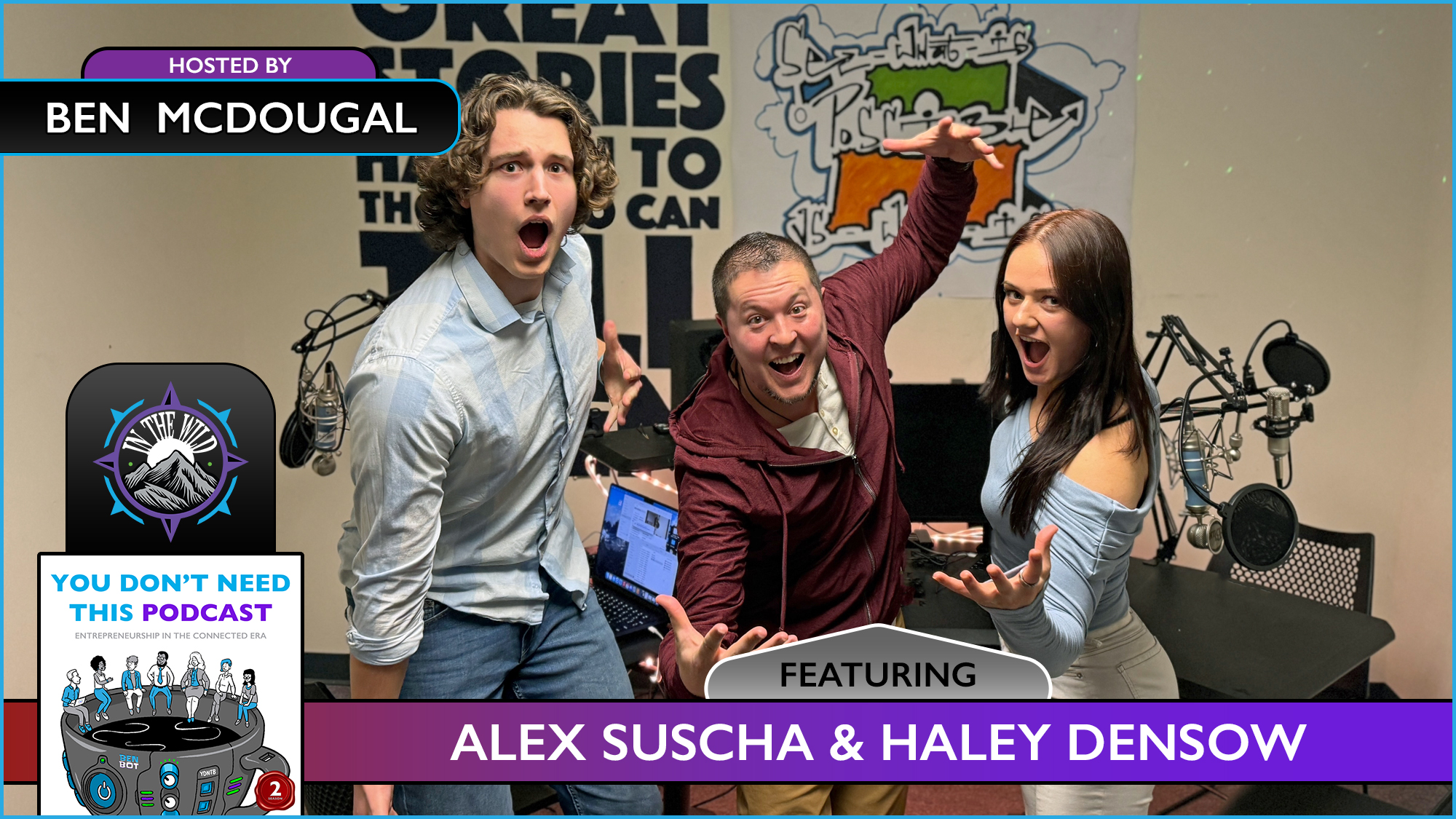
Ben was back at UW Stevens Point, speaking and collaborating inside the UW Stevens Point Center for Entrepreneurship. During his time on campus, Alex Suscha and Haley Densow joined him for another “In The Wild” jam session.

Hear how these two college student founders are building beyond the classroom by embracing the tension of going beyond the status quo. We speak about building a company while balancing school work, how to win pitch contests, and growing up in the connected era. For leaders who build on the timeline of now, this timeless episode is brewed just for you. Enjoy!

LISTEN on APPLE PODCASTS
LISTEN on SPOTIFY

BONUS MATERIALS

https://sourcerai.co

https://uwsp.edu/news/haley-densow-dormdash

https://x.com/SentrySchool/status/1896335458461778294

https://x.com/BENovator/status/1894227286326464568

http://Student-Founders.YouDontNeedThisPodcast.com

http://YouDontNeedThisKeynote.com

http://PlayforcePrinciples.com

EP17 – Schoolhouse Rock 🎙️ Anika Yadav

EP31 – What is School For? 🎙️ Russ Goerend

EP53 – Now & Later 🎙️ Evan Stanislawski + Matt Vollmer

EP54 –  Blurring Lines 🎙️ Kevin Neuman + Chris Klesmith

EP69 –  Generative Humans 🎙️ Chris Snider

EP81 – Technology Soup 🎙️ Carl Lippert

https://BenMcDougal.com/slide-deck-design

http://YouDontNeedThisPodcast.com

By Ben McDougal, ago

Adapttitude

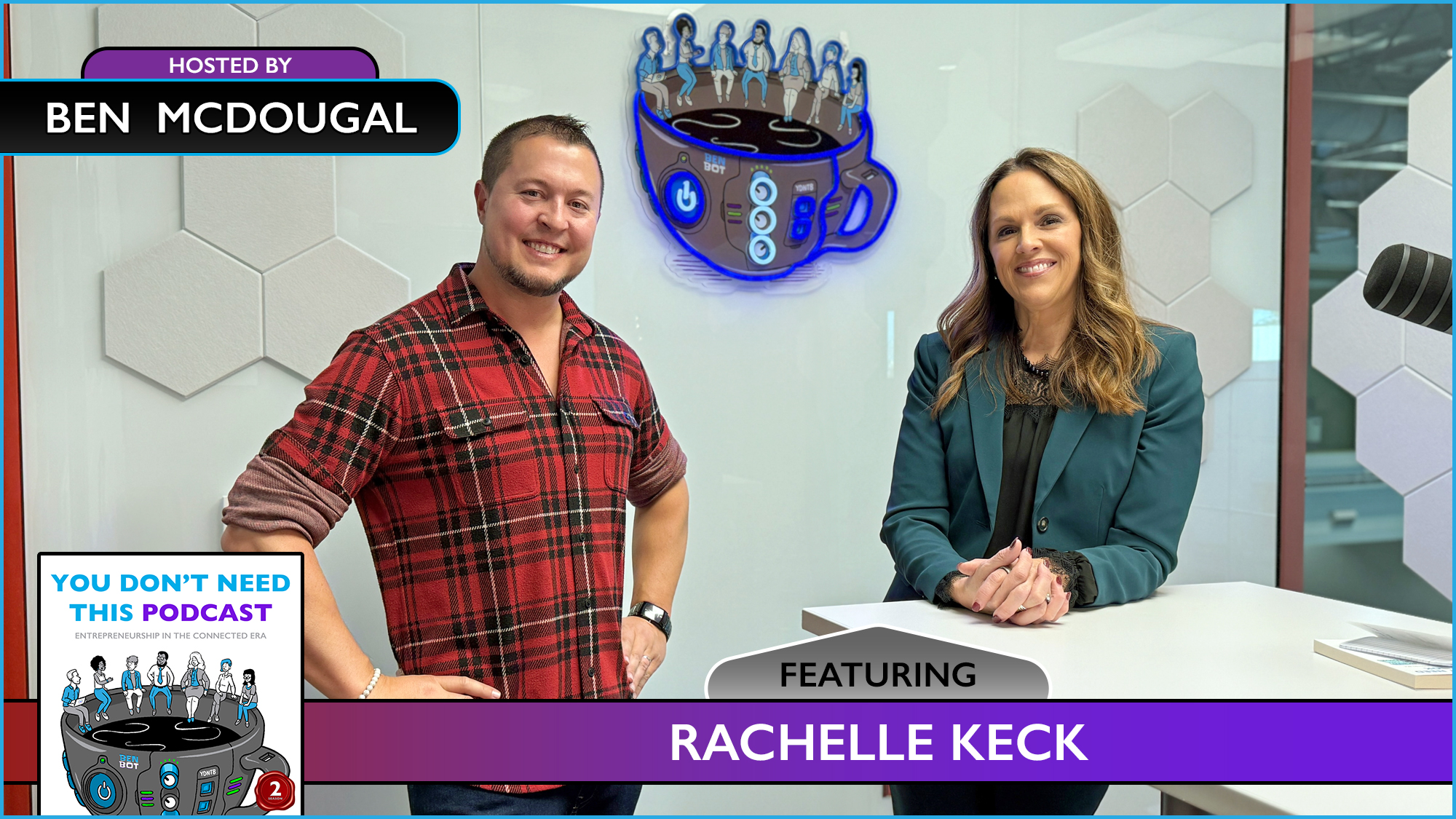
Rachelle Keck is the 14th president of Grand View University. Students join us in-studio as we discuss the energy of leadership. We also talk about writing a book and how to leverage an adapttitude, which is an attitude that fosters an aptitude for adaptation.

After an extended break that celebrates Playforce Principles and Seth Godin’s Real Skills, we navigate the ROI of higher education, cosmic curiosity, and what’s worth sacrificing to achieve progress. We close with a viking story from Rachelle, on how she burnt the ship by selling her law practice to pursue more grand adventures.

LISTEN on APPLE PODCASTS
LISTEN on SPOTIFY

BONUS MATERIALS

https://Wikipedia.org/wiki/Rachelle_Keck

https://Grandview.edu/about/about-gv/president

https://x.com/rachellekeck

https://linkedin.com/in/rachellekeck

http://Adapttitude.YouDontNeedThisPodcast.com

Roasted Reflections Break: Playforce Principles

EP9 – Future of Work 🎙️ Nancy Mwirotsi

EP31 – What is School For? 🎙️ Russ Goerend

http://YouDontNeedThisPodcast.com

Roasted Reflections on Discord

http://BENBOT.ai

By Ben McDougal, ago

Blurring Lines

Welcome back to Wisconsin! Ben McDougal was visiting UW Stevens Point to deliver You Don’t Need This Keynote at the 2024 Think Like an Entrepreneur event. As part of a wonderful whirlwind, he visited a local coworking and makerspace to record this special “In The Wild” episode.

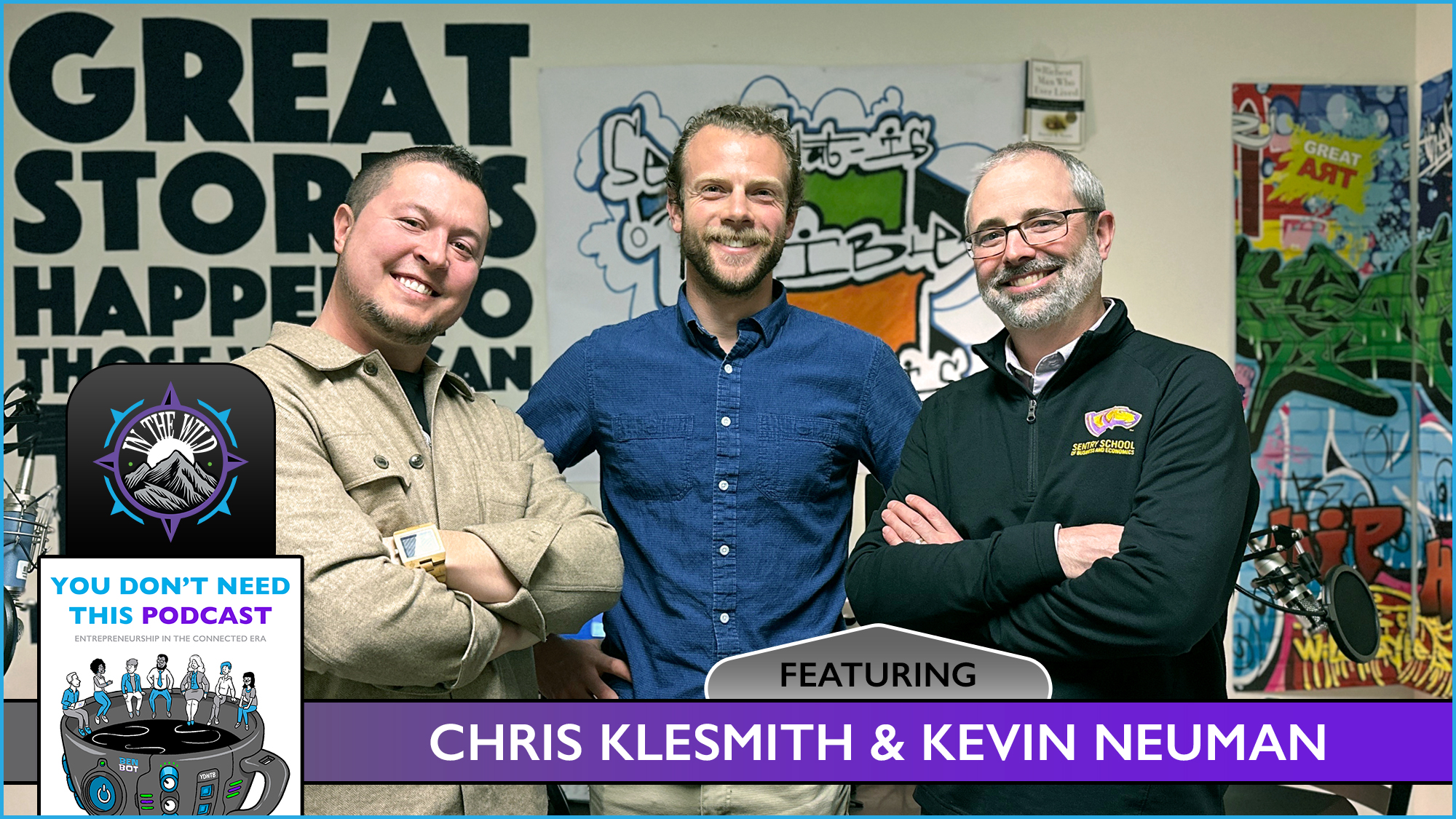
Kevin Neuman leads the way as Assistant Dean within the Sentry School of Business and Economics at UW Stevens Point, while Christopher Klesmith is the Neighborhood Planner at the City of Stevens Point. Special thanks to Dr. Elizabeth Martin for coordinating such a unique collision between ecosystem allies!

Together, we discuss how placemaking connects with higher education and how entrepreneurial ecosystems can integrate students. We also celebrate agility within the future of work, ask what is school for, discuss collaboration between educational institutions, and close by solving the power paradox. EP54 is a timeless reminder for those who are blurring the lines between the classroom and community, which paints a reality that activates innovative ways for leaders to interface with the world.

LISTEN on APPLE PODCASTS
LISTEN on SPOTIFY

By Ben McDougal, ago