Jargon vs. Understanding

Humans seek to define emotions and articulate thoughts, yet a lack of understanding leads to fancy words and long-winded rhetoric. Sounding smart may protect our perceived knowledge, but as Albert Einstein said, “If you can’t explain it simply, you don’t understand it well enough.”

To gauge levels of understanding, there are two questions to ask. First, can we deconstruct, expand, or compress what was said? Second, can we then describe the exact same idea in five different ways? If not, seek further insight to go beyond memorized jargon.

Genuine understanding leads to more transformative conversations. As you seek to translate emotions into thoughts and thoughts into words, here are quick constructs that signal a state of comprehension:

  • Actively listening with genuine interest
  • Using fewer but more effective vocabulary
  • Feeling untroubled by uncomfortable silence
  • Ongoing execution and creative adaptation

Brewed From Within
#35 📖 Leadership

By Ben McDougal, ago

Linear

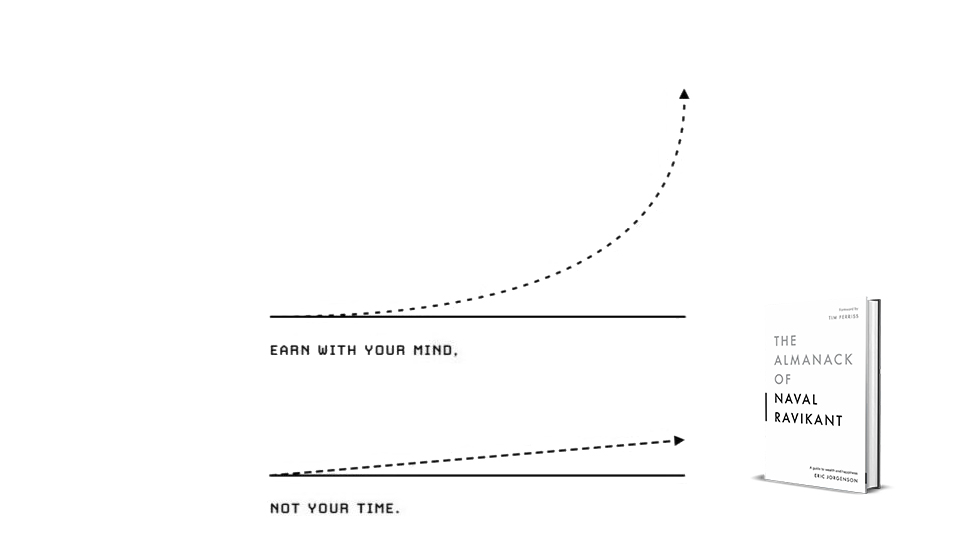
We use linear thinking in an exponential universe.

From a blade of grass on the football field, how can one imagine gaining a single yard? The first down marker feels distant at best, a touchdown seems impossible, and winning the game is barely comprehensible. A season championship? Yeah, that’s not even a glimmer in our mind’s eye. Trying to win all at once makes movement daunting, but staying consistent builds confidence and unlocks efficiencies. When space from this efficiency is used to stay innovative, what’s working is fortified as wormholes connect new levels of momentum.

We all know this.
Let’s dig deeper.

If a linear thinking is status quo, opportunity awaits those who augment their work through a cosmic perspective. As signals of product-market-fit emerge, understanding how each part effects the system will optimize what must work. This awareness leads to stability, which tempts most to coast along a linear path. People like us know that while it’s important to respect past success, such nostalgia does not guarantee the same results within a neon future characterized by constant change.

Yes, paving an exponential path takes endless energy, but we play for 80 hours to avoid working 40 and your creative eagerness can be nourished by a peculiar lack of routine. The goal is not more of the same. That will lead to similar, linear results. Instead, maintain what works, then keep increase the curve’s trajectory by feeding new ideas, talent, collisions, and action into the system.

You knew this was coming, but as always, an easy way to go beyond our linear capabilities is found in community. Community allows us all to do more with less. Curiosity, initiative, and adaptability activates diversified trust channels. Fresh feedback rewards a willingness to experiment and when integrity to follow up is applied, variables can be added to a more exponential equation.

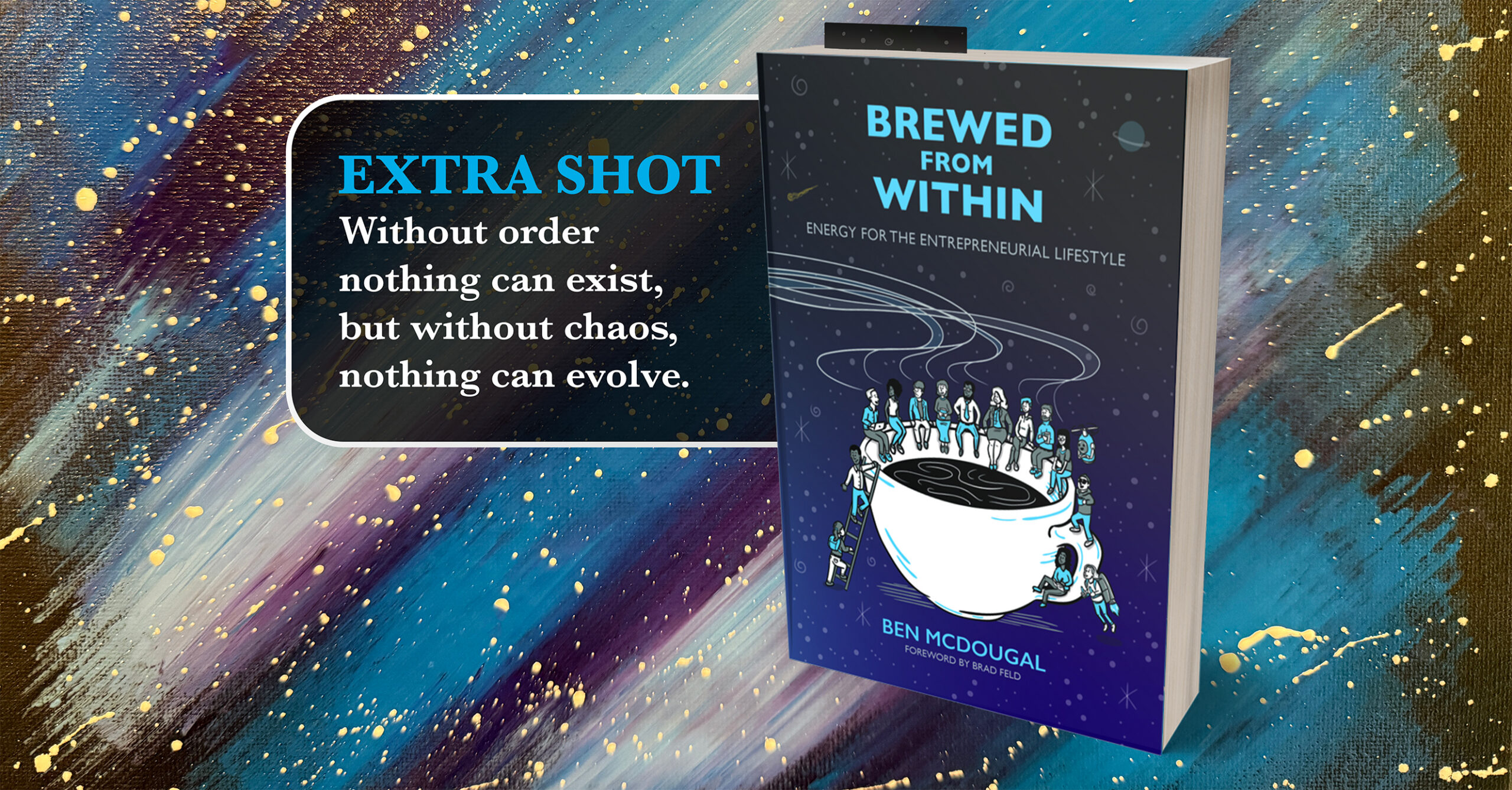
Extra Shot

“Getting rich is about knowing what to do, who to do it with, and when to do it. It is much more about understanding than purely hard work.” –Naval Ravikant

Like the opening analogy reminds us, converting a slope of work from linear to exponential is not done all at once. The Headline Trap is distracting and we often assume it takes luck, but we make our own luck with every action.

As we leverage our own community-driven exploration, we uncover ways to earn more with our mind, not our time. The farther we separate time and money, the less we rent our most precious resources. Each time we find that next gear, the system unfolds and the rising slope of your impact, personal bandwidth, sense of peace, and happiness is set free to rapidly ascend.

By Ben McDougal, ago

39

It’s my 39th birthday!

I love using birthdays to reflect on what was learned, trying something new, or appreciating memorable moments from the past year. I also like to craft recaps (e.g. 33rd birthday / 2014 recap) for my future self to read. This year, YDNTB is quite the relic to always remember this moment in my life so instead of a personal narrative highlighting the past, let’s lean into the future by exploring the idea of retirement.

Extra Shot

“Retirement is when you stop sacrificing today for an imaginary tomorrow.” –Naval

I always told myself I wanted to retire in my thirties. Financial advisors are quick to remind us that the golden years of middle class leisure will require around $1 million in savings, but perhaps there’s more to this story.

Yes, the traditional path to retirement is all about earning enough money to cover the burn rate of your life. A second option to realizing financial freedom is to reduce your burn rate to zero, but not many people are cut out to be a monk.

I prefer early retirement in the form of leveraging what you love to do. Similar to what I describe as Career Nirvana, peaceful satisfaction can be achieved when you do something you love so much that it’s not about the money anymore. This doesn’t mean the work stops or that the responsibilities of life fade away. It’s quite the opposite, as more opportunities tend to present themselves when you figure out what you’re best at and map that to what society wants. This forges an abundance of innovative energy you can’t buy. As you collaborate with those who feed off this energy, you soon realize that nobody can compete with being you.

As you build towards such transcendence and realize that a neon future awaits us all, I’ll close with a toast. May the best of your todays be the worst of your tomorrows. Cheers!

Extra Shot

Good, better, best;
Never let it rest,
‘Til your good is better,
And your better is best.

By Ben McDougal, ago

Collide

Education can be less about compliance and more about painting a reality for indispensable students who do not need permission to color outside the lines, build without a map, embrace wonderment, and never fear the beauty of their own inextinguishable light.

Extra Shot

Students do not need permission to build on the timeline of now.

Whether it’s rethinking career day in elementary school, high school students flexing innovative muscles earlier, or college students earning a degree while also building a profitable business, the education system is becoming more than just a machine to produce factory workers. Students must still learn to play the game of school, but it’s not all about following rules, good grades, and earning that expensive piece of paper to work for someone else.

Students become leaders when an educational system welcomes the weird. No matter the age, curiosity and initiative are required to go beyond the status quo, but that happens more often when students are introduced to the opportunities of an entrepreneurial lifestyle.

The future of education is providing a safe space to learn how to learn. To explore knowledge, different cultures, social interactions, and activities that feel like play to us but look like work to others. Along with activating students in the classroom, invaluable insights await educators who prioritize activity outside the walls of a school. Participating within a startup community is often seen as extra effort for educators already asked to do so much, but there is ease in leveraging community members eager to share experiential wisdom in the wild as well as back inside the classroom.

As we keep things interesting by colliding students with founders and intrapreneurs, educational organizations infuse recurring energy into startup communities and entrepreneurial ecosystems. Ongoing collaboration is required between educators and community builders, but as lines blur between classrooms and community, students are introduced to reality.

When students are set free to paint their own future in ways that transcend a class, school feels less like day care. A thirst for conformity can be replaced with curricula that rewards pure wonder and life-long learning for students of all ages.

Brewed From Within
#55 📖 Leadership

By Ben McDougal, ago

Threaded Thoughts

Let’s talk tactics. Here is a simple technique to absorb, translate, and share the (audio)books you read.

Start with one tweet, then reply to that same tweet over and over again. The result is a thread (sometimes called a tweetstorm) that combines your key takeaways and gives you a single link to share your collective thoughts.

Here are a few examples…
Tribes – Seth Godin
We Are All Weird – Seth Godin
This Is Marketing – Seth Godin
Free Prize Inside – Seth Godin (ideal for intrapreneurs)
The Icarus Deception – Seth Godin (great for students)
Startup Community Way – Brad Feld & Ian Hathaway
Think Like A Freak – Steven Levitt & Stephen Dubner
The Hard Things About Hard Things – Ben Horowitz
Angel – Jason Calacanis
Think Again – Adam Grant
Entrepreneurs’ Weekly Nietzsche – Dave Jilk & Brad Feld
The Almanack of Naval Revikant
BONUS THREAD – Big Thoughts in Little Tweets

Why is this helpful? If you’re thirsty to learn from (audio)books, it’s easy to feel overwhelmed as authors bombard you with knowledge. Passively enjoying (audio)books is fine, but this organizational exercise forces you to slow down, which reduces the numbing effect. In short, crafting concise tweets that are all connected forces you to feel the experience.

Another benefit to sharing threaded thoughts, is that each public post draws out more focused contemplation. I’ve found this technique makes me think deeper, use words carefully, and has actually made me a better writer. Such value is compounded when the entire thread can be retrieved with one link.

Lastly, this exercise generates accountability. When this exercise becomes a habit, you spend extra time with that first tweet, knowing it may become be the foundation for a neat collection of thoughts. As the thread expands, you’ll feel momentum that keeps you listening/reading. If progress stalls, the lingering sense of an incomplete project may bring you back to finish the literary journey. If you must get through something quickly, just craft a smaller thread, but include one post that lists the page numbers for areas that caught your attention. Such a hack is still better than nothing.

To be clear, this exercise is not about pirating content or echoing knowledge like a parrot that sounds smart. It’s about sharing a meaning narrative while leaning into what resonates for you, knowing you’re creating a relic for others (including your future self) to enjoy as well.

Extra Shot

Tag me on Twitter if you try this! I’d love to follow along and will definitely chime in if you experiment using You Don’t Need This Book.

By Ben McDougal, ago