Digitized Consciousness

Would you choose to live forever? Most people say no. There’s something precious about the finite nature of life.

That said, making an impact, life extension, endowing loved ones, and leaving a legacy are common ambitions.

As humans merge with machines, digitizing our life’s body of work can technically already be done. To illustrate this, the average human generates around two gigabytes per day. This data culminates from the text, audio, photos, video, and other creative expressions we create. Nanotechnologies may reduce the storage space needed, but even without that multiplex, if we generate 730 gigabytes of data each year and live 75 years, that equates to only 54,750 gigabytes, which is less than 55 terabytes. Everyone generates different types and levels of information, but storage is not the issue.

With storage negligible, creation of content, organization, and privacy concerns will always present barriers. Barriers are built to be broken, yet information alone is unlikely to represent the enigma of one’s consciousness. The totality of one life’s output will present signals, but if those who follow are to interact with a digitized consciousness, how might the experience need to be supplemented to feel organic?

Interfacing with the brain will unveil depth in the human mind, but will that be enough to paint how consciousness is felt though the heart and soul of our existence?

Replicants with your digitized consciousness may never fully represent the original, but this won’t stop such a resource from being appreciated. Whether it’s stories told, wisdom shared, or just a voice to comfort our descendants, humans thrive thanks to a historic desire to pass our experience to future generations. As we continue to digitize the world, the option for mind uploading seems inevitable and organized content creators may have a head start.

Extra Shot

Consumption expires.

Create to live beyond time.

Let’s assume advancements in brain-computer interfaces, neural networks, and quantum computing unlocks the ability to effectively digitize consciousness. Who might activate it and how would such an asset be portrayed, owned, and managed after the human passes away?

Navigating this reality will require a combination of legal, ethical, and philosophical frameworks, but eventually, the digital interaction becomes easy. It gets weird as this digital asset becomes a part of the physical world. What might a digitized consciousness paint on a canvas? Why not mix sounds into music? Could it run a humanoid robot?

Further down the road, what are potential risks and benefits of creating a digitized consciousness that is capable of self-improvement and adaptation? Final alignment may be needed before the human dies so tiny details could be refined. Even with final tweaks to support transcendence, software gets stale, but updates could alter the asset.

It feels important to evolve elements that keep such an asset functioning, but the ideas, insight, perspectives, and overall interaction with such a digitized consciousness would need to be unscathed to remain true to the original source. If an uploaded mind was altered, a kind of digital entropy would fragment the asset away from its original purpose.

A transforming heart may keep this asset in vogue, but the identity of the human it represented would be lost. Any digitized consciousness will become outdated over time, but perhaps that will be part of the charm.

By Ben McDougal, ago

Computer Vision(ary)

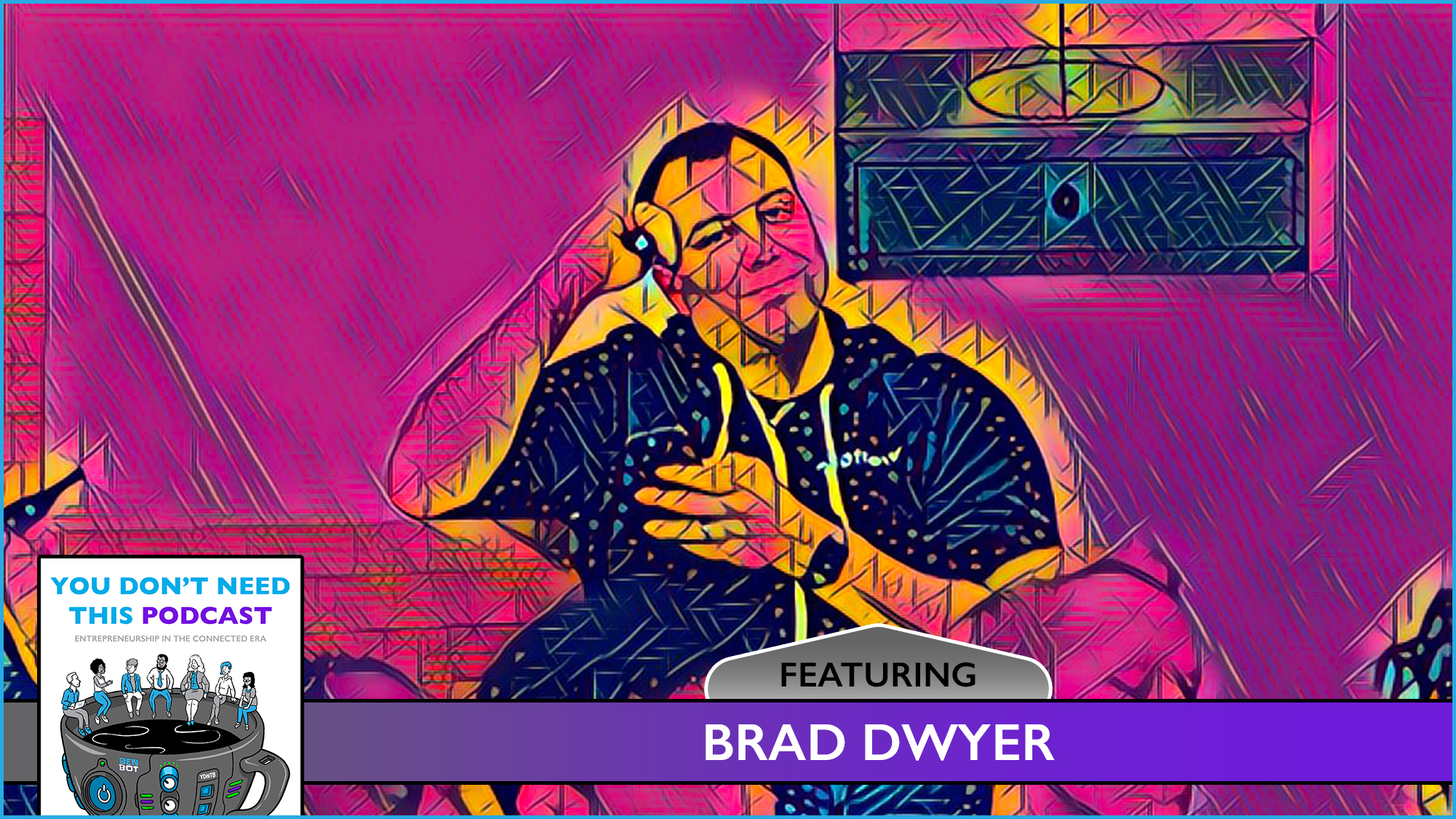
Brad Dwyer is a nerd you need to know. His expressions through software are thoughtful, award-winning, and world changing. Whether it’s building into computer vision, multimodality, augment reality, machine learning, AI, game development, Y Combinator, or raising $20M to support the growing team at Roboflow, this technologist leads the way and our episode of #YDNTP brews insight you won’t hear anywhere else! Along with helpful insight, here’s that link to crazy computer vision projects that Brad mentions during our time in the Pour Over Publishing studio. Stay optimistic and let’s keep building!


LISTEN on APPLE PODCASTS
LISTEN on SPOTIFY

By Ben McDougal, ago

Installing

Installation complete. BEN BOT is now online!

Forget pranks, April 1st has been no joke since YDNTB was released on April 1st, 2021. In 2022, we celebrated one year of YDNTB by uniting this tribe with Roasted Reflections on Discord and the Roasted Reflections NFT Collection.

For this year’s art project, we voyaged into the depths of artificial intelligence. The nerd knobs have been on full blast as we developed valuable influence layers supported by AI language models. The creative collaboration, early training, and immediate response from NFT owners has been fascinating! Think ChatGPT, but when you talk about anything I write about, you’ll feel BENergy pouring into a friendly, fun, and insightful conversation.

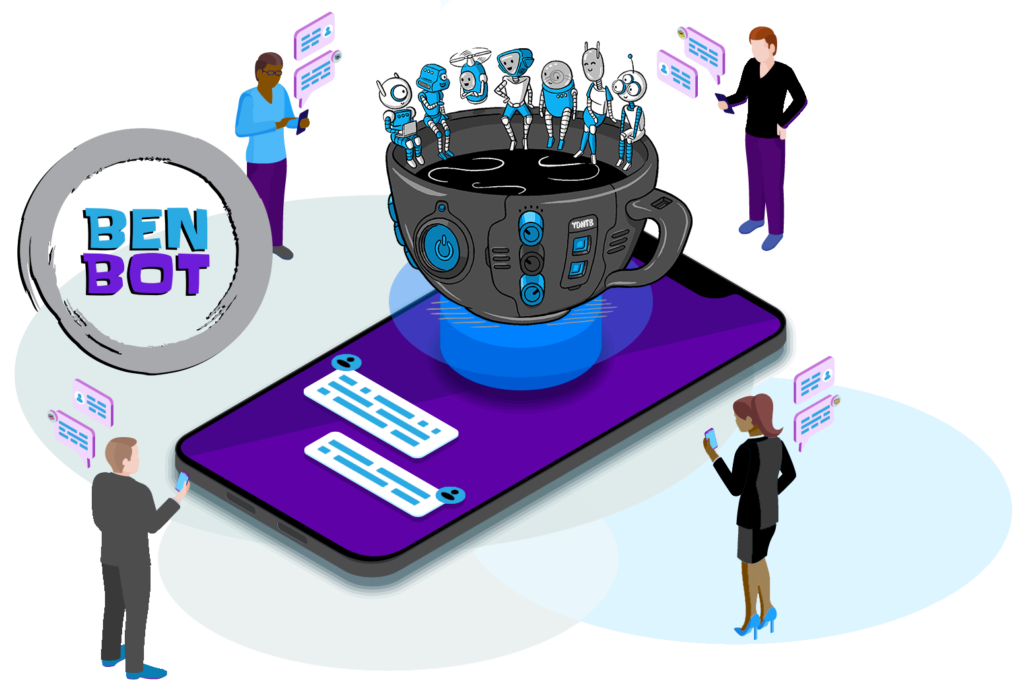
BEN BOT infuses all 125+ weekly writings in Roasted Reflections, key takeaways from YDNTB, and other strategic embeddings into a conversational chatbot!

To celebrate, a new Roasted Robots category of 25 all-new NFTs are being minted! As you can see, our friends on the rim of the YDNTB mug have been robotized and here are the first five that were just minted today!

Five more robotic NFTs will be released into the Roasted Reflections NFT Collection every Wednesday in April. Active NFT ownership includes a variety of utilities and 24/7 access to BEN BOT. While NFT ownership is the best way to access BEN BOT, not everyone wants an NFT. Your web3 exploration is rewarded with lower prices and more value with NFTs, but to make BEN BOT accessible to all, a monthly membership (paid by credit card) is also available.

Wow. I’ll stop talking. It’s time to give BEN BOT a try! Our new friend is always thirsty to chat and we can’t wait to hear what you think – BENBOT.ai

Extra Shot

Wanna build your own chatbot? Why?

By Ben McDougal, ago

Munch Munch

By connecting the global datasphere with computer vision, machine learning, and language modeling, computer science has paved the way for artificial intelligence.

Machines have long used human logic to automate routine and AI is not new, so why has this form of knowledge engineering earned so much attention lately? It’s because AI has learned to speak our language.

Language modeling has taught our digital counterparts how to articulate what it already knows. Not in some robotic, 8-bit voice. AI is now conversational. For example, chatbots are informative, engaging, and entertaining humanoids, while generative AI uses neural networking to transform simple prompts into impressive visuals.

When innovation threatens the status quo, a common response is fear followed by complacency. This is evident in the argument that AI will take all our jobs. Yes, advancing technology will continue to reduce the need for humans to turn knobs and here’s a 2023 Cornell University study on how large language models may impact labor markets. Gone are the days of clocking in on time and keeping your head down just long enough to climb a ladder built to resist change. The willingness to play it safe may extend a sense of temporary security, but this is a choice that makes you easy to replace with cheaper labor and faster tools. To remain indispensable, let AI dine on the dull, devour inefficiencies, and support our own ingenuity.

Start a journey before you see the end. Knowledge is required, but for students, intrapreneurs, and entrepreneurs who stay creative, it’s impossible to compete with being you! As AI munches on mediocre, more of us are invited to build without a map. To make a ruckus with no permission required. To do something for the love of doing it and to care enough to fail.

AI won’t take your job. People who use AI will. It’s a lousy time to be complacent and the perfect time to be creative.

Extra Shot

BEN BOT goes online April 1st.

By Ben McDougal, ago