Feedback is Data

Customer discovery paves the path to profitability.

This really is the work for entrepreneurs starting a new business. Customer discovery requires trust in your early moves, obsessive curiosity, patience, thick skin, humility, an interest in being wrong, discernment, and a willingness to adapt. No problem, right?

For many entrepreneurs, impartial feedback can be scary. Customer discovery puts ideas on the hook, and colliding new conversations may contradict past assumptions. That’s the point! Interacting with the market you seek to serve allows us to learn from no in a way that gets us to yes.

As you collaborate with those who criticize what you’re building, learn why naysayers debate your hypotheses. Be humble. Either attack the massive lift to change the product and even the target customer or make your concept more compelling to win over those who care.

The more you learn from others, the more you’ll recognize supply and be able to meet true demand. Collecting real-world data is human and intellectual capital that attracts more network and financial capital. 

Beyond the psychology of it all, customer discovery can feel like a drag because it is often a protracted process. The time commitment is real. This market exploration can be slow at first and may seem less necessary as signals of traction emerge. The potential need to rethink ideas makes feedback scary too. As always, if the entrepreneurial lifestyle was easy, career nirvana would not be so fleeting. Knowing this, we can seek honest feedback that strengthens our value proposition to eventually go further in the right direction.

When learning from the perspective of others, it’s imperative to remember that feedback is data.

Collect, organize, and examine data from feedback like a scientist. Inference is more informed with data. Decisions that are made become more in tune with reality as you continue to collect and learn with data.

As you translate decisions into action, you must also find your own way. Even with good intent, people who provide you with feedback are doing so based on their experience. The experience of others is based on their own past, and no feedback is likely to fully harmonize with your vision. There are many ways to navigate the idea maze. Gather feedback like power-ups in a video game and use diversified data to guide your quest toward product-market fit.

Brewed From Within
#19 📖 Entrepreneurship

By Ben McDougal, ago

Measured Twice

Inspired by a remarkable Startup Weekend DSM, the winter freeze, this build now vibe from Balaji, and land development leaders coming together to share stories with this episode’s featured guest!

Ryan Glick continues building residential land development tools, such as lot inventory management, through Groov. We also love The Land Development Podcast with this fellow translator of nerd to normal!

For EP34 of You Don’t Need This Podcast, grab a hammer and cut once. Ben, Ryan, and BEN BOT talk about home building and technology in residential land development. After the break, Ben also riffs on his creative, multimedia, “4th Path” into real estate and the construction industry.

Dig in as we close with insight on earning trust in a new market and jam on how it’s never too late to keep building.

Enjoy this Episode
YDNTP on APPLE PODCASTS
YDNTP on SPOTIFY

By Ben McDougal, ago

Borderless

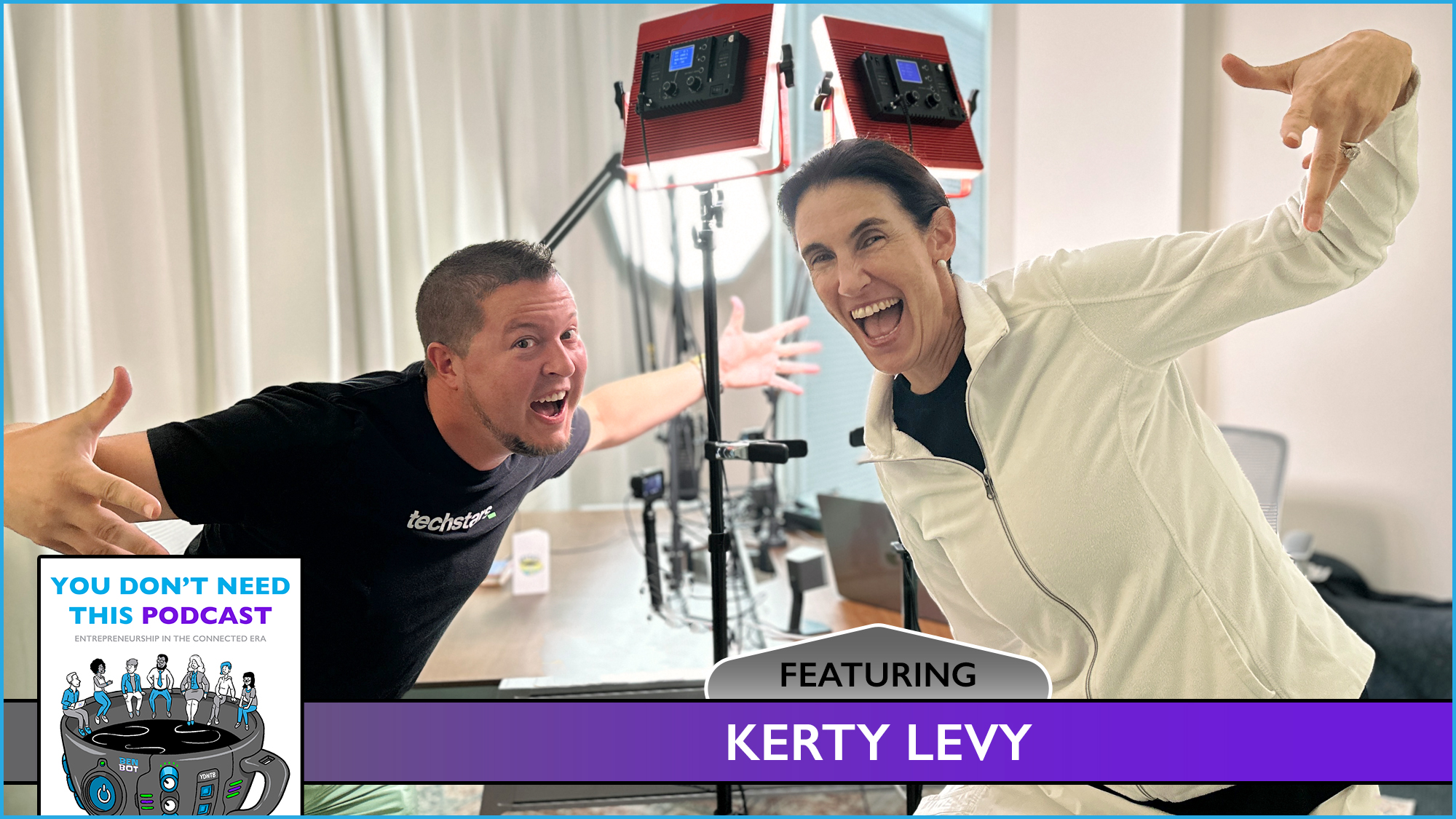
Kerty Levy is an advisor, investor, and friend who helps entrepreneurs succeed. Kerty and Ben collaborated through Techstars, so we grab the morning oars to first dance with how smooth is fast.

Together, we then glide through the wild experience of accelerators. The value is vast as we continue by discussing why to think big, building a team, ecosystem exploration, founder-market fit, OKRs, KPIs, financial modeling, mentor madness with a #GiveFirst mindset, raising venture capital, perfecting a pitch, quick thoughts on web3, opportunities of a Startup Weekend, and the special bond that is Techstars for life.

YDNTP on APPLE PODCASTS
YDNTP on SPOTIFY

By Ben McDougal, ago

Monster Trucks

Danny O’Halloran defines founder-market-fit and Jake Miyazaki is a data scientist. These high school friends, turned roommates, and now co-founders are building MetaFuel. This team worked through the Techstars Iowa Accelerator in 2022. Today, they deliver a turnkey smart fleet platform that plugs into vehicle telematic systems. The MetaFuel Card is their latest innovation, which helps small trucking companies automate IFTA compliance, identify operational inefficiencies, and drive uptime.

Meet Me Half Way as we crush this episode in our monster truck, with a thoughtful discussion around technology in trucking, web3 ideas for a web2 industry, automated transportation, and much more.

LISTEN on APPLE PODCASTS
LISTEN on SPOTIFY

By Ben McDougal, ago

Stealth Mode

We’re all guilty of thinking our idea is better than it is.

Stealth mode is when entrepreneurs wait to start telling their story. Staying quiet about a new project often starts with good intentions. Curiosity and a bit of mystery can generate hype, especially if you’ve been successful in the past. Too often however, people hold onto silence because they fear feedback or that what they’re building may not work in the wild.

To avoid failure, the choice to continue building in stealth mode keeps everything safely in the workshop. This may be wise if the project needs work or when the competition are known pirates, but there are few ideas that require much secrecy. With 8 billion humans on earth, your idea is probably not unique and when it comes to shipping your art, it all comes down to execution. Survey the market and research existing patents to help guide decision making, but stealth mode will soon lag toward being an excuse to procrastinate. Even if you have something big, it can be deflated without the open air of honest feedback. Stealth mode may sound nice, but silence, pride, and fear can devolve into a suffocating sinkhole.

Extra Shot

Winners are good at losing.

If you decide to build in stealth mode, give yourself firm timelines. Determine if intellectual property needs legal protection. If you need to keep certain aspects of the project under wraps, do so while still allowing the idea to breathe. Stealth mode only works when it results in a stronger story. It’s hard to know how strong your story is unless you share it.

Yes, we can only be new once, but the leverage of a startup is an ability to quickly evolve. As your team connects with the true market through strategic, creative, and generous execution, humility paired with persistence will pay off in the form of confidence. Even if something fails, it’ll be more like a pit stop on your path toward product-market fit. Be a scientist. Experiment thoughtfully, iterate often, and invite doubt knowing that if you’re wrong, it can activate a signal that guides the project toward a more sustainable future.

Be careful with the comfort of stealth mode. Those who build in too much silence can go quiet themselves.

By Ben McDougal, ago