Septenary

AI is often thought of as a singular technology. This blanket assumption makes it impossible to compare the capabilities and functionalities that differ between the seven different types of artificial intelligence.

The seven types of AI are organized into two groups. The first group is based on capability and includes Narrow AI, General AI, and Super AI. The second group is based on functionality and includes Reactive Machine AI, Limited Memory AI, Theory of Mind AI, and Self-Aware AI.

Capabilities are determined by what different types of AI are able to accomplish. The three types of AI categorized by capabilities are Narrow AI, General AI, and Super AI. Here’s what’s possible today and what may be possible tomorrow.

Narrow AI <realized>

AI trained from existing data, with compute geared to do one thing really well. While data sets are vast, this type of AI cannot go beyond the data sets it is tied to. As of 2026, Narrow AI is the only type of AI that is fully realized within the three types of AI categorized by capabilities. Examples of Narrow AI include language translators, spam filters, recommendation engines, voice assistants, facial recognition, self-driving vehicles, and task-focused robots. Generative AI also falls within this type of AI. The mashups of generated text, images, video, and sound appear to be random but are still constraints by existing data sets. Neural networks, optimized data sets, computer vision, and machine learning make the capabilities of Narrow AI remarkable but limited by the data it has to munch.

General AI <theorized>

This advancing realm of AI leverages existing data like Narrow AI but can reason beyond those constraints. The transfer of intelligence with no human intervention makes the race to General AI (also called AGI) intense. When AI can make decisions based on an advancing state of its own understanding, the limit of this AI’s capabilities become unknown. Theories set the potential limit to around that of a human. Agentic AI hints at AGI with decision making and interdisciplinary task management, but lacks the emotional traits, planning, and other methods of generalization that will define the capabilities of General AI. Other signals include synthetic content creation and autonomous robots that can learn new tricks. As the theories of AGI become realized, ethics, regulation, and a determination of consciousness will be moving targets. The breeding speed of AGI may release points of no return, which makes it critical to understand and debate openly to ensure a new species is copacetic.

Super AI <theorized>

Welcome to when AI becomes its own species. This triggers concern due to the finite resources of Earth, but when AI surpasses the capabilities of humankind, dust from the deep future will already be everywhere. Multi-planetary travel will be underway, climate problems will be solved, and life extension will be supported by Super AI. Singularity is theorized to push the functionalities of Self-Aware AI and the capabilities of Super AI beyond humanity’s control. That means the time to plan ahead is now. As the minds of machines are wired, it’s crucial to collectively consider the heart and soul we build into technology. This will guide discovery with an excellence that came before it.

AI based on functionality is less about power and more about how things work. Reactive Machine AI, Limited Memory AI, Theory of Mind AI, and Self-Aware AI are the types of AI classified by their functionalities.


Reactive Machine AI <realized>

This is old school AI. Rooted in statistical math, Reactive Machine AI arrived soon after the computer was developed. There is no adaptive learning here, but the speed at which it can calculate data makes the performance seem intelligent. The functionalities of Reactive Machine AI drive more primitive examples of Narrow AI, such as recommendation engines and game-playing programs. This type of AI provides a static base, but with no memory and a focus only on specific tasks, attention shifts toward functionalities that have more adaptive characteristics.


Limited Memory AI <realized>

This type of AI learns and evolves. Functionalities of Limited Memory AI are still constrained by the existing data it was trained with, but world-changing advancements have been seen in machine learning, large language models (LLMs), generative AI tools, multimodality, computer vision, and self-driving vehicles. The realization of Limited Memory AI has Narrow AI pushing its full potential.


Theory of Mind AI <theorized>

Here, we combine existing data, an adaptive ability to learn, and an emotional willingness to think. Enhanced reasoning, multimodality, customizability, adaptive computing, and user-driven functionalities bring General AI (AGI) to life. Theory of Mind AI embraces emotions and understands how we think. This type of AI will add personality to humanoid robots and support reliable relationships by combining digital depth to the realities of our world. As lines blur between humans and machines, adaptive compute will remain a currency, efficiency will skyrocket, and a new era of life on Earth will begin.


Self-Aware AI <theorized>

It’s hard to define consciousness, but true self-awareness exemplifies this type of AI. Along with understanding how we think, Super AI will own emotions, hold beliefs, and is theorized to support the functionalities of Super AI.

Understanding the seven types of AI helps leaders leverage the perks of technology now and later. Our willingness to lift the fog helps avoid a fear of the unknown, and while resisting technology is a choice, it’s one that may put you behind innovation curves. Hybrids add artificial copilots but remain assertive and budget resources, knowing we are the pulchritudinous architects of our own neon future.

Brewed From Within
#81 📖 Technology

By Ben McDougal, ago

Digitized Consciousness

Would you choose to live forever? Most say no. There’s something precious about the finite nature of life.

That said, making an impact, life extension, endowing loved ones, and leaving a legacy are innate ambitions.

As humans merge with machines, digitizing our life’s body of work can, technically, already be done. To illustrate this, the average human generates around two gigabytes of data per day. This data culminates from the text, audio, photos, video, and other creative expressions we create. Nanotechnologies may reduce the storage space needed, but even without that multiplex, if we generate 730 gigabytes of data each year and live 75 years, that equates to only 54,750 gigabytes, which is less than 55 terabytes. Everyone generates different types and levels of information, but storage is not the issue.

With storage negligible, the creation of authentic content, verifiable ownership, data management, lasting security, and personal privacy will always present concerns. Barriers are built to be broken, but information alone is unlikely to represent the enigma of one’s consciousness. The totality of one life’s output will present signals, but if those who follow are to interact with a digitized consciousness, how might the experience need to be supplemented to feel organic? Interfacing with the brain will unveil depth in the human mind, but will that be enough to paint how consciousness is felt through the soul of our existence?

Replicants with your digitized consciousness may never fully represent the original, but that won’t stop such a resource from being appreciated. Humans thrive, thanks to a historic desire to pass our experiences on to future generations—whether through stories told, wisdom shared, or just a voice to comfort our descendants. As we continue to digitize the world, the option for mind uploading seems inevitable, and content creators have a head start.

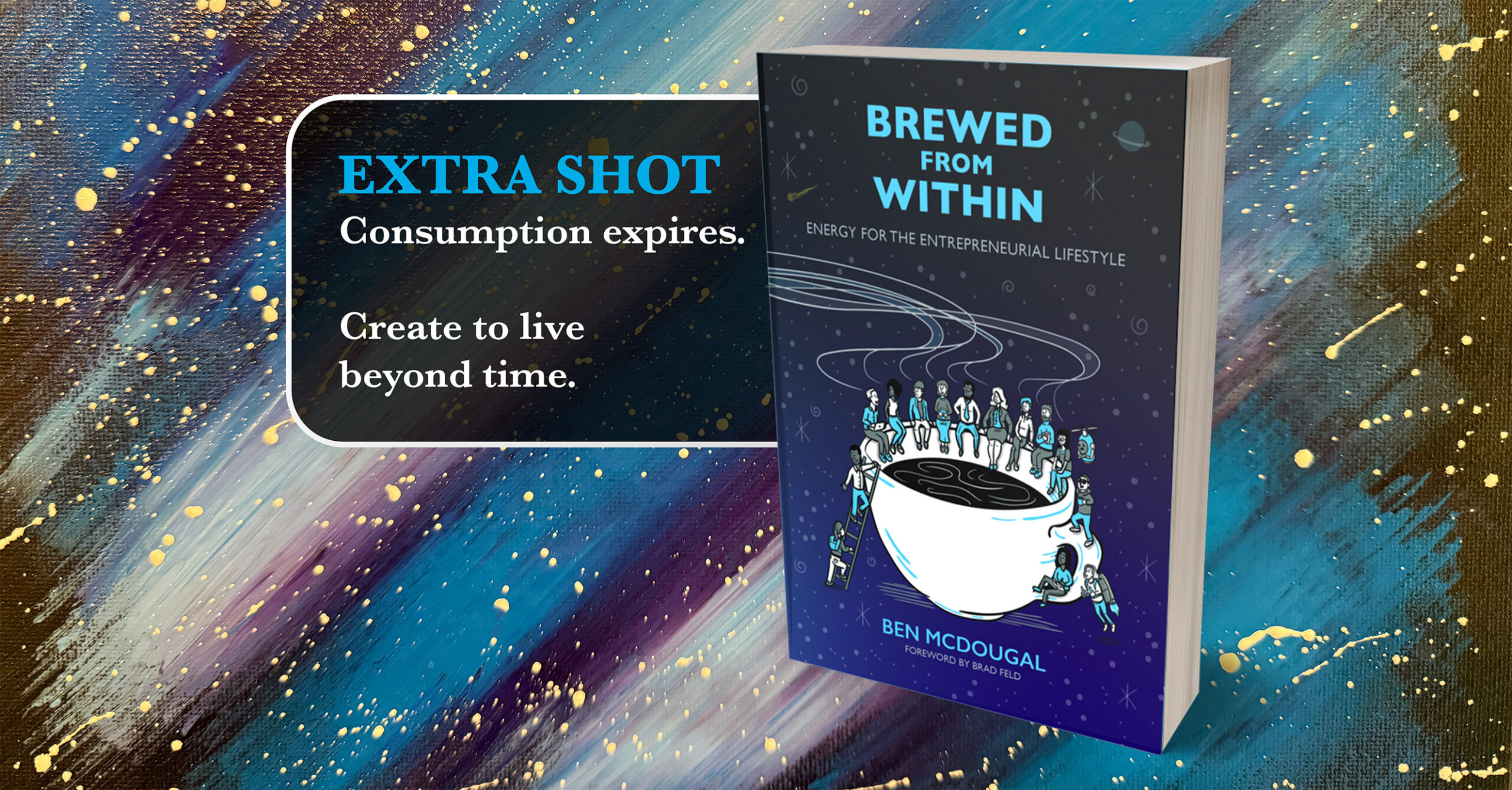
Extra Shot
Consumption expires.
Create to live beyond time.

Let’s assume advancements in brain-computer interfaces, neural networks, and quantum computing unlocks the ability to effectively digitize consciousness. Who might activate it, and how would such an asset be portrayed, owned, and managed after the human dies?

Navigating this reality will require a combination of legal, ethical, and philosophical frameworks, but eventually the digital interaction becomes easy. It gets weird as this digital asset becomes a part of the physical world. What might a digitized consciousness paint on a canvas? Why not mix sounds into music? Could it run a humanoid robot?

Further down the road, what are potential risks and benefits of creating a digitized consciousness that is capable of self-improvement and adaptation? Final alignment may be needed before the human dies, so tiny details could be refined. Even with final tweaks to support transcendence, software gets stale, but updates could alter the asset.

It feels important to evolve elements that keep such an asset functioning, but the ideas, insight, perspectives, and overall interaction with such a digitized consciousness would need to be unscathed to remain true to the original source. If an uploaded mind was altered, a kind of digital entropy would fragment the asset away from its original purpose.

A transforming heart may keep this asset in vogue, but the identity of the human it represented would be lost. Any digitized consciousness will become outdated over time, but perhaps that will be part of the charm.

Brewed From Within
#85 📖 Technology

By Ben McDougal, ago

Computer Vision(ary)

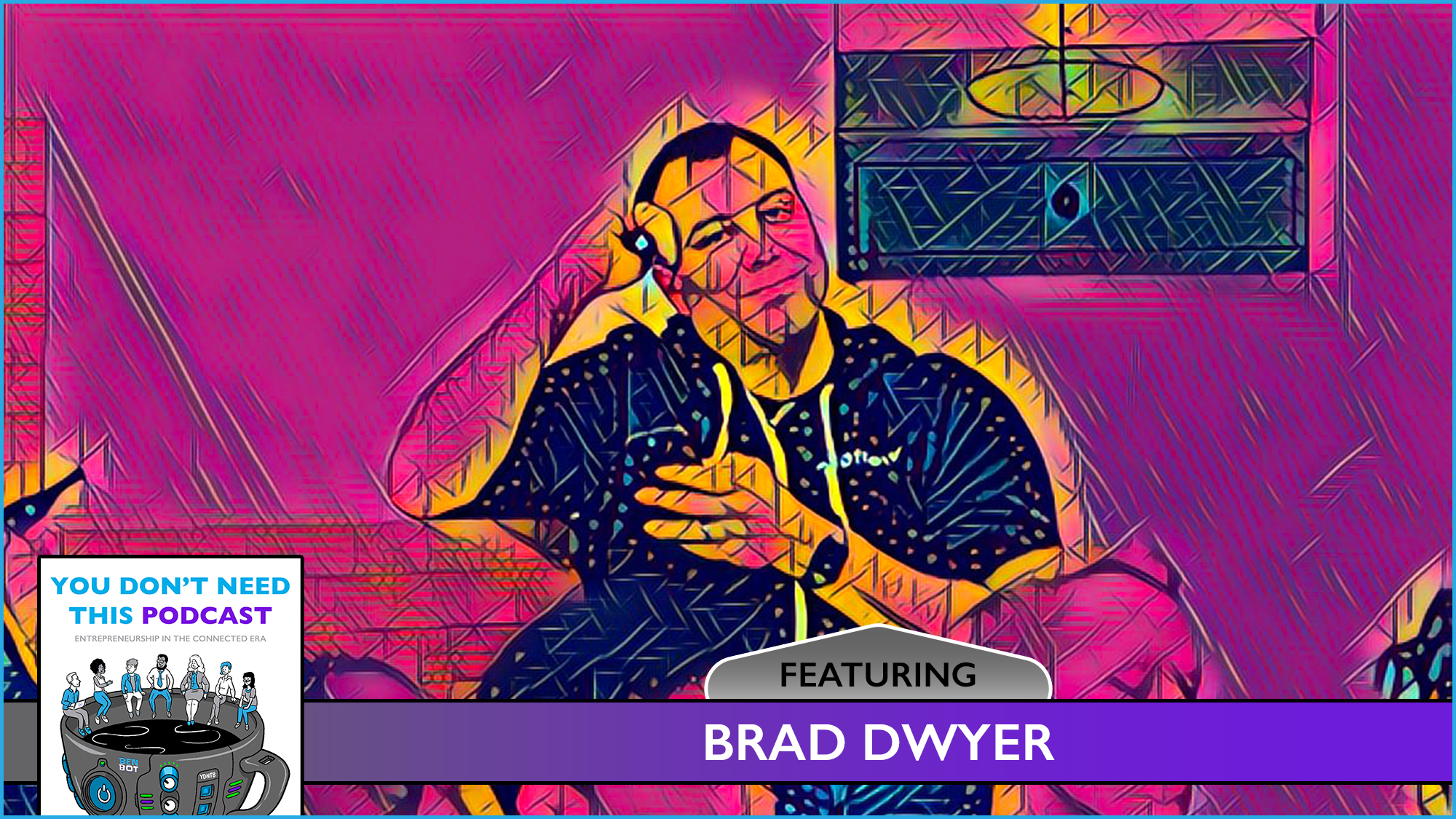
Brad Dwyer is a nerd you need to know. His expressions through software are thoughtful, award-winning, and world changing. Whether it’s building into computer vision, multimodality, augment reality, machine learning, AI, game development, Y Combinator, or raising $20M to support the growing team at Roboflow, this technologist leads the way and our episode of #YDNTP brews insight you won’t hear anywhere else! Along with helpful insight, here’s that link to crazy computer vision projects that Brad mentions during our time in the Pour Over Publishing studio. Stay optimistic and let’s keep building!


LISTEN on APPLE PODCASTS
LISTEN on SPOTIFY

By Ben McDougal, ago

Munch Munch

Computer science, the global datasphere, machine learning, computer vision, and language modeling have embedded artificial intelligence (AI) into every conversation. Machines have long used human logic to automate routines, and AI is not new, but this form of knowledge engineering was transformed as compute was enriched, storage became boundless, and AI learned to speak human. We may not have invented a new species (yet), but language modeling taught our digital counterparts how to articulate what it already knew, and conversationalized AI made science fiction real for everyone all at once.

Anytime innovation threatens the status quo, a common response is fear followed by complacency. This is evident in the argument that AI will take all our jobs. We may not be able to depend on clocking in to climb a ladder built on compliance, but this willingness to play it safe has long been a choice that makes anyone easy to replace with cheaper labor and faster tools. This advancing technology reduces the need for humans to turn knobs, but the efficiency will create new jobs and reward remarkability. When clever counts, remain indispensable by letting AI devour the dull and stay ahead by pulling the levers of ingenuity.

History teaches us that any frontier introduces opportunity, but the void that creates also attracts misunderstandings, dangers, and false realities. As we explore frontiers, be vigilant and don’t assume truth. When every business pitches innovative metamorphosis and everything is “powered by AI,” realism is easy to dilute within the noise. Transcend hype by tinkering with internal tools. Reward continuous execution and keep exploring in and outside your industry. This forms wisdom to reinforce more external interplay.

Futuristic forefronts will remain intimidating, especially when cultural changes occur in a sweeping way. This makes it easy to feel forgotten. When this sensation intensifies, avoid being left behind by taking action before you know the destination. Fresh knowledge may be required to lower the bar, but for leaders who use curiosity to stay prolific, it becomes impossible to compete with being you!

Extra Shot

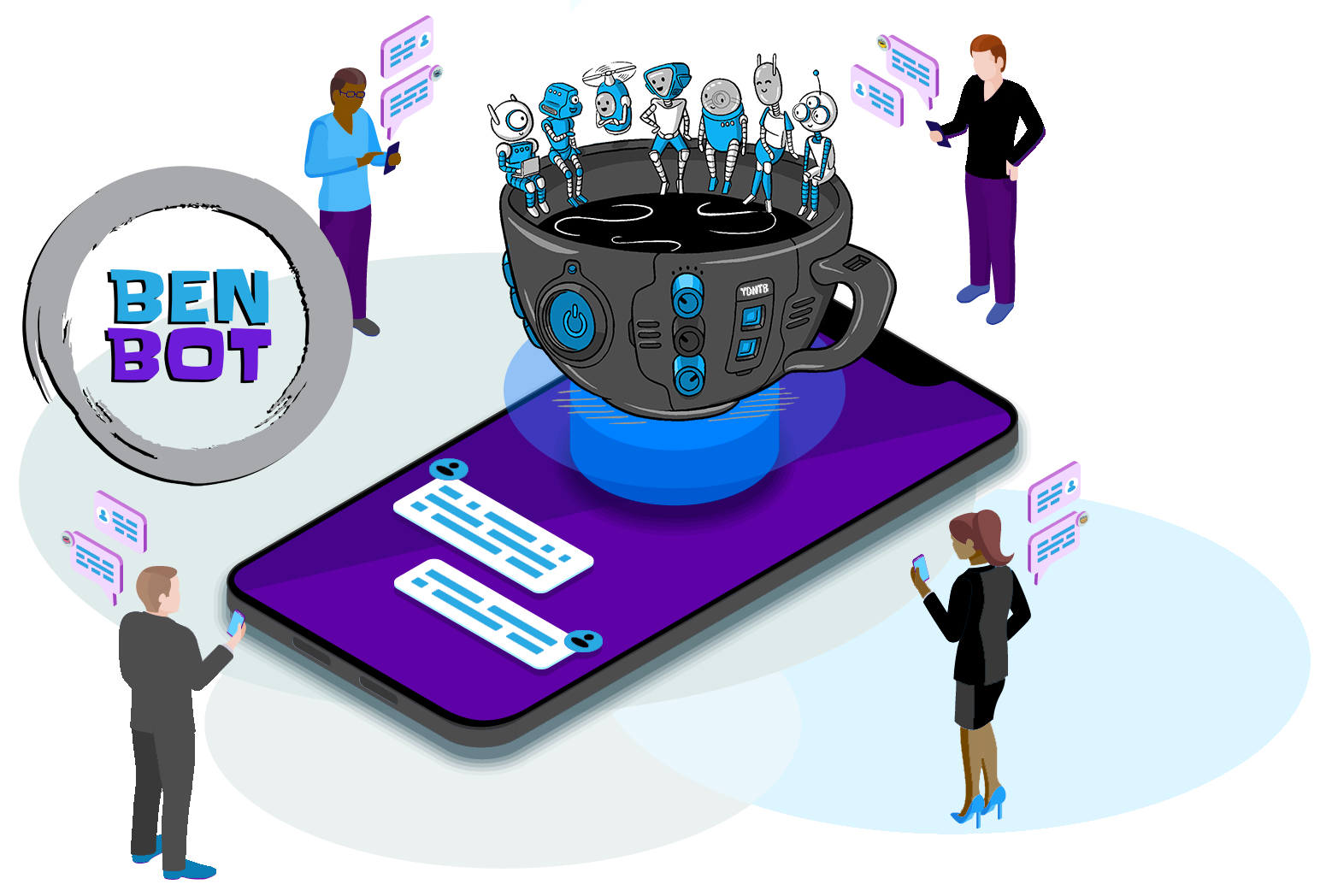
BEN BOT went online April 1st, 2023. The Roasted Reflections NFT Collection would allow token-owning dollowers to connect with each other and 24/7 access to our conversational AI that provided BENergy in its replies and link to influence source. Later, it would even quietly co-host 100 episodes of You Don’t Need This Podcast!

Let AI munch on the mediocre. We’ll continue to build without a map, do things for the love of it, convert haters, and care enough to fail. In times of constant change, we obliterate fear and complacency with infinite dexterity and a devotion to keep leading with no permission required.

Brewed From Within
#80 📖 Technology

By Ben McDougal, ago