There are endless early moves to help avoid pushing your idea toward someday. For instance, creative wireframing requires only a pencil. With a little visualized clarity in place, a couple exploratory conversations can also help.
First, meet with a mentor. This should feel like a supportive space but avoid rainbows and butterflies. Be realistic with exciting aspects of the idea, but also the challenges. As we learned in YDNTB, an early no is much better than a long, wrong yes. That said, playing it safe is easier than activating initiative, so don’t let early doubt slow you down. Instead, welcome it. Let curiosity uncover new understandings. Pivots are inevitable, and this exploration adds confidence as the original idea is tweaked toward product-market fit.
After transparently talking with that trusted mentor, the next meeting is with a potential customer. This will feel too early, but it’s not. You’re actually protecting your personal bandwidth by not swinging at a bad pitch too many times.
To optimize early innings, arrive prepared to ask good questions. Take notes and speak less so you can actively listen to how this potential early adopter is responding.
Are you building a pain killer or vitamin? Remember, feedback is data, and this is only one data point, but let this conversation infuse reality into the idea. Show up, stand out, follow up, stay connected, find a thoughtful way to accelerate their work, and then keep building.

The business model canvas is a tool to do so. While it’s impossible to predict the future, business model canvases help us continue to explore while curating a story that sells.
Most early business ideas don’t have a clear story. This can make it hard to know where to start within the business model canvas. While you can use this tool in endless ways, consider an approach that is less about the entire business and more about one story at a time. Instead of trying to boil the ocean, organizing a complete story for each customer segment creates a combination of more actionable insights.
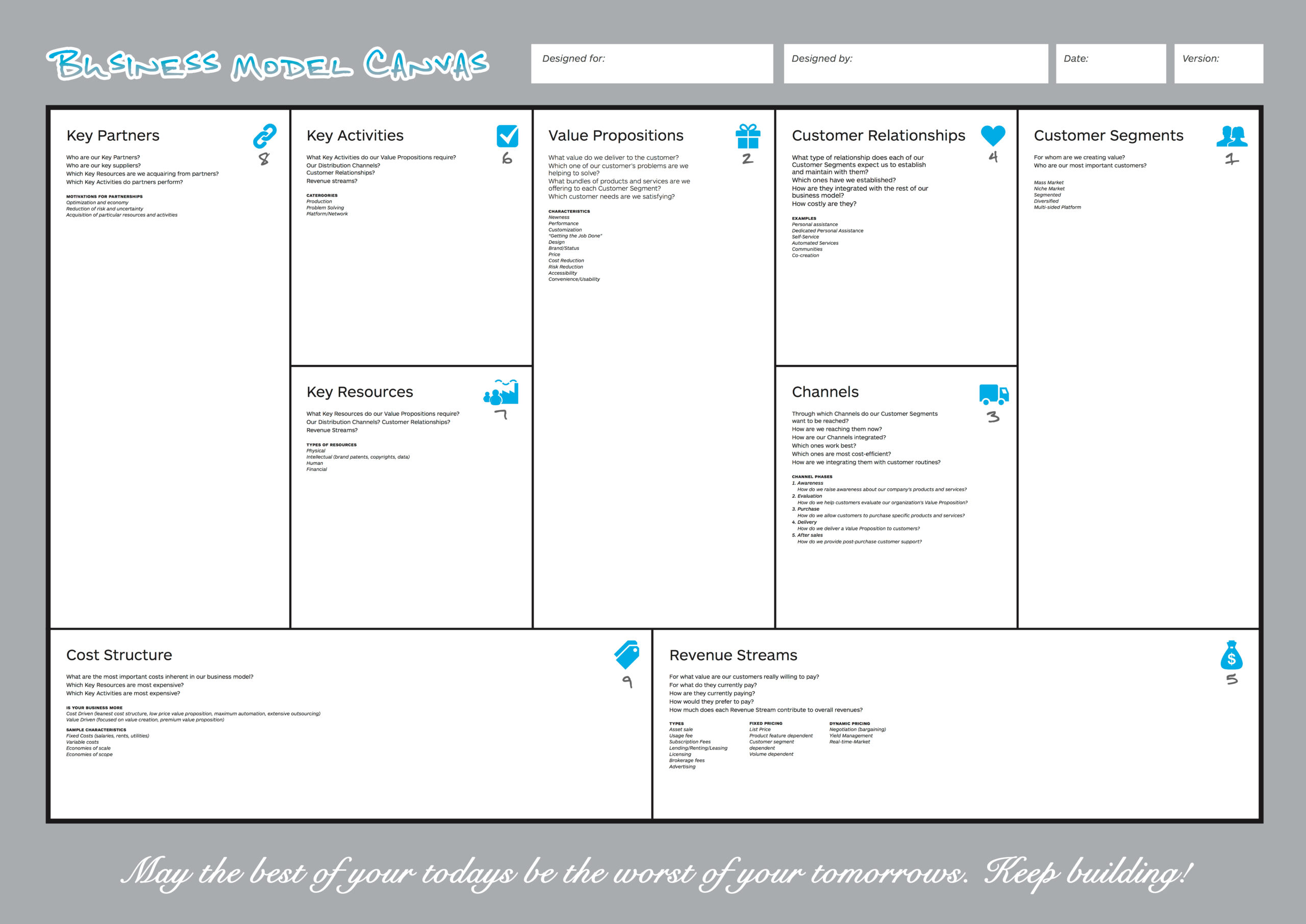
To give it a try, use this special business model canvas. The areas are numbered to curate canvases that each highlight a customer story:
- Customer Segments – Start with the details of a particular type of customer. The goal isn’t to complete the Customer Segments box. It’s starting a story to follow through the rest of the canvas. Now lean into the pain as you move from box to box and watch as your solution transforms into a story.
- Value Propositions – What benefit(s) can you deliver?
- Channels – Where can you connect with this customer?
- Customer Relationships – Who are you working with and how will you make this customer feel?
- Revenue Streams – Will financial income flow? How?
- Key Activities – What actions make the customer care?
- Key Resources – What is needed to keep building, and how might needs change to maintain momentum?
- Key Partners – Who helps to make this sustainable?
- Cost Structure – What costs go into activating this customer segment? How is pricing organized to support realistic profit margins that align with a financial model?
By telling the story of created value for one customer segment, hypotheses can be connected with context. Next, using a separate business model canvas, visualize more stories based on different customer segments.
With separate business model canvases for each customer segment, merge everything into one business model canvas. To stay organized, select different colors to use for each customer segment. As everything blends together, the prismatic rainbow maps roads to reality.