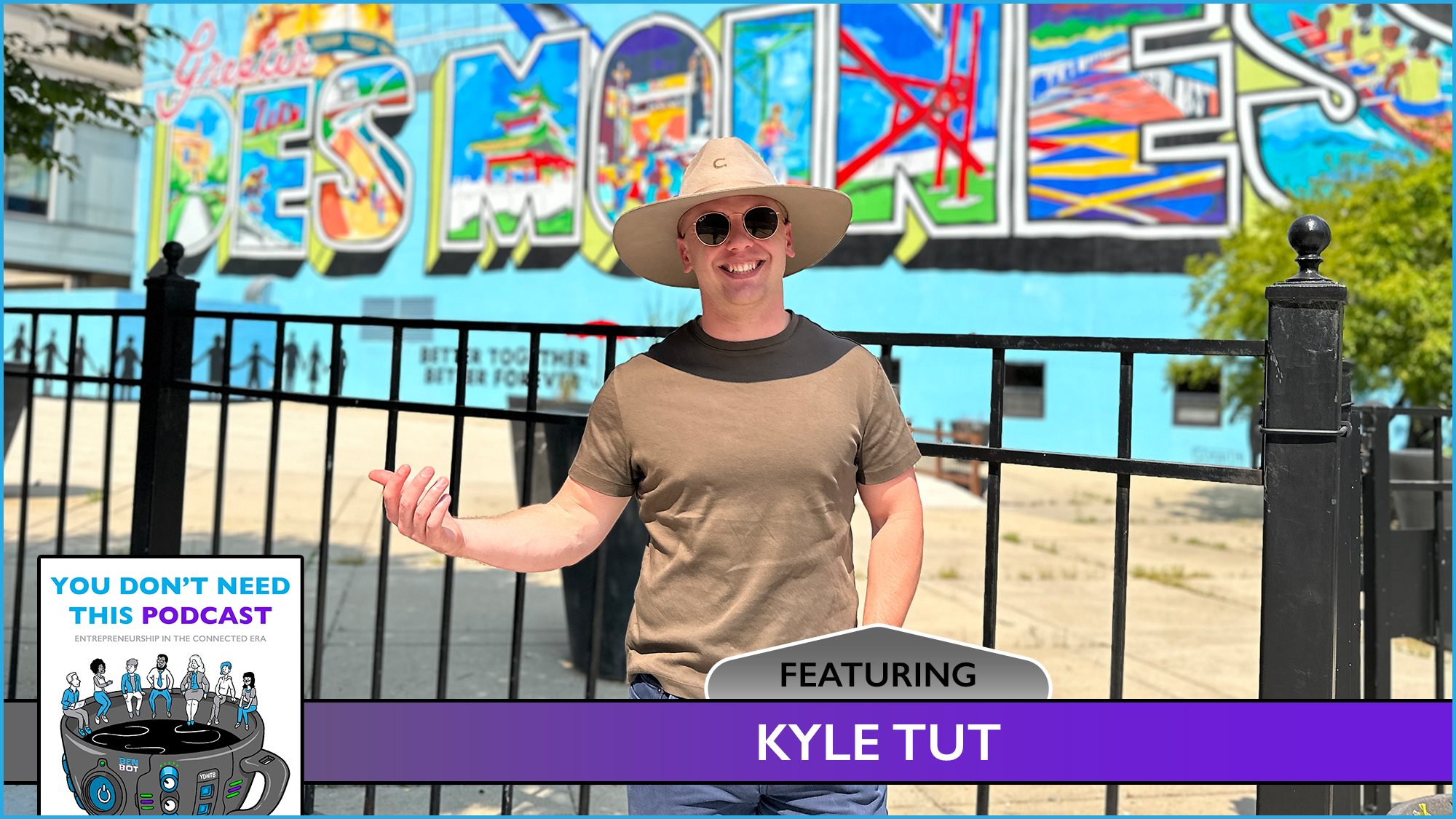
Kyle Tut is a cowboy who wrangles data on the frontiers of web3. The team at Pinata

Why do we insist on talking about the weather?
When there’s nothing else, atmospheric conditions offer an early bond between strangers.
It’s a safe way to avoid awkward silence. Weather is always changing and may be one of the easiest forms of small talk, but it’s just so shallow. Remain courteous to cordial strangers, but for anyone we already know, talk of the weather is weak and pointless. Now, there are meaningful topics like climate change, severe weather, and contingencies for planned activity, but sagacious leaders make it rain with thoughtful questions that draw out deeper discussions.
Breeze past the weather talk to respect people’s time, to show an interest in real progress, and to forecast more relevant bonds that last.
Brewed From Within
#43 📖 Leadership

Seasonal changes are revitalizing. The awakening of spring, the relaxation of summer, the release of fall, the refreshment of winter, and endless surprises keep us all bewildered. What if seasons apply to our work as well?
Agility awaits those who think of a job, specific roles, projects, experiments, side hustles, content creation, or entire business ventures more like creative seasons.
Quality takes time and consistency requires sacrifice, but seasons change. This reality makes decisions easier to make and action more accessible. Stress is typical when we care enough to ship something we’re proud of, and yet, every story ends. Embracing the seasonality of impermanence trims the fat of forever.
Extra Shot
Seasons change but never lack significance.
As we dance with new pieces of our own puzzle, milestones track progress and a beginner’s mindset keeps valiant optimism flowing. When a creative season begins to connect with the right audience at the right time, a nourishing sense of success emerges, which can extend that creative season. No matter how long a creative season lasts, prudent awareness along the way helps leaders remain harmonized with how time is invested, while the subtle lightness adds liberating vibes to keep an uncharted future interesting.
In the event energy begins to stall, as it often does, ensure you’ve done what’s needed to push through dips, gather feedback from diverse perspectives, avoid isolation, and be honest with if/how you want to continue navigating this quest. When these inevitable impasses arise, find your own version of unanimity, knowing that even if a creative season is held in abeyance, seasonality makes something you spent time with more natural to return to in the future.
If it’s time to leave one season behind, avoid potential regret by appreciating the progress made. Take time to reflect on learnings, put the old seasonal decorations away, and maintain relationships as you regenerate energy and lean into whatever season is next.
Brewed From Within
#62 📖 Leadership
DAOs are a revolutionary way for connected humans to organize, coordinate, and pool resources without the need for centralized authorities or intermediaries.
These community-led groups transparently establish operating agreements and manage a shared treasury. By leveraging smart contracts, all decisions made by a DAO (“Decentralized Autonomous Organization”) are recorded on an immutable blockchain and governance tokens are used for gathering consensus.
Extra Shot
This caffeinated contribution was written by Alex Myers. This certified futurist is a DAO Agility Coach at Aragon, a web3 platform for building DAOs on open-source infrastructure with governance plugins. Alex is also a web3dsm organizer who believes the more we teach, the more we learn.
There are over 11,000 DAO’s in operation, encompassing $11B+ in treasuries, varying widely in size, scope, and AUM (“assets under management”). All of DeFi utilizes DAOs to govern their treasuries, yet many are simply small groups of like-minded individuals who want to quickly gather, pool capital, and make decisions.
DAOs, like companies, come in many forms. Venture funds, investment groups, grant committees, philanthropy, media, and more. Here are the world’s largest DAOs and here are different types of DAOs.
Besides a wallet and owning cryptocurrency, no technical skills are required to create a DAO. Several no-code operating systems (Aragon, Tally, Colony, DAOHaus, and others) enable anyone to create a DAO in minutes by simply selecting governance capabilities, funding options, and voting requirements. Given many DAO operating systems are open-source, custom smart contracts and powerful plugins can add tailored functionality without additional cost as well.
To join a DAO, new members go through an onboarding process. Once confirmed, members can be given a digit asset, such as an NFT, to verify the details of their participation. Members are then granted access to a communication tool (like Discord, Telegram, or Slack) to collaborate with other members as decisions are made on which projects to pursue.
DAOs are different from traditional companies in that there is no hierarchy and decision-making is done through pre-set protocols and smart contracts. This decentralizes power and allows for more operational versatility. Members can work from anywhere and focus on work management rather than people management. Contributors can work in multiple DAOs and choose to remain anonymous or more identifiable within the group.
Extra Shot
Cheers to this web3 series brewing on the future of how we connect, communicate, and collaborate online!
As hype cycles and funding began to deteriorate in 2022, due to (mostly) macroeconomic forces, DAOs realized that community over performance was unsustainable. Today, sustainable DAOs utilize battle-hardened methodologies like Agile and KPIs to enhance coordination and productivity, while still maintaining a sense of community.
While all DAOs use crypto-assets to establish themselves, the size and scale of a DAO can impact its operations. Larger DAOs require more planning and coordination around governance optimization, commonly breaking into smaller, goal-oriented teams to define their own budget proposals, objectives, and success metrics. Since treasuries are often much more significant, DAOs members expect historical performance and analytics before voting to allocate funding.
DAOs are built on open, borderless, neutral, and censorship-resistant blockchains. This distribution is paradigm-shifting and a big reason for DAO growth. However, such dispersion also exposes DAOs to legal ambiguity. Since DAOs aren’t beholden to country-specific laws backed by traditional business structures (LLC’s, S-corps, C-corps, etc.), they must consider incorporation to minimize liability for members. Smaller DAOs with reduced financial capital are not as complex and more nimble, which allows them to define budgets, proposals, and goals with less effort.
Depending on the size, composition, ongoing activity, and how a treasury is funded (seed funding, ICOs, airdrops, grants, etc.), taxation and regulatory compliance is another presiding element for DAOs. This is especially true if a DAO is generating revenue by charging fees and distributing them back to token holders, as they could be redefined as securities and create taxable events. In short, the larger a DAO becomes, the more professional legal support, financial strategy, administrative attention, and overall leadership is required.
As we consider the future of work, DAOs have the potential to revolutionize the way organizations are structured and operated. DAOs re-imagine human coordination to be more equitable and transparent. With exponentially improving blockchain technology, alongside network effects, joining and contributing to DAOs will become a self-sustaining cycle of growth. As the world digitizes and becomes more decentralized, DAOs are poised to become a powerful force for change, disrupting traditional institutions and fostering a new era of innovation.
Extra Shot
You’re now ahead of the curve! Welcome to Web3 is a shareable reference and follow the Web3 tag for more reflections flavored in futurism.
Technology is known for expanding the reach of an idea, but plenty of leaders are not tech savvy.
One common scenario is a concept from someone with industry experience but no ability to code. If an idea has technical components, it’s advantageous to be technical, but this often makes first-time founders feel like there’s nothing they can do without paying for development or immediately recruiting co-founders to help build the product. This locks the idea in limbo, when in fact, there are many methods to make purposeful progress without a line of code.
Tools to make progress without being a developer are absolutely accessible, but knowing what direction to take is time-consuming. Decisions will be needed, but if doubt lingers, one easy way to think through your ideas is to visualize each step of the user experience.
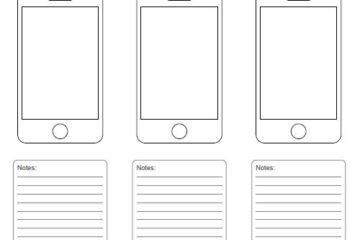
Wireframing is an exercise that requires only a pencil, paper, and time. This activity is thought-provoking and allows anyone to conceptualize the structure and flow of their idea. It helps identify each type of user and user experience (UX) with no tech required.
To start, find a wireframing template to draw everything on screens of the device(s) your product will be used on. For example, if it’s a mobile app, find a wireframing template that includes blank smartphone screens and space for notes (example) to describe each state and how everything connects within the user interface (UI).Wireframing is used mostly to conceptualize digital products, but sketches help jumpstart physical products as well. If it’s a physical product, test your drawing skills by highlighting how different elements collectively come together to form the final embodiment. If it’s a storefront, determine the ideal space by sketching how customers move within it. If it’s a network of parts, draw how the system comes together.
Along with clarifying concepts for yourself, wireframing makes it easier for others to follow how everything fits together. Time spent here saves money if development is eventually outsourced because it curates a roadmap to avoid costly detours. When building a team, wireframes show you’re serious. This visual asset helps to explain the angles and makes it easier for others to contribute.
While product design and the business to support it will need to advance, earnest wireframing helps idea machines dodge melting momentum. Remain willing to learn but consider using this early move to help avoid paralysis by getting crafty as less technology brings more ideas to life.
Brewed From Within
#70 📖 Technology