Slide Deck Design

Ready to inspire an audience? Maybe you’re looking to host a meaningful meeting? Let’s explore translating your transmission with a supportive slide deck.

Before we dive in, why are slides needed? Building a slide deck highlights your key points while establishing the tone, cadence, and flow for your storytelling. Think of a slide deck as the visualization of a story, which supports what you say when expressed in a natural way. The unconscious objective is to deliver impact in the least amount of time.

There are endless templates that will help you format the look of a slide deck, but find creative ways to make it your own. You can customize your slide deck with colors that match your brand, icons, and other graphics that add character beyond the status quo.

When every slide matters, it’s tempting to overload slides with too much text. This is a common mistake, but if the audience is tasked with reading, they’re unable to listen. One hack is to remove punctuation. This eliminates paragraphs, full sentences, and lengthy bullet points. Good storytelling, short titles, eye-catching images, and concise key phrases are all you need to guide the audience.

Make your slide deck stand out with bold imagery and less text coupled with simple transitions and creative movement of the content on each slide. Subtle animations will keep your audience curious, while graphs, charts, and other data visualizations keep things informative and easy to digest.

As content comes to life, include specific details related to any themes, goals, or requirements. For example, pitch competition judges often use a rubric to score each participant. Creatively addressing these details will answer questions before they become a distraction.

As you bring a presentation to a close, design the final slide with intention. The last slide is often on screen longer than any others, so combine heroic imagery, branding, calls to action, and simple contact information to finish in style.

Extra Shot

Pitches are built to impress.

Presentations are meant to share.

After you glide through your impressive slide deck, are questions allowed? If so, consider including back slides. Back slides live behind the final slide. They are used to highlight material not included in the main presentation. Handy back slides include detailed pricing, competitive analysis, marketing strategies, research data, testing results, and intricate financial information. People who understand what they’re talking about use fewer words and optional back slides allow you to simplify your storytelling. This reduces the numbing effect of information overload.

With back slides in place, you can be more concise. This makes for a more impactful tone. It can even be good to purposefully leave out a curious topic from the main presentation. When the inevitable question is asked, you can use the sneaky back slide to share a focused response. If your presentation includes back slides, memorize their order and you’ll soon be leading a more authoritative exchange. In short, back slides prove you’re a pro.

Extra Shot

When your story and slide deck resonate, the audience nods, laughs, asks questions, and takes action to connect with fellow attendees.

Being prepared is obviously important when all eyes are on you. With a striking slide deck in place, practice what you plan to say and sync the narrative to the timing of each slide. Whether you use animated content or not, it’s best to have a single click to move between each slide. As you speak, you should focus on connecting with the audience, not on the slide deck or the handheld clicker.

Memorization is also a trap. A more genuine tone comes from the heart. We’ve all seen people lose their place in a memorized script or fumble through notecards. Avoid this by practicing what you plan to say out loud. Memorize the order of your slides but not exactly what you plan to say.

As you practice, move around and find ways to keep track of where you’re at without reading from the slides. Further challenge yourself by introducing distractions. A small audience throwing ping-pong balls, starting from random slides, and practicing with strangers are a few ways to get past the ease of speaking in front of a mirror.

Extra Shot
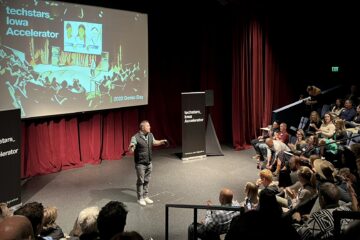
Watch this presentation and notice the slide deck.

To complete your slide deck preparation, export everything into one PDF and create a JPG file for each slide. The richest presentation will come directly from the software your slide deck was built with (Apple Keynote, Microsoft PowerPoint, Google Slides, etc.). These flat formats can be used as marketing materials, but they also provide a quick answer to unplanned technical issues. Deliver the digital assets on time, and organize everything on a backup flash drive.

When clarifying visuals become part of the equation, slide deck design will spark the imagination, guide storytelling, earn that pitch competition win, keep attention focused, seal the deals, and invite more inspired collaboration. As you tell your story, take feedback seriously. Feedback from people you don’t know will sharpen the business, your slide deck design, and your presentation overall.

Brewed From Within
#21 📖 Entrepreneurship

By Ben McDougal, ago

Pain Relievers vs. Vitamins

In agony, we reach for pain relievers made to kill the torment. When everything feels normal, we may pop vitamins to support a healthy lifestyle, but missing a day is not a problem. For every vitamin, the medicine cabinet has just as many intentions collecting dust.

As we study a team/product/service, is true pain for real customers being relieved, or it a nice-to-have idea that may (or may not) provide unquestioned value?

When people like the idea but hesitate to buy, you have a vitamin. If you always have to explain why someone needs it, you have a vitamin. If it’s unclear what you have, you have a vitamin. Pain killers are easy to spot. They sell as fast as supply can keep up with demand.

Ongoing customer discovery keeps a pulse on demand and helps us build with product-market fit. As we ease true pain, stories that sell (marketing) should highlight the results that target customers desire without question. Forget the jargon, impressive features, and pretending to be passionate. Lean into the pain.

Brewed From Within
#6 📖 Entrepreneurship

By Ben McDougal, ago

Follow Up

As you continue to show up and stand out, it’s important to wrap a bow on your interactions by following up. Why? When creating connections, a single encounter is rarely enough. Whether it’s an email, phone call, social media connection, or handwritten note, follow up.

These tiny touch points can root a relationship. Even if there’s no obvious ways to collaborate right away, take a moment to say you enjoyed meeting that new contact. If possible, include something memorable from your encounter to personalize the message. This is also another chance to ask if there’s anything you can do to help, then close by sharing how you look forward to staying in touch. Whether they respond or not, this follow-up will increase the chance you’ll be remembered.

Extra Shot

The moment you meet is an effective time to connect on social media.

As you meet more people, it can become hard to maintain this habit without support. Don’t be afraid to use relationship management tools to keep conversations organized. Hubspot, Airtable, and other free CRM tools may be a good place to start. These platforms can automate your communication efforts, but play it cool. This is not the time to sell or bombard someone’s inbox. Instead of a pre-determined cadence, make a simple note to follow up. Use this reminder to comment on a social media post, share a quick idea, suggest a meaningful introduction, or invite your new contact to an upcoming event. While these follow ups are unscripted, it doesn’t hurt to internally track how many times you’ve touched base.

This balanced, friendly, and ongoing effort to stay connected will separate you from the pack and keep you on that person’s radar. Business may not spawn from these touch points, but there will be fresh context the next time you see each other. If opportunities to collaborate emerge, you’ll have a channel of communication already in place. Either way, showing up, standing out, and following up makes it easier to explore engaging ideas with your evolving network.

By Ben McDougal, ago

Co-Founders

The freedom to build as a lone wolf is exhilarating, but collaboration is how to go beyond your own limitations.

It takes more time to collaborate with others, but finding a co-founder can be life changing. Generosity, transparency, and candidness will bring the right people on board faster. Even if it’s one other person who wants to build in an aligned direction, co-founders pave a smoother path toward success.

Good people eager to collaborate can fall in your lap, but finding co-founders usually requires a concerted effort. If you hunt for the right co-founder in the beginning, it will take more time to make early progress. The trade-off is more creative and cultural alignment when things come together. This makes it easier to evolve ideas when a team finds its groove early on.

If you’ve been building as a lone wolf too long, you may have a harder time working with a co-founder. This is because it’s difficult for others to jump on a bus you’ve been driving the whole time. It’s still possible, but a thoughtful willingness to adapt is required. If you’re merging energy with another lone wolf, take your time. Moving a bit slower will uncover the why behind what was built before the partnership. As trust grows within the team, everyone will have more freedom to make the impact they want.

No matter how you decide to join forces with co-founders, choose wisely. It’s easy to work with someone like you, but don’t clone yourself. As a fun analogy, we also don’t put linebackers at wide receiver, right? Identify what you’re good at and know where you fall short. This allows you to pinpoint people who have complementary skill sets. It will also keep you focused on finding those who can push you further. With indelible honesty, who might be fun to build with?

Extra Shot

Perhaps you are looking for a co-founder? Show up to where the people you may want to work with are congregating. For instance, I met two of my co-founders at 1 Million Cups. We were working on different things, but over time, our shared interests led to a business idea we decided to pursue together.

Like anything new, as a team forms, early excitement will provide a surge of enthusiasm. This will soon fade and at some point, the story of this venture will end. It’s easier to plan ahead than it is to react to problems after they arise. Talk openly about roles and how everyone wants to be involved to avoid future tension. Discussing everyone’s immediate and future commitments reduces the stress of unknowns. With professional transparency a team can also work with more sustained stability. This leads to less drama and more consistent success.

As you solidify complementary co-founders, the goal is to have everyone equally enthusiastic. Think deeply about what a fair equity and role distribution means now and how it can also support future growth. No matter how cap tables look, co-founders expand capabilities and add valuable accountability. Working with others to achieve a shared goal is also more fun than working alone. Collaborate with remarkable co-founders and you’ll enjoy the ride together.

Extra Shot

Want more? Check out the Team chapter in You Don’t Need This Book!

By Ben McDougal, ago

Social Audio

Video may have killed the radio star, but our voices were never silenced and social audio is now connecting them.

What does the term “social audio” mean? Social audio is an emerging subset of social media. Think talk radio with your entire social graph. Instead of a broadcast studio, everyone is able to speak their mind directly from a smartphone. The result is unscripted conversations that feel like a live podcast, with an endless amount of hosts, speakers and listeners tuning in from anywhere.

These audible discussions strip away the text, photos, and video. Your spoken thoughts are everything in this realm, but sharing your voice is nothing new. Talk radio, music, conference calls, voice messaging and podcasts have been around forever. What’s interesting is how social audio companies are transforming one-to-many productions into synchronized, many-to-many experiences. The timing of this growing market also makes sense, as the global pandemic has created an isolated world craving new ways to stay connected.

As Jeremiah Owyang shared in his comprehensive market forecast, a lot of attention has been given to Clubhouse, but there are signals of a market that’s getting much louder. Twitter Spaces, Locker Room, Sonar, Roadtrip, Yoni Circle, Quilt, and Cappuccino are a few more pioneering platforms that have each caught my attention for different reasons. Apple, Google, Facebook, LinkedIn, and Spotfiy are surely working on clones to catch up as well.

After scanning the open airwaves, I’m betting people with large followings will be drawn back to social audio features that allow them to interact with their existing audience on established social media platforms. For talkative people looking to expand their influence, choosing to be an early adopter on a new platform could be a waste of time if the app flops, but with less noise, the reward could be the audience they seek.

Extra Shot

It’s hard to tell if the race to win in social audio is causing this, but more social media companies are experimenting with different ways to compensate content creators. Twitch and YouTube have this somewhat figured out, but imagine spending the day talking on Twitter Spaces. Listeners could show their support with quick tips, while sponsored conversations and other shared revenue attracts more creative talent.

If you decide to share your voice by exploring social audio, remember the words we use matter. These are live, decentralized discussions, but what you share with the world may be hard to take back as many of these conversations are being recorded in one way or another. While this data collection feels like Ursula stealing Ariel’s voice in the The Little Mermaid, we all know the social media landscape is not a private place.

Privacy concerns aside, social audio provides an innovative way for humans to communication. Unlike edited writing, filtered photos, and polished video, our voices in real-time provide raw access to what people think. How might you use social audio to engage in more connected conversations? <End of Transmission>

By Ben McDougal, ago