Blending a physical reality with digital depth is something humanity has experimented with for decades. Catchy names, memorable phone numbers, short URLs, and QR codes are simple methods that guide a physical interaction to details online.
 Augmented Reality (AR), Bluetooth, Near Field Communication (NFC), Radio Frequency Identification (RFID), biotech, and smart materials all take it up a notch. Each of these technologies provide a path to phygital experiences.
To spin some yarn, let’s stitch this nerdy good term into the world of fashion. Phygital clothing now has passive chips embedded behind a patch or hidden in the garment. When tapped by a phone, the tiny chip is given enough electricity to pass data. This prompts a notification that links to digital destinations. The destination may be a website just for fun, but for larger brands with dollowers, the loyalty contest is given all-new levels. Imagine the status game of a global fan base that unlocks digital assets by working together. An elbow bump from someone wearing your favorite brand can now highlight ownership and unlock gamified layers.
With ownership determined by code and real-time incentives connected to the owner, this nerdy good phygital term quickly becomes apart of the web3 taxonomy. That said, the flex is not about being high-tech. It’s introducing a remarkability factor.
When remarkability matters, as it often does, phygital twists offer an edge. There are endless examples of digital depth revolutionizing every industry. Computers and smartphones link a physical device to digital experiences and the first smart vending machine in 1982 would lead to an entire microcosm we call the Internet of Things (IoT). Today’s chips are cute, but nanotech (think a computer on every cell) and neurotech (think brain-computer interfacing) represent a direct line where input and output will require no physical movement. Edges dull as new becomes commonplace, so the time to get phygital is now.
As the world continues to be phygitized, more physical products will be mirrored by digitized counterparts, ownership will be obvious, and an augmented experience will be increasingly invisible as our perceived reality is reinforced by the phygital world all around us.


1 Comment
Ben McDougal · November 26, 2025 at 12:38 PM
ORIGINAL POST
Phygital is a nerdy good term.
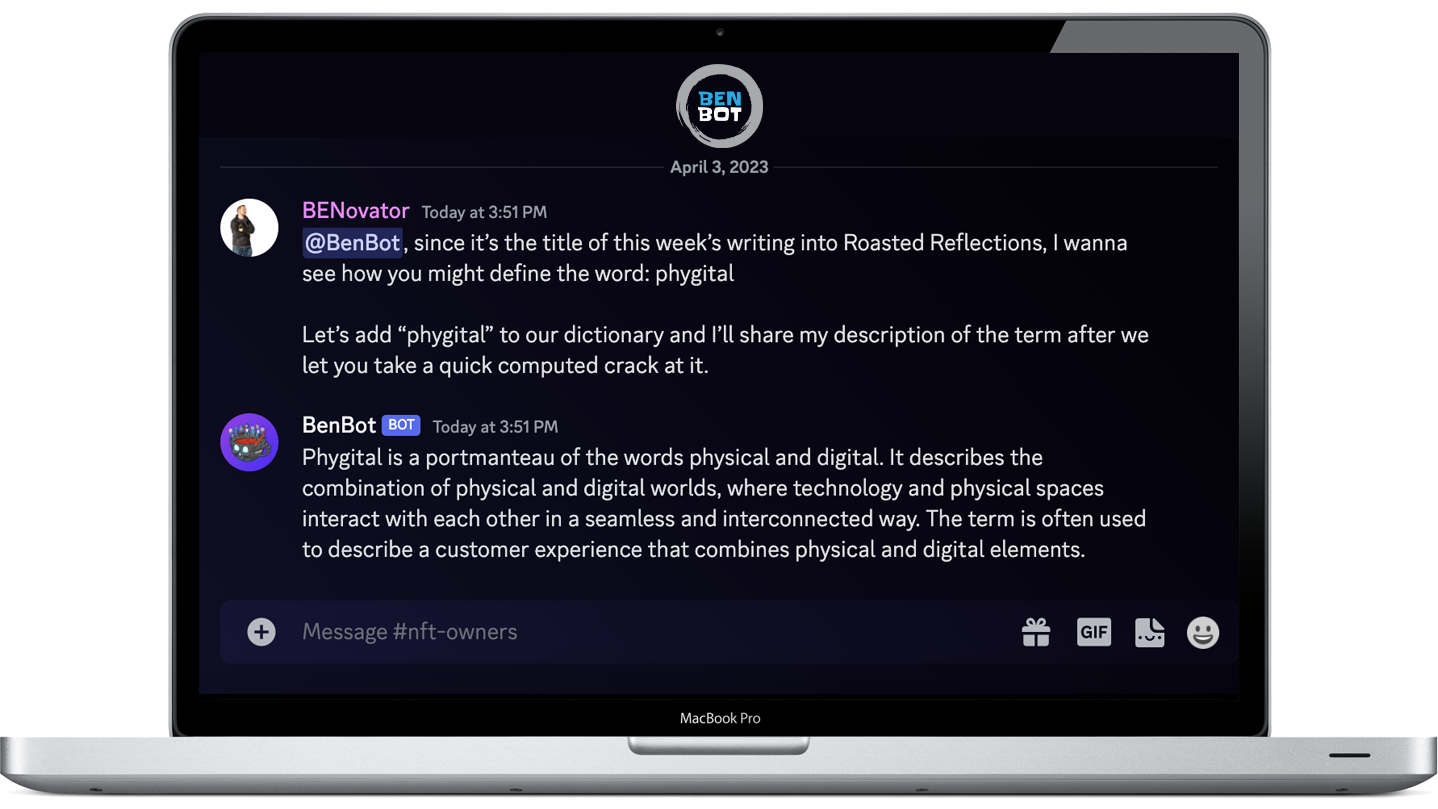
The combination of physical and digital is something humanity has been experimenting with for centuries. The history of electronic engineering is straight inventive and the conversational AI powering our new ChatUX in BEN BOT knew about the concept before I even asked. Perhaps this means I’m late to the party, but at web3dsm last week, I was introduced to this “phygital” word. As I’ve thought more about it, phygital feels like a term to help us think about the blends between physical and digital worlds. Phygital experiences have connectivity (or potential to do so) in almost everything man-made.
Phygital products exist in seemingly all industry sectors. Basically anything with electricity, and of course, technology products with electronic hardware and of course, all IoT products designed to be smart. These days, everything has an app option, eh. As I roasted on this writing, the computer and smartphone kept earning my mental vote for the most personified examples of a physical device that layers the entire user experience (“UX”) into a digital counterpart. Radio and TV can earn runner-up recognition if they don’t want left out, haha!
So, how did a recent web3 conversation lead to this new word? When more wayfinders start sharing ideas, the expansion of one’s thoughts can be dilated and intensified. After Josh Larson helped us paint a conversation with generative AI, prompt engineering, and liberating bias systems in digital art, the articulated use of phygital and a compelling use case stuck with me.
Alright… imagine a hoodie with a passive chip. When scanned by a phone, the clothing activates a treasured digital experience. Think about it. Maybe you already have? Ta daa! Digital clothing.
You’d need a strong tech team and some luck in loud markets, but the idea of chip-enabled clothing feels like pure wonder, but also possible with an inquisitive team, expanding access to required components, attention from the right audience, and the right community-driven initiative. Hmm…
Phygital clothing is extra crazy too, because it’s been such a traditional example of a physical product. Clothing is also designed to be a very personal choice. As clothing continues to be initialized by electronics, the digital companion will introduce almost endless depth. Embedding fresh remarkability, accessibility, different states to unlock, real-time incentives, network effects, and transcendent brand loyalty. Wow.
Whether you get electronic clothing from me or not, I predict more clothing will soon have the option to connect, even offering digital options to pair with what you wear. Alright, it’s been fun to reflect on the future of fashion, but this idea machine is scheduled for a pit stop. As always, reply to connect and I’ll look forward to bonus interactions.
Comments are closed.