Playforce

The expectation of top talent has evolved. People crave a connection to time that delivers a sense of purpose and belonging. When work feels like play, the lively environment invites people to take on bigger challenges. To support the future of work, today’s students, educational organizations, employees, and employers must adapt together.

When we think about work that feels like play, it’s not just pinball all day. The definition of “fun” is to spend time doing an enjoyable activity and to feel engaged. When a team has fun with satisfying work that matters, the group’s true potential is unlocked, and individuals are more likely to become indispensable. This leads to more generosity, laughter, caring, scientific questions, learning, gift-giving, and mapmakers eager to go beyond what’s expected.

EXTRA SHOT

This contribution was written by Elizabeth Tweedale. Elizabeth is a founder who is passionate about technology education, AI, and preparing children for the future.

In addition to more flexibility and fair compensation, employees want greater autonomy. Employees want the freedom to be creative and to find purpose in the way they spend their time. When this balance is achieved, people are happy, and the sense of satisfaction they feel allows them to do their best work. This culture leads not only to more innovative productivity but also to lasting retention. It’s an oxymoron, but a playforce earns this lasting retention through a shared freedom to believe in the mission, people, target market, service/product potential, and timing.

Too often, attempts to optimize employees’ work-life balance stems from a flawed assumption that we must create boundaries to differentiate our life and our work. The idea of a “work-life balance” is a corporate illusion not suitable for the entrepreneurial lifestyle.

The neon future of work creates an experience where life and work coexist as one. This is possible when labor looks like work to others but feels like play to us. This activates a culture where retention is natural due to a genuine interest in a shared direction. This type of playforce environment welcomes anyone to leave when a quest is no longer the best opportunity for their life. This bizarre freedom is balanced because it’s shared by leaders who assume positive intent but can also make moves when an employee no longer aligns with the time. This mutual admiration transforms a team that shares a creative way of being.

As today’s workforce is transformed into tomorrow’s playforce, let’s consider the difference between work that feels like play, versus work with proverbial playgrounds nearby. When fun activities serve as a distraction, the facade of fun will wear off.

It’s also important to remember that what’s fun for one person could be more of a chore for others. Personality assessments and ongoing coopetition help leaders sense team dynamics. Acting professionally does not mean dimming one’s honest personality. We want people to be themselves.As professional comfort is paired with an eagerness to make things better, people can focus.

If the future of work is play, we must activate children with creativity, involvement, and adaptability. The future is their playground, and no permission is needed to contribute. Education can be about delivering access to culture, skills, tools, and purpose. When children connect, play, and learn with passion, they engage not because they have to but because they’re having fun. This supportive sandbox empowers students to win the game of education and then go beyond it. As students grow, Playforce Principles help them understand superpowers and build beside evolving interests.

This translates into employers and employees who enjoy significant roles that feel tailored for what they’re best at. Together, we can change the equation and make work our lifestyle, setting us free to have fun while making an impactful and lasting difference.

Brewed From Within
#56 📖 Leadership
By Ben McDougal, ago
You Don't Need This Book: Entrepreneurship In The Connected Era

Perpetual

It’s hard to stop anything that repeats so frequently it seems endless. There’s infinite ways perpetuity could be good or bad, but never ending happiness, trust, love, hard work, fun, generosity, action, wonder, and learning seem like safe bets.

Extra Shot

It’s not whether you know how, it’s whether you will.

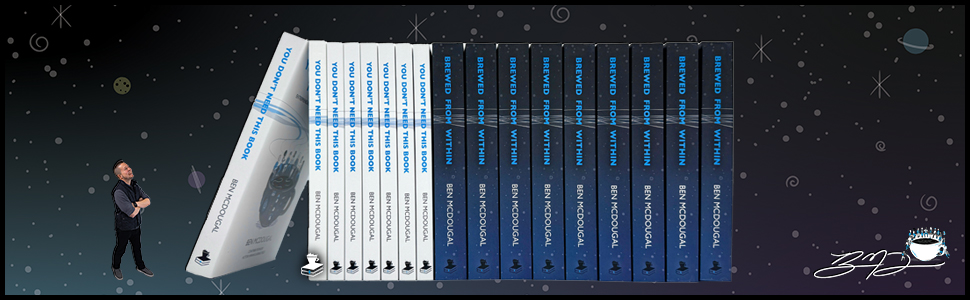
Being inspired by so many remarkable people (like you), has instilled a lasting appreciation for consistency within the entrepreneurial lifestyle. Perpetual feels like a cousin to persistence, so without airdropping the final chapter, here’s a short excerpt from the closing moments of You Don’t Need This Book: Entrepreneurship in the Connected Era.

As entrepreneurs traverse through the unknown, setbacks are inevitable. Each conquered setback makes an entrepreneur more resilient. As resiliency bonds with experiential knowledge, focused determination makes setbacks less distracting. Eventually, setbacks become more like interesting challenges for problem-solving entrepreneurs. This hardened mindset welcomes endless suffering. Such willingness to suffer unlocks a key to entrepreneurship. Passion.

Passion fuels persistence, and persistence is a wild card. Passionate persistence combined with obsession, allows anyone to achieve entrepreneurial success.

You’ll build when others don’t. You’ll savor projects longer and you’ll fight through dips that made others quit. You’ll be comfortable with uncomfortable and you’ll enjoy making a ruckus every step of the way.

Extra Shot

Belief in one’s self is contagious.

By Ben McDougal, ago

Airport Foot Massage

Scripted ice breakers are usually lame, but a fun one invites participants to share something that others may not know about them. There are many ways to approach such a prompt, but a response I once threw in the mix was my unassuming indulgence in foot massages at airports.

After traveling, there’s something bougie about having your tired feet rubbed while endless strangers pass by. Along with mental relation in a very public environment, tightness can be melted after a conference, team meetup, golfcation, or whenever you had fun on your feet.

Transitions came to mind when a recent airport masseuse was whisking my feet into mashed potatoes. A tension arrived as the artisan prepared to switch from one foot to the next. There was an undercurrent of disappointment in that one foot’s rub was coming to an end, yet this feeling disappeared when the next foot received its first touch of attention.

This tiny transition accentuates the kaleidoscopic variety of shifting twists we experience in endless ways. Unconscious, planned, and unplanned changes happen all around us, yet some transitions bring added avoirdupois or take more time than expected.

The route toward a smooth transition is different for every situation, but one tactic to help navigate any transition is to acknowledge the past, then use the present to concentrate energy toward what’s next.

This seems obvious, but our ego often tries to pull us back to what we may be leaving behind. For example, a sense of loss can be felt when leaving a team or as one steps out of an active leadership role. When something has become part of our identity, it’s no surprise that transition brings tension. Will you still be respected after you’re gone?

When leaders let others lead and depart with a sense of abundance, it takes time, but appreciation will last.

Brewed From Within
#52 📖 Leadership

By Ben McDougal, ago

First in Line

There’s something special about being first in line.

Being up front means you’re committed. You’ve made a sacrifice to ensure you experience something you care about in style. Conquering the unknowns to secure this coveted spot has required effort, but a sense of pride materializes when everything goes to plan.

When we think about being first through the lens of innovation, first in line is not such a desired position.

Being first gives entrepreneurs a chance to take an early lead, but early leaders don’t always win in the end. The headwind is strongest when you’re in front.

When you’re creating something new, enthusiasm from early adopters is often met with pernicious friction. One common source of friction is the time spent educating a prevailing market. This protracted process wears on even the most resilient and exhausts resources every step of the way. Along with frictions that come with being first, with fewer clues from the past it’s harder to avoid potential pitfalls as well.

There’s value in a head start, but the early market leader often falls behind the innovation curve. Never hesitate to forge into the unknown, but remember that when you lead, others will always be chasing you.

If you’re building in front, stay ahead with humility, a challenge network that invites you to be wrong by avoiding groupthink, a genuine desire to accelerate others, and interactive leadership that allows intrapreneurs to stay wild.

If you’re the one chasing, which is far more common, you’ll need to flex a bit of founder-market fit to find product-market fit, but it’s nice knowing there’s an existing path with potentially more opportunities to champion change in a known industry.

Alright, now think bigger. How might we avoid the wait? The front of any line may be a traditional way of getting ahead, but this requires time with no guarantees. You’re still relying on someone else to let you in as well. If this activity is something you really enjoy, be conscious of how business can sometimes kill your passion but know there’s usually a way to be less of a spectator by getting more involved.

One way to do this is by combining your creative skills and an entrepreneurial spirit to wedge yourself into the experience itself. This requires initiative, but volunteering, building into a side hustle, or using content creation skills can quickly become your ticket to skip the line all together.

Extra Shot

A love for friends, craft beer, and technology is what led to FliteBrite. Along with a patented electronic serving system, our beer festival app is a tasty example of how we now skip past lines like this. Cheers!

Brewed From Within
#4 📖 Entrepreneurship

By Ben McDougal, ago

Ship It

We are all artists. No matter what you create, there’s a distinction between creating art and shipping it.

Seth Godin teaches us to go beyond the status quo by creating remarkable art. As leaders cultivate a creative practice, Godin also suggests that if we don’t ship our art (i.e. send it into the world), the effort is self-limited. There’s value to creating more than we consume, but art creates connection. If what you construct is not shipped, there is no connection, and therefore, Seth Godin says it’s not art.

Extra Shot

Does (re)defining art change how you think about your own contributions?

What is your art? Entrepreneurs, intrapreneurs, side hustlers, students, and community builders who are willing to ship, fuel positive change with their art.

Unfortunately, the ego fears external evaluation. This fear is compounded when progress feels slow, which is part of the dance. As apprehension calcifies over time, it’s hard to resist the temptation of hiding our thoughts, emotions, and activities within the safety of solitude.

Creating art to enjoy by yourself can build real skills and provide internal layers of sentimental value, but to go beyond the status quo, push past the fear of feedback. No need to waste time shouting just to make noise, but know that we need you to ship the art.

This encouragement is not an excuse to rush into bad ideas, ship something that hasn’t received proper attention, or not deliver on a promise. It is, however, a friendly reminder that pursuing perfection can devolve into an enemy of progress.

We’ve all heard inspiration like that before but listen to those you admire. Perfection is rarely required when all you need is enough success to continue creating art. Let such liberation fuel confidence. Translate expanding confidence into fresh curiosity. Augment this curiosity with creative action. Rinse and be isochronal in your creative practice.

As belief in oneself grows, one interesting hesitation is disguised by good intention. We tell ourselves it’s not wise to be too self-serving. This is virtuous, but sometimes endless humility makes silence feel safe. As we protect ourselves by staying quiet, a self-limiting restraint develops. For example, many find a journal to be therapeutic but are quick to dismiss sharing these beautifully raw writings with others. It’s good to internalize thought, but as you learn more about yourself through writing, even if it’s only for those you love, know your art can only connect when it ships.

Ready to ship your art? Double-click on your superpowers and the people you care about. Pouring a hint of discipline over what you’re best at and who you seek to serve will provide genuine value over time. Experiment with small actions, and as this develops into a practice, expand the connected nature of your creativity. As your art connects with those who care, find a cadence that allows you to be consistent. A daily blog? A weekly podcast? The monthly newsletter? An annual event? One size does not fit all, and the right tempo depends on the art you’re planning to ship. To find a signal, consider your personal bandwidth and the target audience. Talk with others and take action, then tweak timing to find the right rhythm.

If you’re shipping art, I’d love to hear what makes it stand out and how you remain consistent.

Perhaps there is a renewed desire to connect more of your intelligence? As you take action, know that your contributions matter. Even when the immediate impact is undetectable, thank you for being courageous enough to ship it.

Brewed From Within
#14 📖 Entrepreneurship

By Ben McDougal, ago