ArtOfficial

Art for art’s sake is vital to humanity and innovation.

We need fine artists and creatives who do not conform, who lead even when no one else follows. The calculated confusion we experience in contemporary, experimental, and abstract art pushes boundaries so that ideas, styles, and ways of thinking can emerge. Immersing ourselves in these misunderstood realms trains us to trust strangeness. What feels unfamiliar today often becomes inevitable tomorrow.

EXTRA SHOT
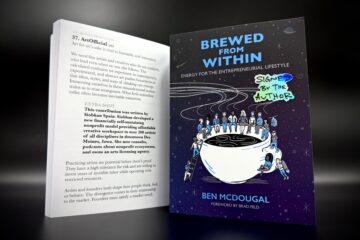
This contribution was written by Siobhan Spain. Siobhan developed a new financially self-sustaining nonprofit model providing affordable creative workspace to over 200 artists of all disciplines in downtown Des Moines, Iowa. She now consults, podcasts about nonprofit ecosystems, and owns an arts licensing agency.

Practicing artists see potential before there’s proof. They have a high tolerance for risk and are willing to invest years of invisible labor while operating with restricted resources.

Artists and founders both shape how people think, feel, or behave. The divergence comes in their relationship to the market. Founders must satisfy a market need; ignoring users is fatal. Artists, meanwhile, can deliberately resist or ignore market signals. This alienation can become the feature rather than a flaw.

Then there’s the question of success and perceived impact. Founders are validated externally: users, revenue, growth. Artists answer to internal measures: mastery of a medium, conceptual rigor, or making work that holds personal meaning.

In the contemporary art world, a purist code of practice is common. “Selling out” is to be avoided at all costs, lest the merit of both artist and artwork be compromised. Selling out can mean creating work primarily for aesthetic beauty or mainstream appeal; heaven forbid it be mass-produced.

The commercialization of fine art often inverts traditional capitalist values, where financial success is viewed as a betrayal of artistic integrity. However, communities that prioritize robust creative ecosystems recognize artists and creatives as powerful drivers for economic development, cultural identity, innovation, and social cohesion.

They foster diverse economic and social opportunities in which titles, race, career, and socio-economic status dissolve into a culture of curiosity and inspiration that spark cross-disciplinary collaborations that benefit artists, companies, and civic entities alike.

As these sectors blend a financially sustainable infrastructure is now possible, motivating artists to lean into their creative visions with a sense of purpose.

Artists are critical thinkers who imagine what does not yet exist. They collaborate to form solutions before markets know to ask for them. They rehearse cultural shifts, test narratives, and expand our collective tolerance for the unknown.

Artists show us how to use emerging tools, including AI, with intention rather than conformity.

When artists stop being an afterthought and start being recognized as founders with foresight, viable economic pathways emerge, cultural relevance deepens, and irreplaceable talents can be engaged by all.

Brewed From Within
#37 📖 Leadership

By Ben McDougal, ago

Overtime

Meaningful moments form faster without an agenda.

When communication is graded by productivity, meetings, pre-planned talking points, goals, and recorded remains, there is mysterious value in extended conversations that have purpose but no end goal.

Extended discussions create space to pass interesting anecdotes, opportunities, and unforeseen knowledge grenades. While it’s uncommon, consider how bonus time connects friends who simply haven’t met yet.

Extra Shot

Many people are oversubscribed. When being busy makes us feel important, the illusion leaves less room to uncover peculiar variety.

Long-term leaders expand minds while tightening impact networks along the way. Respect the extra time required, but invite these verbal volleys and when asked to go into overtime, stay thirsty and see what happens.

Brewed From Within
#49 📖 Leadership

By Ben McDougal, ago

Adaptability

As leaders prepare others for an unpredictable future, an interest in understanding answers and an eagerness to claim confidence is essential. A vital element to both qualities is an ability to constantly adapt.

When technology makes answers easy to find, adaptability makes the human touch unmistakable and more resilient. As students traverse problem-solving activities, they learn to appreciate what goes into the answer. This leads to deeper understanding and boosts adaptability as assumptions are tested and unplanned obstacles are conquered.

Extra Shot

This contribution was written by Nancy Mwirotsi. She is a leader from Kenya who empowers underserved youth through technology education.

Imagine a young student, standing in front of a packed room to pitch her first startup idea. Something unexpected is bound to happen. When it does, real-time adaptability keeps her calm and her voice grows stronger as the crowd responds to her ability to execute despite the disturbance. Outside the classroom, similar manifestations occur when leaders reward team members who adapt to stay ahead of innovation curves and we all know how unpredictable entrepreneurship is, which makes adaptability an ongoing requirement for founders building without a map.

Adaptability strengthens confidence as we then let students lead. When young people are trusted to take the stage, make decisions, or shape solutions, they begin to own their success and claim a confidence that can’t be taught.

As students claim confidence, adults stop underestimating their capacity. This fosters a two-way exchange for students that see themselves in leaders who motivate them to explore, make mistakes, and yet, always remain valued. A shared interest in how things work can then amplify potential as technology is introduced to create awareness, multiply real skills, and actuate ideas. This experience encourages students to go beyond just using technology to find the easy answer. It elevates those who understand how technology works, which continues to shape courageous innovators that avoid the temptation to be mediocre.

Within the unknowns of constant change, adaptability keeps us curious. Enduring curiosity can then activate initiative supported by real skills and expanded through lifelong learning. Leaders who create environments that help others build proficiency in the dynamic elements of playforce principles, prepare us all for the future of work.

By Ben McDougal, ago

Everyday Activism

Power from the past keeps us moving, but effectiveness dwindles when fewer voices are heard. Fewer voices help those in power grow, but history reminds us how a lack of diversity is not only dangerous, it’s also boring. This invites the leader inside us all, to design action for change by empowering diverse populations.

EXTRA SHOT
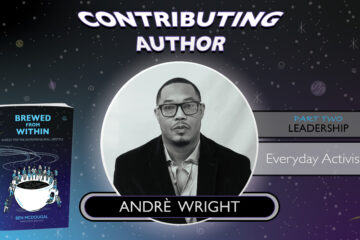
This contribution was written by Andrè Wright. Andrè is a thinker who uses design, fashion, and art to inspire students and community-driven movements.

To thread a topic for discussion, let’s stick a few bars on the global language of fashion. Our voices can be heard, but sometimes the volume makes a message miss. The art we share online is material but can be lost in the sea of content. Efforts add up, but community requires sacrifice. Activate as much energy as possible, but clothing can also speak. What we wear tells a story. This story has many characters, each playing a role in how we feel, think, and act. What we wear either hides or magnifies our mode for that moment. Fashion makes each outfit a creative act.

To thread a topic for discussion, let’s stick a few bars on the global language of fashion. Our voices can be heard, but sometimes the volume makes a message miss. The art we share online is material but can be lost in the sea of content. Efforts add up, but community requires sacrifice. Activate as much energy as possible, but clothing can also speak. What we wear tells a story. This story has many characters, each playing a role in how we feel, think, and act. What we wear either hides or magnifies our mode for that moment. Fashion makes each outfit a creative act.

In America, we dress to impress, to feel the chill, to stand out, to fit in, to perform, to relax, or just to call it good enough. In Tokyo, streetwear is precise, with a quiet confidence, layered intention, and respect for the craft. In Seoul, it’s forward-thinking—experimental silhouettes, fearless self-expression. In Paris, style is posture and effortless rebellion wrapped in restraint. In Milan, heritage meets the edge of luxury with attitude. In Bangkok and Ho Chi Minh City, fashion is adaptive, with heat, movement, and hustle shaping design. In Istanbul, layers tell stories of empire, faith, and modern youth culture colliding. In Mexico City, Lima, and Bogotá, streetwear carries ancestral memory that shines through bold colors and symbolism. In Berlin and Amsterdam, fashion is utilitarian resistance with form following function and identity following truth. Across the Philippines and Sri Lanka, style is resourceful, resilient, and deeply personal.

Streetwear is more than clothing. It’s code. It’s both survival and celebration at the same time. These creative expressions grow stronger when paired with education, lived experience, and collaborative partnerships that invite people in. For any genre, when stories stack alongside real progress, community-driven activism can cook up the ingredients for a movement.

The right audience in the moment (timely) and over time (timeless) sets a direction for these movements. This form of group action involves individuals, organizations, and communities choosing to move together. Together, a vision becomes possible through a compelling narrative. Planning keeps the vision clear. Small, consistent actions—moves that rhyme—are what build trust, assurance, and momentum.

The movements we remember are those that create pathways: opportunities to build leadership, teamwork, and citizenship through creative expression. They don’t just inspire people; they equip them.

We each carry gifts and love people who shape how we show up in the world. That’s what makes our style, our approach to life, entirely our own. This individuality, altered by the environment, also makes us each an accouterment for change.

Everyday activism adds up. The diversity it invites keeps the work honest and interesting. Designed with an open mind and a positive-sum mindset, everyday activists form communities that create conditions where all of us can thrive.

When this happens, we develop more conscious people who can then contribute positively to their families, schools, neighborhoods, and the world—one outfit, one conversation, one shared vision at a time.

By Ben McDougal, ago

Diversified Career Portfolio

From an early age, the world tells us to change it by chasing our dreams. Not one dream, all of them. At the same time, we’re told our work must be focused. The most classic example lies in a loaded question we ask children. What do you want to be when you grow up? This simple question assumes a singular path. In school, the pressure mounts as students are forced to select classes and eventually declare a major if they choose to attend college. In adulthood, side hustles are often discouraged and replaced with the promise of security in exchange for corporate compliance. As a founder, the focus of today can shift, yet remain relevant.

If financial stability relies on a single income or employees depend on you, true focus will support lasting stability. Even with such discipline, many people have lost that safe job, closed a business, had a new idea, or need extra income.

Things rarely go as planned and the promise of security is just one decision away, from being taken away. To avoid the pitfalls of a singular path, activate a collection of initiatives that come together in a diversified career portfolio.

In a digital age, we are more efficient and can unite technology with community to balance more than one quest at a time. When leaders push progress on multiple fronts, each activity injects various flavors of value. For example, you may have a traditional job that provides financial capital in the form of a paid salary. At the same time, a side hustle can generate intellectual capital and innovative energy that translates into more creative work in that traditional job. You may also volunteer within a tribe you trust, which fuels human, network, and cultural capital as well. Such ambition should be celebrated, but it’s more often feared by those who don’t understand how it feels to hammer on one thing, ship progress; pop to the next thing, ship more progress; and then pop one or three more times to fuel even more momentum! This type of work requires tenacity, but over time, a multi-modal focus is refined into an indescribable stamina and lasting stability.

All seven capitals (financial, intellectual, human, physical, institutional, network, and cultural) can be hard to find in one place. When leaders mobilize a diversified career portfolio, we celebrate what we have to attract more of what we want. For example, the common complaint of not having enough money fades when leaders build momentum through a sense of abundance. What you want is replaced by what you have, which attracts what’s needed to fill gaps.

As you make moves to expand a diversified career portfolio, it is important to avoid diluting yourself to mediocrity. We know the entrepreneurial lifestyle requires extra gears, but the exhilaration of building into things you’re obsessed with supports more persistence. The wild card of persistence creates elasticity in how we spend time. When this form of agility is applied on multiple fronts, smaller time windows are still enough to make a big impact on various fronts.

Along with flexibility, a diversified career portfolio delivers unmatched dependability. Even with different activities, the common thread is you. Nobody else is you, which makes a diversified career portfolio hard to compete with.

As an added bonus, no matter the reason, when one creative season receives less attention, other activities still remain. This allows attention to be shared between an evolving collection of activities and adds to the flexibility and dependability of a diversified career portfolio.

For anyone with more to build, there is no permission required to add creative slivers to the pie chart of how you spend time. Does it take extra gears? Yes. Might this require practice to keep your personal bandwidth balanced? Yes. Will your co-founder in life play a tremendous role in how much risk you can apply? Yes. Might you have to play 80 hours in order to avoid working 40? Yes. Is such splendor absolutely accessible for anyone in our connected era? Yes!

By Ben McDougal, ago