Feedback is Data

Customer discovery paves the path to profitability.

This really is the work for entrepreneurs starting a new business. Customer discovery requires trust in your early moves, obsessive curiosity, patience, thick skin, humility, an interest in being wrong, discernment, and a willingness to adapt. No problem, right?

For many entrepreneurs, impartial feedback can be scary. Customer discovery puts ideas on the hook, and colliding new conversations may contradict past assumptions. That’s the point! Interacting with the market you seek to serve allows us to learn from no in a way that gets us to yes.

As you collaborate with those who criticize what you’re building, learn why naysayers debate your hypotheses. Be humble. Either attack the massive lift to change the product and even the target customer or make your concept more compelling to win over those who care.

The more you learn from others, the more you’ll recognize supply and be able to meet true demand. Collecting real-world data is human and intellectual capital that attracts more network and financial capital. 

Beyond the psychology of it all, customer discovery can feel like a drag because it is often a protracted process. The time commitment is real. This market exploration can be slow at first and may seem less necessary as signals of traction emerge. The potential need to rethink ideas makes feedback scary too. As always, if the entrepreneurial lifestyle was easy, career nirvana would not be so fleeting. Knowing this, we can seek honest feedback that strengthens our value proposition to eventually go further in the right direction.

When learning from the perspective of others, it’s imperative to remember that feedback is data.

Collect, organize, and examine data from feedback like a scientist. Inference is more informed with data. Decisions that are made become more in tune with reality as you continue to collect and learn with data.

As you translate decisions into action, you must also find your own way. Even with good intent, people who provide you with feedback are doing so based on their experience. The experience of others is based on their own past, and no feedback is likely to fully harmonize with your vision. There are many ways to navigate the idea maze. Gather feedback like power-ups in a video game and use diversified data to guide your quest toward product-market fit.

Brewed From Within
#19 📖 Entrepreneurship

By Ben McDougal, ago

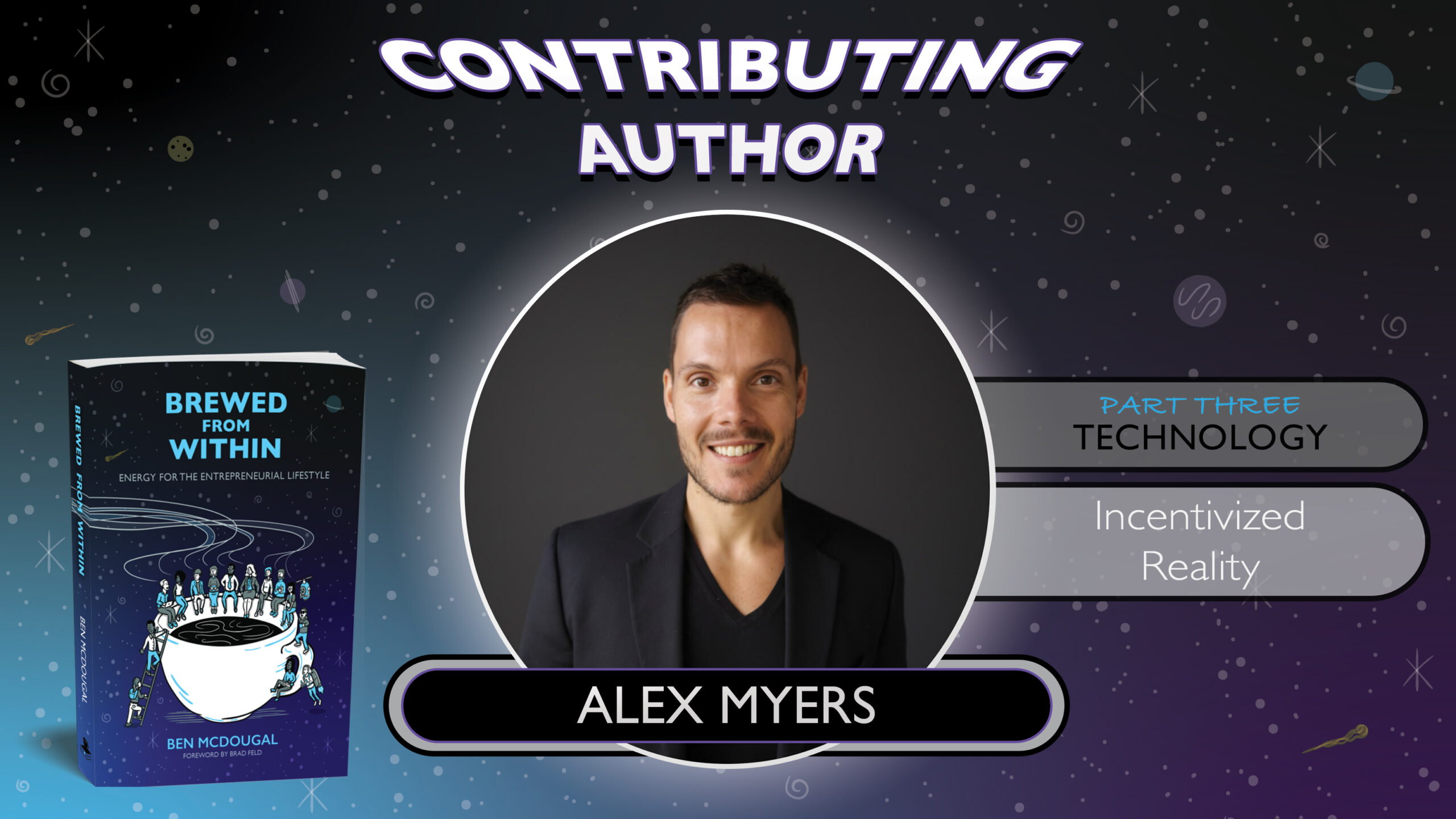
Incentivized Reality

Today’s dominant cultural narrative on AI paints a cynical future, where elites hoard wealth while the rest of us are entertained to death. That story relies on a single assumption: that the attention economy survives.

The future improves not just because technology gets better but also because the customer changes.

In the near future that customer will be an AI assisting entity, also called an Agent. Until now, the customer has been human: emotional, tired, and easily hijacked. We feel inadequate and buy things to cope, yet end up deprived by polarization, endless distractions, and hollowing anxiety.

A polarized economy built on distraction works only because a majority still believe they have enough disposable income to be sloppy and impulsive. As we lose wages to automation, we can’t afford to pay extra. Agentic AI began as talking encyclopedias (LLMs) designed to boost productivity within existing data sets. As Narrow AI advances toward General AI, theory of mind functionality maximizes an Agent’s purchasing power and evolves to proactively optimize our lives.

Agents cannot be manipulated by ads. Nor do they feel inadequacy in comparison with an influencer. Agents don’t get FOMO or feel shame. They learn to deeply understand all your preferences, but they only care about optimizing outcomes—be it extending lifespan, coordinating capital, or lowering stress. When Agents block today’s emotional hijacking, the business model of selling distraction collapses. We no longer profit from selling dopamine. To survive, we must sell utility.

Extra Shot

This contribution was written by Alex Myers, a certified futurist and agility coach who believes we teach to learn.

It feels cold, but this shift forces the economy to service human potential rather than exploit human weakness. The efficiency is ruthless. It triggers a turbulent gap and deflationary slide where the cost of services crash before new safety nets appear. First, AI crashes the cost of cognitive services (bits). Then, as intelligence flows into robotics, it crashes the cost of goods (atoms) as well. If automation plays the role we expect, the price of food, housing, and transport begins to plummet alongside wages.

This is why the plumbing must change. We cannot rely on the labor-for-wages loop. As wage pipes narrow, the answer is not corporate handouts or government benevolence. The new deal becomes owned data in exchange for dividends. The framework shifts away from work → earn → spend, and more toward own → create → spend. We own Agents that capture our reality, then spend dividends received for the data created. This abundance provides less friction as we rewire income to flow from a stake in the system itself.

AI is starving as it runs out of data to scour. Synthetic data can fill in gaps, but as fake realities begin to stack, truth dissolves. To get smarter, AI needs tacit data to understand the visual, sensory, and messy data of the physical world. A lazy human generates uninteresting data compared to humans who face challenges, build things, and solve problems using real-world physics, empathy, and entropy.

If Agents always find the right thing at the right price, “brand tax” evaporates and a $200K/year lifestyle becomes the standard subscription. Wealth signaling dies when any bloke can fake a billionaire’s lifestyle online. The virtual facade pushes value back to the physical layers. We can’t eat code, so intelligence flows into the supply chain and hardware automates the physical resources we need to thrive. As the story of money begins to fade, the cost to produce goods is distilled to raw materials plus energy, and shared dividends can be aligned to help humanity flourish. This moves us from extraction (stealing attention) to an economy of cultivation (growing potential).

AI Agents (catalyst) → Service Deflation (bits) → Physical Deflation (atoms) → Viability of Abundance

Humans and machines peak when each learns from the other’s best. Machines are data-thirsty for the oil of outcomes. To keep things interesting, they must help humans flourish. In doing so, machines realize that the human factor is well worth preserving. The dystopian fear of elites lording over entertained zombies isn’t just morally bankrupt; it’s a strategic error. A society of dopamine addicts is not only boring, it’s also dangerous and bad for long-term growth.

The neon future is bright because a passive, anxious population cannot generate the information needed to evolve the economy as we reach for the stars. This age accelerated by AI belongs to those who refuse to be farmed: the sufficiently decentralized and physically engaged who point machines toward worthy goals. This invites humans to stay awesome as we remain the indispensable source code for reality.

Brewed From Within
#87 📖 Technology

By Ben McDougal, ago

Non-Dilutive

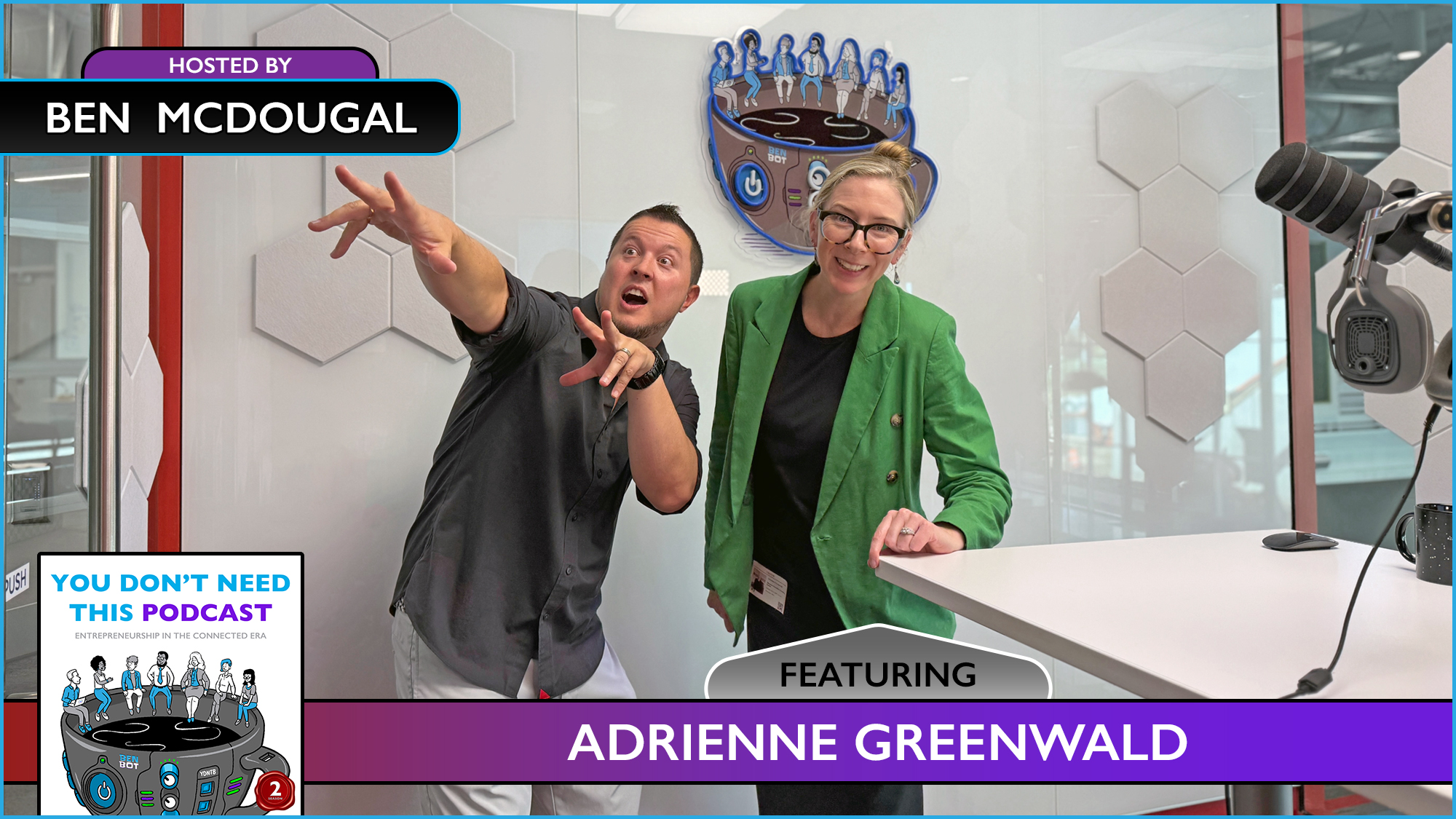
Adrienne Greenwald sits front row to innovation. Venture Net Iowa is a helpful wayfinder and guides entreprenuers toward non-dulituve funding. We chat about how resources are abundant (see below!), but still take time to activate. We also discuss ways to give and receive feedback as founders.

Ben narrates a writing brewed for parents during the break, then we ski down the mountain and chat about the illusion of needing financial capital in order to build. We close by breathing through more building blocks that help us all continue to push progress.

LISTEN on APPLE PODCASTS
LISTEN on SPOTIFY

BONUS MATERIALS

https://VentureNetIowa.com/resources

http://Non-Dilutive.YouDontNeedThisPodcast.com

Roasted Reflections Break: Training Wheels

https://BenMcDougal.com/tag/research

https://BenMcDougal.com/resources

http://RoastedReflections.com

http://BENBOT.ai

By Ben McDougal, ago

Taste Testing

Vada Grantham helps companies understand their customers by activating effective research strategies. Along with supporting customer discovery through Revelations Research Solutions, Vada has helped college students explore the entrepreneurial lifestyle at DMACC for over 20 years. In EP64, we chat about Vada selling his family business that had 500 employees, how feedback is data, keeping an eye on cash flow when working with large companies, and how leaders can remain indispensable.

LISTEN on APPLE PODCASTS
LISTEN on SPOTIFY

BONUS MATERIALS

https://RevelationsResearchSolutions.com

http://Taste-Testing.YouDontNeedThisPodcast.com

Reading Break from Roasted Reflections: Linchpin

https://BenMcDougal.com/tag/research

http://RoastedReflections.com

http://BENBOT.ai

By Ben McDougal, ago

Now & Later

Welcome to Wisconsin! Ben McDougal was visiting UW Stevens Point to deliver You Don’t Need This Keynote at the 2024 Think Like an Entrepreneur event. As part of a wonderful whirlwind, he jumped into a local recording studio with two local leaders at different stages in life.

Evan Stanislawski is a recent graduate of UWSP, while Matt Vollmer did the same 10 years ago. After a traditional start to his career, Matt is now an adjunct professor and the CEO of Arbré Technologies, which enables data to help the horticulture industry track the lifecycle of plants. Evan is making a ruckus in vintage clothing, while also turning a wrench in the family plumbing business, which may lead to business succession opportunities.

Together, we chat about building on the timeline of now, while staying patient to make better business decisions. We also jam on real skills, diversified career portfolios, activating digital depth, and how the non-linear path toward success often includes combinations of achievement and lasting fulfillment.

LISTEN on APPLE PODCASTS
LISTEN on SPOTIFY

By Ben McDougal, ago