Welcome to Web3

Back in the 1990s, we were dialing up and waiting on snail mail to avoid paying for every minute of access to the world wide web. This early version of the internet was built by developers and primarily delivered content in one direction. Websites were static and really only available for people to read. This read-only experience can be thought of as web1.

By 2005, most business owners had computers and had started to see the value of having a website. The ability to read content on the internet remained, but an option to write into cyberspace introduced dynamic websites where content could be updated. Bulletin boards, e-commerce, and social media also emerged. With the expanding capability to read and write online, anyone could share content without knowing how to code. This stage of the internet with read+write can be thought of as web2.

Within web2, supercomputers landed in our hands. This social integration with machines accelerated access worldwide and ushered in our connected era.

While such affinity allows us all to do more with less, immense power (and liability) was earned by big tech companies that controlled the world’s data. A dependency on convenience fed these web2 giants, which offered free access in exchange for more data. Big tech boomed through 2020, but trust wilted as humans became the product.

Investors demanding profit from big tech shifted ideals away from attraction and more toward extraction.

Tech giants became gatekeepers and left a stalling world of users feeling dispensable and disenfranchised. The internet had linked our planet, but power had become centralized.

Web3 is an umbrella term that describes the future of how we will continue to connect, communicate, and collaborate online. Guided by principles that suggest the internet is best when it’s decentralized, web3 technologies strive to be transparent, distributed, permissionless, proportionate, and verifiable. If web1 was read-only and web2 was read+write, web3 can be thought of as read+write+own.

What does it mean to own your online experience? Instead of another profile controlled by an individual company, we now traverse cyberspace with our own digital backpacks. Your digital assets are personalized, verified, and shared within any online environment, but privacy, content, and audience remain contained. As we move throughout the internet, our digital presence sticks with us instead of being lost on yet another centralized server. Enhanced cyber hygiene is needed when we own more of the experience online, but this paradigm shift returns ownership to the people who make cyberspace special.

As with anything new, this frontier brought fear, confusion, bad actors, and strange projects that felt like a prank. The challenges of building into the unknown suppressed mainstream growth, but this is how adoption curves work. Onboarding remained wonky, good ideas failed, AI burst back onto the scene, and the world had gotten comfortable with web2. Considerable progress came from traditional tools, and the growing pains of web3 led to an intermediate stage. Web2.5 was needed to move people through new layers of understanding. It took time, but winners made the experience feel like web2, with sufficiently decentralized technologies under the hood.

Over time, experimentation has led to more platforms that allow users to retain ownership as they move throughout cyberspace. Whether this is the first time you’ve heard of web3 or you’re a crusader leading the charge, pour another cup of curiosity and let’s introduce a few common terms that will make this nerdy narrative more approachable.

Decentralization – Sufficiently transitioning from single authorities to proportionately deliver verifiable ownership, access, control, transparency, communication, and governance to many stakeholders.

Blockchains – Decentralized immutable systems that record transactions with transparent logs on a dynamic ledger. There are private and public blockchains with different interfacing layers. Transaction fees cover the costs of the computing, electricity, and verification required to interact onchain.

DeFi – Acronym for decentralized finance, which weaves cryptocurrency into the existing financial industry.

Cryptology – The study of code. Within this context, cryptology supports security through cryptography. A theoretical debate is how this form of digital security will hold as quantum computing continues to mature.

Cryptocurrency – Mechanized money. Fungible assets used to support economies and immutable transactions between stakeholders online. In 2026, there are countless cryptocurrencies that total ~$4T in market capitalization, with Bitcoin maintaining the largest market cap (~$2T).

Smart Contract – Code-based agreement that establishes terms for how a transaction is executed for stakeholders involved. Like a bridge from a blockchain to digital assets, smart contracts also frame automated governance, arbitration procedures, and more.

Dapp – Acronym for decentralized application. Like other apps, but a Dapp lives on a decentralized network that uses wallets (versus profiles on a corporate network) to combine the user interface with an individual smart contract, which connects to dynamic data onchain.

NFT – Acronym for non-fungible tokens. NFTs are digital assets that represent ownership. Each NFT has a smart contract that then connects it to a blockchain. These smart contracts apply, transfer, and track digital signatures and verifiable ownership. Non-fungible means something is unique and cannot be replaced. In contrast, cryptocurrencies are fungible, as they are mutually interchangeable.

Extra Shot

The Roasted Reflections NFT Collection will always represent a neat technological experiment from 2020. It resulted in the creation of creative tokens owned by savvy/supportive true fans, who then unlocked front row seats and networked ownership with others. Studious, but fun stuff!

Minting – The process of locking a cryptographic asset (such as an NFT) into a blockchain. Transaction fees may be required, and blockchain hashing tracks the provenance for everything onchain. Lazy minting is when a digital asset is not fully minted until a transaction occurs.

Digital Wallet – A software tool to access the web3 world. Wallets store digital assets (ex: NFTs), interact with dapps, and host public/private keys. The wallet’s unique address is a hexadecimal string that refers to locations on a network, which are generated from the wallet’s private keys. This secures data transfers, cryptocurrency transactions, and digital signatures. A wallet address can be shared like a public email address, while private keys and seed phrases should always remain private.

Airdrop – Giveaways sent to digital wallets. Airdrops provide a creative way for people to share assets with each other, with senders paying the transaction fees. Be skeptical of an airdrop from unknown sources. Like clicking links or opening attachments in emailed spam, there are poisonous airdrops that can force access to your digital wallet when a malicious item is transferred. To be safe, if an unrecognized airdrop lands in your digital wallet, leave it alone.

Rugged – When digital property is lost or stolen, often malicious but not always deliberate. Being rugged is a bad thing, but it’s wild in experimental environments. Have fun in the rabbit holes, but exploration is done at your own risk. Be diligent with digital hygiene and tread lightly to stay safe in any digital realm.

DAO – Acronym for decentralized autonomous organization. These member-owned groups operate through code with less hierarchy. DAOs often share treasuries and governance, with projects defined by a collective goal.

Metaverse – Interoperable environments where users can interact from anywhere, with augmented and virtual reality ushering in more immersive experiences.

Protocol Networks – Open systems, like email, the web, and RSS that are funded and controlled but not owned by software developers or network stakeholders. In contrast, corporate networks are owned and controlled by companies instead of communities.

Zero-Knowledge Proof – In cryptography, a zero-knowledge proof is a protocol in which one party (the prover) can convince another party (the verifier) that a given statement is true—without conveying to the verifier any information beyond the mere fact of that statement’s truth. The logic in zero-knowledge proofs is that it becomes trivial to prove possession of the relevant information simply by revealing it; the hard part is to prove this possession without revealing this information (or any aspect of it whatsoever).

Tokenomics – The study of how digital assets create incentivized value within social economic frameworks.

As jargon alarms sound, remember, prevailing concepts are still being built. There are fewer industry standards, terms are not fully authenticated, and regulation is far from perfect. As web3 concepts move through different adoption life cycles, early adopters will continue to bake terms that help translate the ways in which different technologies work together.

Amid such efflorescent activity, it’s helpful to remember that much of the new jargon describes existing ideas that are being enhanced with advancing technology.

Money, for instance, is the oldest story humans have used to exchange value, yet this form of currency has evolved and will continue to do so. Secure access to a shared database is old hat for web2 wizards. We lived in Sim City long before the metaverse; everyone has flight and concert tickets landing in their phone’s digital wallet; and communities always thrive when they are sufficiently decentralized and still brewed from within. This does not thwart the magic of web3. It makes emerging technologies easier to adopt.

Brewed From Within
#76 📖 Technology

V2.0 – 100% HUMAN

By Ben McDougal, ago

Fresh Powder

After a gondola ride, whether you ski or snowboard, you’re not getting far without the right equipment.

Let’s imagine you’ve made it to the top of a snow-covered mountain. The distant view is inspiring and there are endless ways to enjoy the ride back down. Similarly, there are endless ways a business can evolve.

Financial modeling is an important technique that helps us simulate different scenarios for a business.

Extra Shot

This contribution was written by Jeff Erickson. Jeff is an investor, advisor, and skier on the silicon slopes of Utah.

A financial model helps forecast the financial performance of a company. They are based on the company’s historical performance and assumptions about the future. This tool can be used to make better decisions when raising financial capital and to assess potential returns of a given venture.

Returning to our mountainous metaphor, think of financial models as your map of the snowy terrain. It provides an overview of the area, routes to explore, and dangers to avoid. Like a trail map, financial models use numbers to set the scene, then help us determine the speed and direction of our business. They also help identify potential risks and optimize how different types of resources are used.

A financial model is essentially a roadmap for the future, and it gives investors an understanding of how you plan to generate revenue and scale over time. A solid financial model demonstrates that you have done research into the market, understand potential risks and opportunities, and have thought through the key drivers for success. Your financial model helps investors see how you think about your business and whether you understand the levers that matter. It also gives them confidence when they see that you know how to strategically allocate the money they may invest and that you know how to manage cash flow.

Most investors speak in the language of finance. Terms like run rate, CAC, LTV, runway, and burn rate are common vernacular. Building your financial model helps you learn, decipher, and understand this language of finance, enabling you to more effectively work with investors.

A common mistake is thinking that it’s you and your financial model versus the world. Instead of falling in love with assumptions, work with potential investors by using the financial model to analyze various scenarios. When founders can cruise down the mountain with investors while using a financial model to explain different scenarios in real-time, partners will get more excited about taking the lift back up for another run.

Entrepreneurs need to be aware of the changing terrain to make the best decisions for their evolving business. Let’s avoid the trees and carve out a few steps that will land you in a position to know the numbers.

Define

Before building a financial model, it is important to define the company’s business model, revenue streams, and financial objectives. This information will determine how you structure assumptions for the projections to accurately reflect what could realistically happen with your business.

Gather

Once you define company goals, gather historical data relevant to creating accurate projections. This includes past sales, costs for running operations, generating revenue, customer acquisition, and any other financial data that may help tell the story of your business.

Extra Shot

Prevent that new business idea from floating toward someday by compiling relevant resources that brew confidence in getting others excited to join you.

Build

Using qualitative (industry trends) and quantitative (past results) data points, build realistic assumptions to drive your financial model. This can be done using spreadsheets, but dedicated software makes it easier. With a framework in place, begin with customer acquisition data (sales outreach, paid ads, referrals, etc.). Next, make assumptions around revenue streams by considering all the ways you can make money (product sales, services, advertising revenue, etc.). Continue by including resources related to building a team, then focus on any changes in operating expenses. Finally, consider any required expenses to scale your business and how to finance the venture long term.

Validate

Once initial assumptions are plugged into a financial model, it’s important to track the accuracy of your assumptions each month and to update the numbers based on actual data. With metrics consistently tracked over time, your financial model becomes more accurate and reliable. You will notice trends in customer acquisition, identify the most profitable revenue streams, and monitor your expense projections. Additionally, you will be able to run different scenarios using your financial model to help you confidently make better decisions in running your business.

As we add financial models into an investor pack, dynamic understanding is supported by an interactive tool to project progress. This shared awareness brews confidence and helps more people enjoy the ride in a shared direction.

Brewed From Within
#9 📖 Entrepreneurship

By Ben McDougal, ago

Attention Traps

As early moves are sequenced, a few creative assets can help founders translate emerging insight into valuable snapshots of the business. One-pagers, pitch decks, and investor memos are additional types of attention traps that entrepreneurs can use to ignite interest.

One-Pager

The one-pager is a punchy asset built to describe the most important elements of your business. Concise is nice, as the goal is to create immediate intrigue. One-pagers should be made to be seen by anyone. This means you must find a balance in giving enough details to show substance and realistic potential without giving away the secret sauce.

While you may know a lot about your business, the goal is to guide others through new layers of understanding. As you consider what content to include and how to format so much goodness into such a tight document, focus on creating curiosity to keep conversations flowing.

Extra Shot
The FliteBrite one pager from 2015.


Extra Shot
My guest column on consistency in the Business Record.

With a one-pager ready to share, invite feedback as you build confidence by sharing it with strategic investors, partners, and those who may kindle fresh progress.

Pitch Deck

Slide decks support a verbal presentation. Pitch decks add more information to help recipients (often investors) learn about your venture. With 10–15 slides, present the story of your business with eye-catching visuals, data-driven details, and links to more supportive content. Keep this asset concise and entertaining. Do so while identifying the market, problem, solution, signals of traction, moat-digging differentiators, team, competition, the ask, compelling calls to action, and contact information.

Knowing this attention trap is most often needed by founders raising financial capital, even if it’s in a closing appendix, it’s good to include more data-driven details to show research-based comprehension. Like back slides that support Q&A portions of a verbal pitch, market research, conservative financial projections, how money will be spent, and customer discovery results are all ways to prove you understand your business plan and how the numbers work.

That said, don’t numb readers. Avoid small font and word salads. Incorporate imagery that supports a captivating story. Translate your mission while making it clear how this venture will deliver serious returns. Like the one-pager, pitch decks are not crafted to secure an investment. They are designed to fuel interest and more conversation.

Investor Memo

Commanding an influential investor memo keeps people informed with the ongoing progress of your company. Along with sections you include in a pitch deck, investor memos create space to highlight the evolving details of your fundraising campaign, key performance metrics (KPIs), data visualizations, recent milestones, multimedia, needs of the team, and future goals for the company. Online platforms make it easy to manage dynamic, accurate, and interesting investor memos. The quick-to-digest but also real-time information is why investor memos are popular among well-articulated founders raising venture capital.

Extra Shot
If you can’t explain it simply, you don’t understand it well enough. -Albert Einstein

With these attention traps set, alternate versions of each asset may help you share impactful details with the right audience. For example, a pitch deck for local angel investors may be different than a pitch deck for a global venture capital firm.

Connecting everything adds efficiency but maintaining a well-organized data room is not for the faint of heart. As any company expands, so will the need to update different types of attention traps that support an evolving story for a growing variety of onlookers.

Brewed From Within
#22 📖 Entrepreneurship

BACKGROUND CONTEXT
We had spent all month exploring early moves to evolve business ideas into reality. Using our time dedicated to no-code wireframing, actively listening to others, telling customer stories with a colorful business model canvas, and escorting execution with business plans, to translate emerging insight into snapshots of a business. The one pager, pitch deck, and investor memo are distinct types of attention traps entrepreneurs can use to connect with those who care.

By Ben McDougal, ago

Escorting Execution

After a few early moves, developing a business plan is a hearty exercise. Business plans are less pivotal than scholars may preach, but developing a business plan does force you to pick through the specifics of any business. The detailed planning can pave a path toward sustainability and help you articulate opportunities to potential co-founders, new hires, outsourced talent, investors, and early adopters.

The first version of a business plan does not need to be long, but it should include a handful of key elements:

    1. Executive Summary
    2. Company Description
    3. Market Analysis
    4. Products & Services
    5. Marketing & Sales
    6. Operations
    7. Financials
    8. Appendix

One size does not fit all, and earlier moves like canvasing and wireframing will lighten the load as you flesh out details. To determine how particularized your business plan needs to be, consider who will be reviewing this dynamic document. Learn more and explore different templates online, then craft something you’re proud of.

Even without an audience, creating a business plan is rarely a waste of time. They can also become a required asset when you’re raising financial capital. Situations where you’ll likely need a business plan include grant applications, bank loans, and pitch competitions. Entrepreneurial support organizations (ESOs) may request a business plan to warrant professional services as well.

As you build a business plan, use clarifying frameworks, concise content, and mark areas that may need to more frequent updates. This makes the document interesting, more digestible, and easier to maintain.

As you update this dynamic document, consider how your business plan supports other related resources that collectively paint the picture of your company. Sharp business plans integrate with a cool one-pager, slide decks that ignite verbal presentations, a pitch deck with similar content brought to life with enhanced visuals, and ongoing investor updates. This shapes a forwardable investor pack geared to keep your ideas from slipping toward someday.

Brewed From Within
#10 📖 Entrepreneurship

By Ben McDougal, ago

Wireframing

Technology is known for expanding the reach of an idea, but plenty of leaders are not tech savvy.

One common scenario is a concept from someone with industry experience but no ability to code. If an idea has technical components, it’s advantageous to be technical, but this often makes first-time founders feel like there’s nothing they can do without paying for development or immediately recruiting co-founders to help build the product. This locks the idea in limbo, when in fact, there are many methods to make purposeful progress without a line of code.

Tools to make progress without being a developer are absolutely accessible, but knowing what direction to take is time-consuming. Decisions will be needed, but if doubt lingers, one easy way to think through your ideas is to visualize each step of the user experience.

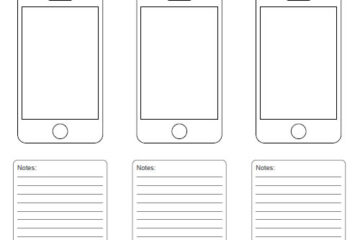
Wireframing is an exercise that requires only a pencil, paper, and time. This activity is thought-provoking and allows anyone to conceptualize the structure and flow of their idea. It helps identify each type of user and user experience (UX) with no tech required.

To start, find a wireframing template to draw everything on screens of the device(s) your product will be used on. For example, if it’s a mobile app, find a wireframing template that includes blank smartphone screens and space for notes (example) to describe each state and how everything connects within the user interface (UI).Wireframing is used mostly to conceptualize digital products, but sketches help jumpstart physical products as well. If it’s a physical product, test your drawing skills by highlighting how different elements collectively come together to form the final embodiment. If it’s a storefront, determine the ideal space by sketching how customers move within it. If it’s a network of parts, draw how the system comes together.

Along with clarifying concepts for yourself, wireframing makes it easier for others to follow how everything fits together. Time spent here saves money if development is eventually outsourced because it curates a roadmap to avoid costly detours. When building a team, wireframes show you’re serious. This visual asset helps to explain the angles and makes it easier for others to contribute.

While product design and the business to support it will need to advance, earnest wireframing helps idea machines dodge melting momentum. Remain willing to learn but consider using this early move to help avoid paralysis by getting crafty as less technology brings more ideas to life.

Brewed From Within
#70 📖 Technology

By Ben McDougal, ago