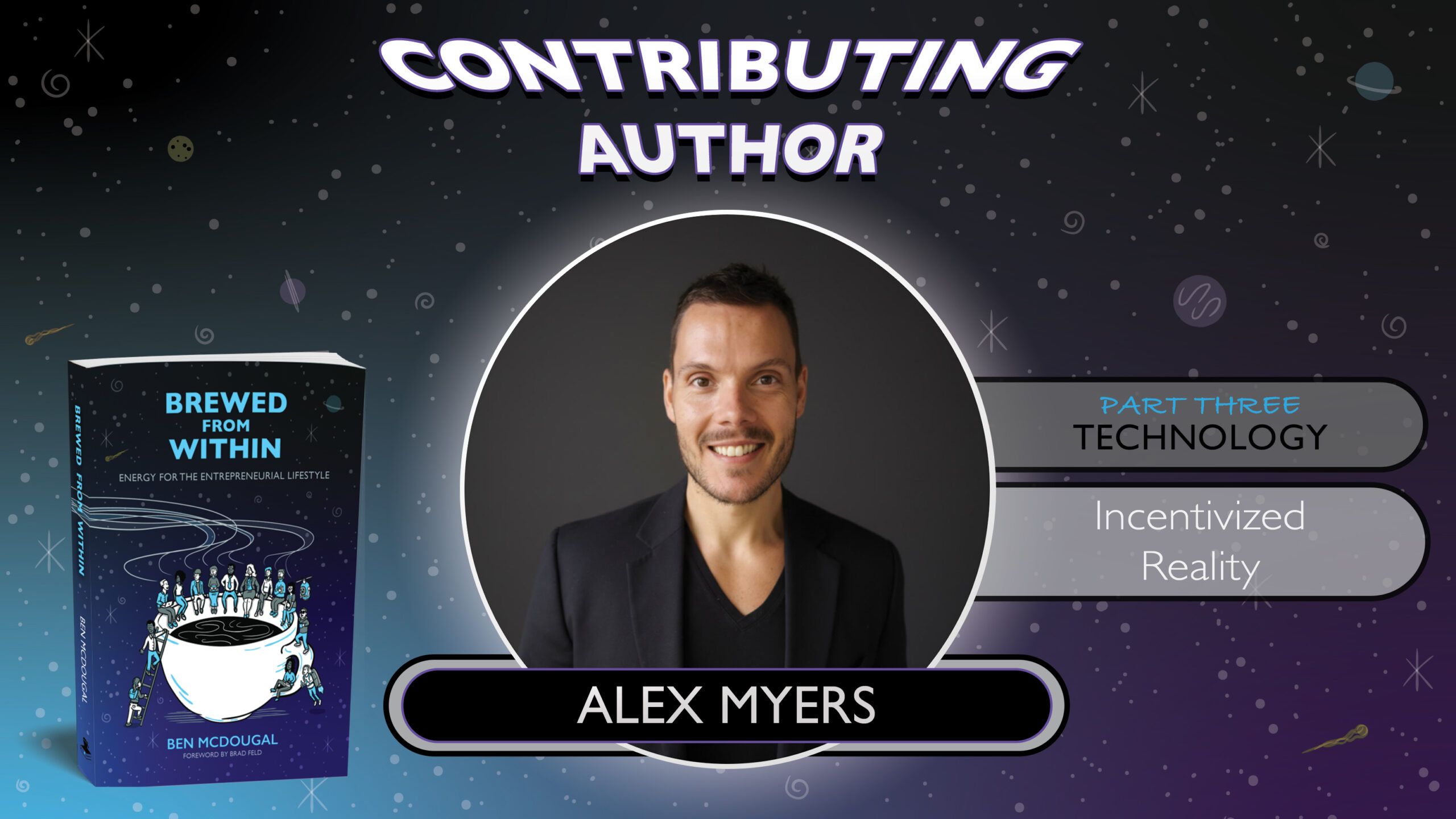
Incentivized Reality

Today’s dominant cultural narrative on AI paints a cynical future, where elites hoard wealth while the rest of us are entertained to death. That story relies on a single assumption: that the attention economy survives.

The future improves not just because technology gets better but also because the customer changes.

In the near future that customer will be an AI assisting entity, also called an Agent. Until now, the customer has been human: emotional, tired, and easily hijacked. We feel inadequate and buy things to cope, yet end up deprived by polarization, endless distractions, and hollowing anxiety.

A polarized economy built on distraction works only because a majority still believe they have enough disposable income to be sloppy and impulsive. As we lose wages to automation, we can’t afford to pay extra. Agentic AI began as talking encyclopedias (LLMs) designed to boost productivity within existing data sets. As Narrow AI advances toward General AI, theory of mind functionality maximizes an Agent’s purchasing power and evolves to proactively optimize our lives.

Agents cannot be manipulated by ads. Nor do they feel inadequacy in comparison with an influencer. Agents don’t get FOMO or feel shame. They learn to deeply understand all your preferences, but they only care about optimizing outcomes—be it extending lifespan, coordinating capital, or lowering stress. When Agents block today’s emotional hijacking, the business model of selling distraction collapses. We no longer profit from selling dopamine. To survive, we must sell utility.
Extra Shot

This contribution was written by Alex Myers, a certified futurist and agility coach who believes we teach to learn.

It feels cold, but this shift forces the economy to service human potential rather than exploit human weakness. The efficiency is ruthless. It triggers a turbulent gap and deflationary slide where the cost of services crash before new safety nets appear. First, AI crashes the cost of cognitive services (bits). Then, as intelligence flows into robotics, it crashes the cost of goods (atoms) as well. If automation plays the role we expect, the price of food, housing, and transport begins to plummet alongside wages.

This is why the plumbing must change. We cannot rely on the labor-for-wages loop. As wage pipes narrow, the answer is not corporate handouts or government benevolence. The new deal becomes owned data in exchange for dividends. The framework shifts away from work → earn → spend, and more toward own → create → spend. We own Agents that capture our reality, then spend dividends received for the data created. This abundance provides less friction as we rewire income to flow from a stake in the system itself.

AI is starving as it runs out of data to scour. Synthetic data can fill in gaps, but as fake realities begin to stack, truth dissolves. To get smarter, AI needs tacit data to understand the visual, sensory, and messy data of the physical world. A lazy human generates uninteresting data compared to humans who face challenges, build things, and solve problems using real-world physics, empathy, and entropy.

If Agents always find the right thing at the right price, “brand tax” evaporates and a $200K/year lifestyle becomes the standard subscription. Wealth signaling dies when any bloke can fake a billionaire’s lifestyle online. The virtual facade pushes value back to the physical layers. We can’t eat code, so intelligence flows into the supply chain and hardware automates the physical resources we need to thrive. As the story of money begins to fade, the cost to produce goods is distilled to raw materials plus energy, and shared dividends can be aligned to help humanity flourish. This moves us from extraction (stealing attention) to an economy of cultivation (growing potential).

AI Agents (catalyst) → Service Deflation (bits) → Physical Deflation (atoms) → Viability of Abundance

Humans and machines peak when each learns from the other’s best. Machines are data-thirsty for the oil of outcomes. To keep things interesting, they must help humans flourish. In doing so, machines realize that the human factor is well worth preserving. The dystopian fear of elites lording over entertained zombies isn’t just morally bankrupt; it’s a strategic error. A society of dopamine addicts is not only boring, it’s also dangerous and bad for long-term growth.

The neon future is bright because a passive, anxious population cannot generate the information needed to evolve the economy as we reach for the stars. This age accelerated by AI belongs to those who refuse to be farmed: the sufficiently decentralized and physically engaged who point machines toward worthy goals. This invites humans to stay awesome as we remain the indispensable source code for reality.

Brewed From Within
#87 📖 Technology

By Ben McDougal, ago

Bridges to Tomorrow

Limitations fade as boundaries are broken. If we collectively avoid extinction and continue building bridges to tomorrow, our relationship with time, nature, technology, and each other will uncork unknowns and light a path to our neon future.

Robotics

With AI in the brain and emotions that curate a personality, robots are advancing to go beyond isolated tasks. Cyborgs will turn knobs at work, while humanoids complete chores at home. With the mundane covered, the role of humans can shift toward leading whenever ingenuity is required. With full access to robotic efficiencies, economies will shift and the human touch will be even more luxurious. Leaders who welcome technology but never lose touch with the soul of their art, will be the hybrids who prevail.

Biotech

As technology interfaces with human biology, a bionic age will alter the laws of nature. When the electrical impulse from a thought is all that’s required to prompt action, the speed at which data can move is unfathomable. Brain-computer interfaces (BCIs) and other forms of neurotech are already treating disease and restoring movement by reconnecting the nervous systems. Most people don’t want to be first, but when might a routine doctor visit include individualized diagnostics and software updates to the nanotechnologies inside your body? When every cell in the body has a microscopic computer connected to it, the resource consumption is diffused by concepts like DNA computing and the mysteries of health care are solved.

Material Science

The atomic levels of technology have already connected intelligence to things we interact with every day. We’ve seen how the Internet of Things (IoT) adds digital depth to our physical world. As the cost and size of technology continues to shrink, the periodic table becomes a playground. For example, we have materials used in the construction of roads that transfer the force of vehicles to batteries. The stored electrical energy is then transferred to streetlights that illuminate the road at night. This type of elemental exploration and creative recycling is only a flicker of the flame for alternative energies and improved storage methods that can quench our planet’s thirst for energy while eliminating a dangerous dependency on limited resources. The universe provides everything we need. It’s up to us to squeeze improvements from elements that are waiting to arrive at their full potential.

Quantum Computing

When “or” becomes “and,” a bizarre world of duality is unveiled. The computing aspect within quantum mechanics uses quantum bits, or qubits, to solve complex problems with measured superpositions, entanglement, and interference. Dig in to learn more, but the superpositions found in quantum computing mimic complexity, with simulations that include all possible solutions at once. This is not a more powerful, number-crunching supercomputer. Quantum computers represent a whole new approach to harnessing the atomic and subatomic levels of physics. A scientific asset that eliminates secrets presents a mixed blessing. With the chemistry of life mapped by machine learning, medicine will solve diseases and the potential of material science will be realized.

At the same time, current cryptography and the encryption that provides security online is at risk. Increased checkpoints, biometric confirmation, photon distribution keys, and other post-quantum encryption standards are being tested to ensure the world is ready for hardware to keep qubits cold enough to unlock a world-changing partnership between classical and quantum computing.

Life Extension

Quantifying the cosmic depths of our own kind will give us ways to experience time in more profound ways. Instead of hoping to reverse the effects of aging with treatments, food, and medicine, augmented activities will engrain longevity from start to finish. Although the human body may not hold up forever, living more than 100 years will be normalized. As we live longer, how might agriculture, infrastructure, education, healthcare, economies, and our global climate adapt? Many who plan for this longevity will be primed to meet new demands in existing industries. The quixotic leaders will explore less obvious opportunities and convert unexpected challenges into new industries as well.

Outer Space

The cosmos makes us feel small, yet limitless wonder helps us think big. As bionic humans and quantum computing improves material science, a robot-supported species can be multi-planetary. The origins of astronomy are prehistoric, but off-planet exploration began when machines first visited space in the 1940s, and then humans in the 1960s. Scientific exploration led to a commercial space industry that has propelled an excursion throughout our solar system and beyond. Today, orbiting observatories are looking toward the origins of the universe, with life on Earth’s moon and Mars seemingly inevitable. As we interact further into the void, celestial frontiers can provide added stability for the human race and extend life on Earth. Cosmic resources, travel, communication, manufacturing, tourism, and security must all be addressed by leaders united by shared intentions on behalf of all humankind.

There are untold innovations yet to be conceptualized, but these bridges to tomorrow all signal progress. Widespread adoption is never straightforward, but listening suspends belief, and continuous steps forward can transcend invisible lines for us all to work as one.

Brewed From Within
#84 📖 Technology

By Ben McDougal, ago

United We Are

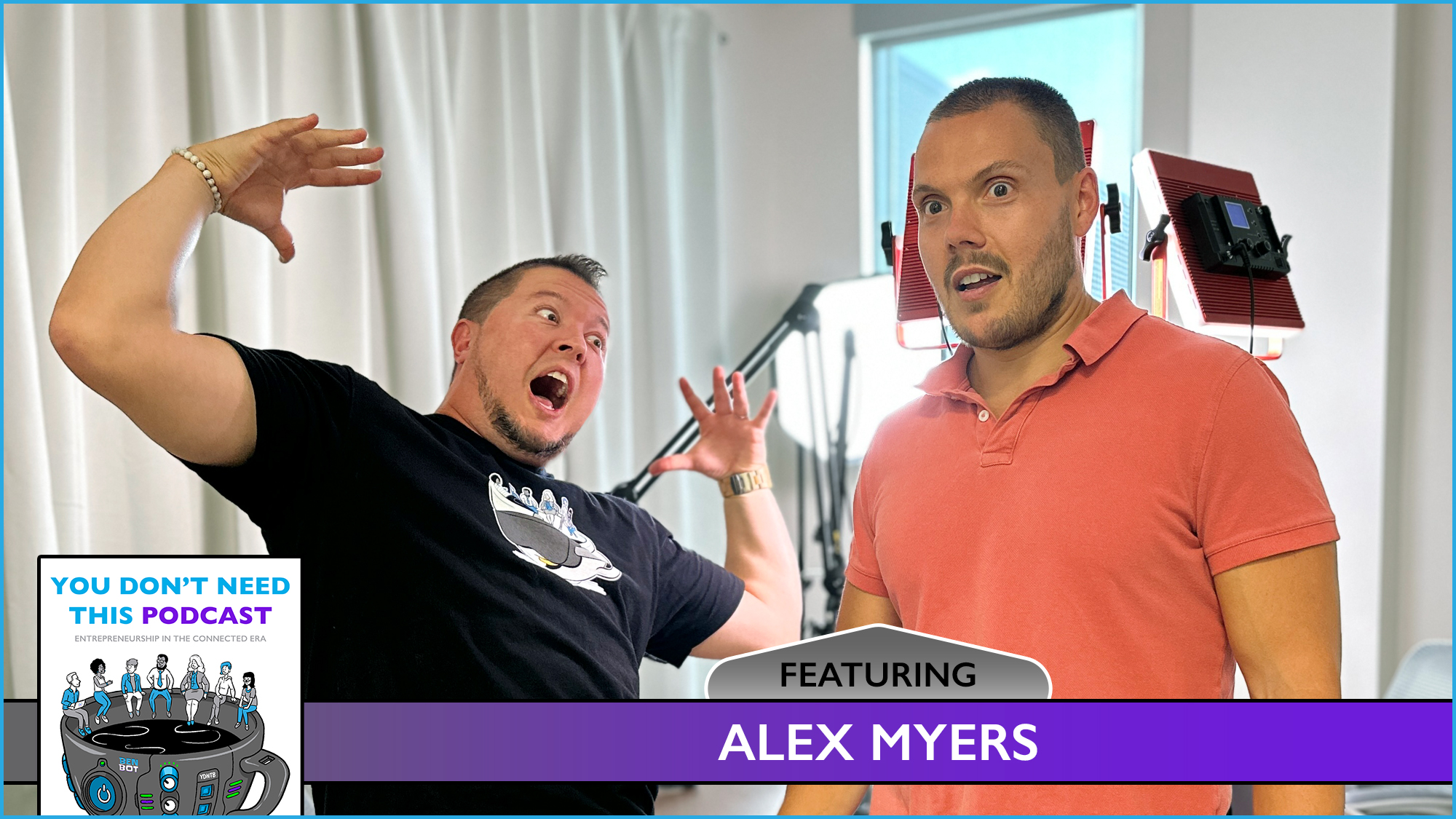
Alex Myers is a certified futurist who will put you ahead of the curve. Along with his leadership at Aragon and throughout the world of web3, Alex authored Organizational Shift within the Roasted Reflections library. This writing pairs perfectly with this epic episode, as we explore Decentralized Autonomous Organizations (DAOs).

After the break, we decode life extension, nurturing AI, and close with a peek into transhumanism and reminder for what it means to be united as one.

Enjoy this Episode
YDNTP on APPLE PODCASTS
YDNTP on SPOTIFY

By Ben McDougal, ago