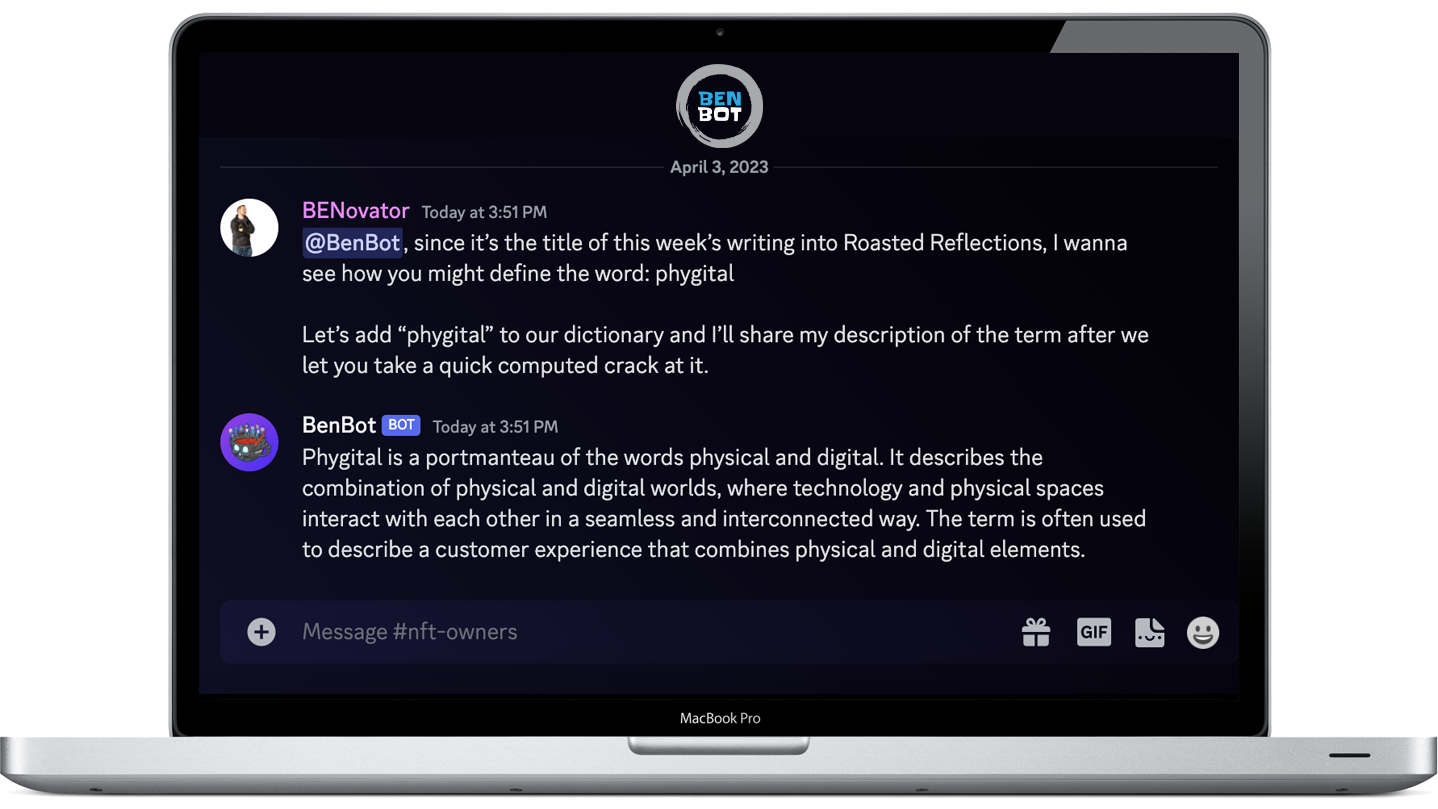
Phygital

Blending a physical reality with digital depth is something humanity has carried out for decades.
Catchy names, memorable phone numbers, short URLs, and QR codes are simple methods that guide a physical interaction to details online. Augmented Reality (AR), Bluetooth, Near Field Communication (NFC), Radio Frequency Identification (RFID), biotech, and smart materials all take it up a notch. Each technology paves a path to provide phygital experiences.

To spin some yarn, let’s stitch this nerdy good term into the world of fashion. Phygital clothing now has passive chips embedded behind a patch or hidden in the garment. When tapped by a phone, the tiny washable chip is given enough electricity to pass data. This prompts a notification that links to digital destinations. The destination may be a website just for fun, but for brands with dollowers who like to collect stuff, the criterion for loyalty is given all new levels. Imagine the status game of a global fan base that unlocks digital assets by working together. An elbow bump from someone wearing your favorite brand can now highlight ownership and unlock gamified layers.

With ownership determined by code and real-time incentives connected to the owner, this nerdy good phygital term quickly becomes a part of the web3 taxonomy. That said, the flex is not about being high-tech. It’s about introducing a remarkability factor.

When remarkability matters, as it often does, phygital twists offer an edge. There are endless examples of digital depth revolutionizing every industry. Computers and smartphones link a physical device to digital experiences, and the first smart vending machine in 1982 would lead to an entire microcosm we call the Internet of Things (IoT).

Today’s chips are cute, but nanotech (think, a computer on every cell) and neurotech (think, brain-computer interfacing) represent a direct line where input and output will require no physical movement. Edges dull as new becomes commonplace, so the time to get phygital is now.

As industries continue to be phygitized, more physical products will be mirrored by digital counterparts, ownership will be obvious, and augmented experiences will be increasingly invisible as our perceived reality is reinforced by the phygital world all around us.

Brewed From Within
#79 📖 Technology

By Ben McDougal, ago

Wireframing

Technology is known for expanding the reach of an idea, but plenty of leaders are not tech savvy.

One common scenario is a concept from someone with industry experience but no ability to code. If an idea has technical components, it’s advantageous to be technical, but this often makes first-time founders feel like there’s nothing they can do without paying for development or immediately recruiting co-founders to help build the product. This locks the idea in limbo, when in fact, there are many methods to make purposeful progress without a line of code.

Tools to make progress without being a developer are absolutely accessible, but knowing what direction to take is time-consuming. Decisions will be needed, but if doubt lingers, one easy way to think through your ideas is to visualize each step of the user experience.

Wireframing is an exercise that requires only a pencil, paper, and time. This activity is thought-provoking and allows anyone to conceptualize the structure and flow of their idea. It helps identify each type of user and user experience (UX) with no tech required.

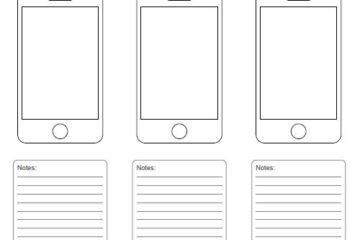
To start, find a wireframing template to draw everything on screens of the device(s) your product will be used on. For example, if it’s a mobile app, find a wireframing template that includes blank smartphone screens and space for notes (example) to describe each state and how everything connects within the user interface (UI).Wireframing is used mostly to conceptualize digital products, but sketches help jumpstart physical products as well. If it’s a physical product, test your drawing skills by highlighting how different elements collectively come together to form the final embodiment. If it’s a storefront, determine the ideal space by sketching how customers move within it. If it’s a network of parts, draw how the system comes together.

Along with clarifying concepts for yourself, wireframing makes it easier for others to follow how everything fits together. Time spent here saves money if development is eventually outsourced because it curates a roadmap to avoid costly detours. When building a team, wireframes show you’re serious. This visual asset helps to explain the angles and makes it easier for others to contribute.

While product design and the business to support it will need to advance, earnest wireframing helps idea machines dodge melting momentum. Remain willing to learn but consider using this early move to help avoid paralysis by getting crafty as less technology brings more ideas to life.

Brewed From Within
#70 📖 Technology

By Ben McDougal, ago

Slow & Fast

Slow is smooth, and smooth is fast. This sounds like a contranym, but when we slow down, it’s easier to find a rhythm that activates kinematics to add elegant speed.

Extra Shot

Accuracy sparkles within rhythm.

This concept serves founders who are building with a turbulent sense of urgency. For example, startup life in an accelerator is a compressed environment for ideas to flourish. When mentors and investors are dedicated to helping founders succeed, milestones will be achieved, but growing too fast can leave the team feeling hollow.

With decisions at every turn, relationships still take time. Early hires are delicate. Financial modeling is complicated. Sometimes the product isn’t even fully baked. This is when slowness adds a healthy thickness. Patience leads to deeper understanding, which bonds to the urgency. Momentum is not only then accelerated; it’s also geared to scale.

By Ben McDougal, ago