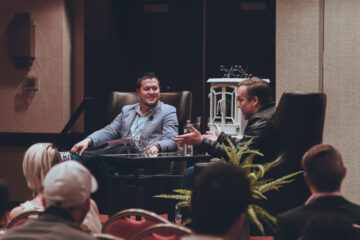
Tenured & Tired

Consistent action transforms opportunity into potential. As experience expands, successful leaders are rewarded with increased capacity, attention, and control. Along with many cultural motivations, financial capital is often involved as well. These alluring incentives make it no surprise that many prominent positions are held for too long. Leadership calls for lasting commitment, and long-term leaders can sustain longstanding progress.

But how can we interact with complacent leaders who have become tenured and tired? People who are coasting. People who act as gatekeepers to progress. People who hold on to power from the past.

When starters run into the aloof, misaligned energy can lead to a standoff. Time is the ultimate answer, but what if progress is needed now? Every situation is complex because of the environment, people, and organizations involved, but here are tactics that work no matter the circumstance.

The first leans on social currency. It requires us to set the ego aside and instead celebrate all that the accomplished, yet stubborn gatekeeper has achieved. Use respect, kindness, and appreciation to form a bond. Relationships that feel less transactional often create leniency toward new ideas. When a crack in the wall of inactivity is created, be the glue that maintains the integrity of the existing system. For example, “I’m too busy” is a common qualm, so lean into that pain by offering to execute ideas that sparked mutual interest.

It’s important to be realistic in these moments, because when promises are made, credibility is at stake. As you light a path toward progress while you also champion change by evolving ideas into reality, trust is gained and your ability to continue making a ruckus increases. Along the way, take responsibility for failure, but give credit away when success is achieved.

If an organization is involved, another tactic invites the tenured leader to level up their team by activating a colleague. This provides a new hire the chance to get personally involved within the startup community, while the organization is seen as being engaged within the entrepreneurial ecosystem. It’s hard for some to understand that time spent in the wild is more valuable than clocking time in the office, but if the organization allows this person to show up, everyone wins. The new community member feels a boost of innovative energy and brings intrapreneurial vibes into the organization, while the startup community benefits from fresh perspectives and expanded support.

Extra Shot

“Make things better by caring enough for those we serve, to imagine the story they need to hear.” –Seth Godin

If you’re tenured and feeling tired, you’re not alone. We all experience motivational ruts and emotional dips. Even in ideal situations, leading for any length of time is depleting. Markets, products, services, teams, strategies, and cultures change as well, which shifts how your own interests and skills align over time. If haphazardness is left untamed, a lack of purpose impacts your attitude and everything around you. When the urge to settle drags us away from being our best, setting new milestones helps to spark fresh enthusiasm. Other galvanizing tactics include trying something new, developing other areas of your career portfolio, resting, reading, writing, hibernating for a longer break, or quitting if it’s time to write a new chapter. Even if it’s challenging, make an effort to find fun and be wary of consuming more than you create.

Once rejuvenated, get back into the startup community. Even if we’re just listening, we can feel invigorating energy from the creative ambition of others. New opportunities will emerge for experienced leaders, but there’s no rush. Instead, adopt the inspiration. Let others lead, and use fresh intensity to break through emotional lulls as you uncover more ways to make an impact with your art.

Brewed From Within
#61 📖 Leadership

By Ben McDougal, ago

Playforce

The expectation of top talent has evolved. People crave a connection to time that delivers a sense of purpose and belonging. When work feels like play, the lively environment invites people to take on bigger challenges. To support the future of work, today’s students, educational organizations, employees, and employers must adapt together.

When we think about work that feels like play, it’s not just pinball all day. The definition of “fun” is to spend time doing an enjoyable activity and to feel engaged. When a team has fun with satisfying work that matters, the group’s true potential is unlocked, and individuals are more likely to become indispensable. This leads to more generosity, laughter, caring, scientific questions, learning, gift-giving, and mapmakers eager to go beyond what’s expected.

EXTRA SHOT

This contribution was written by Elizabeth Tweedale. Elizabeth is a founder who is passionate about technology education, AI, and preparing children for the future.

In addition to more flexibility and fair compensation, employees want greater autonomy. Employees want the freedom to be creative and to find purpose in the way they spend their time. When this balance is achieved, people are happy, and the sense of satisfaction they feel allows them to do their best work. This culture leads not only to more innovative productivity but also to lasting retention. It’s an oxymoron, but a playforce earns this lasting retention through a shared freedom to believe in the mission, people, target market, service/product potential, and timing.

Too often, attempts to optimize employees’ work-life balance stems from a flawed assumption that we must create boundaries to differentiate our life and our work. The idea of a “work-life balance” is a corporate illusion not suitable for the entrepreneurial lifestyle.

The neon future of work creates an experience where life and work coexist as one. This is possible when labor looks like work to others but feels like play to us. This activates a culture where retention is natural due to a genuine interest in a shared direction. This type of playforce environment welcomes anyone to leave when a quest is no longer the best opportunity for their life. This bizarre freedom is balanced because it’s shared by leaders who assume positive intent but can also make moves when an employee no longer aligns with the time. This mutual admiration transforms a team that shares a creative way of being.

As today’s workforce is transformed into tomorrow’s playforce, let’s consider the difference between work that feels like play, versus work with proverbial playgrounds nearby. When fun activities serve as a distraction, the facade of fun will wear off.

It’s also important to remember that what’s fun for one person could be more of a chore for others. Personality assessments and ongoing coopetition help leaders sense team dynamics. Acting professionally does not mean dimming one’s honest personality. We want people to be themselves.As professional comfort is paired with an eagerness to make things better, people can focus.

If the future of work is play, we must activate children with creativity, involvement, and adaptability. The future is their playground, and no permission is needed to contribute. Education can be about delivering access to culture, skills, tools, and purpose. When children connect, play, and learn with passion, they engage not because they have to but because they’re having fun. This supportive sandbox empowers students to win the game of education and then go beyond it. As students grow, Playforce Principles help them understand superpowers and build beside evolving interests.

This translates into employers and employees who enjoy significant roles that feel tailored for what they’re best at. Together, we can change the equation and make work our lifestyle, setting us free to have fun while making an impactful and lasting difference.

Brewed From Within
#56 📖 Leadership

By Ben McDougal, ago

Airport Foot Massage

Scripted ice breakers are usually lame, but a fun one invites participants to share something that others may not know about them. There are many ways to approach such a prompt, but a response I once threw in the mix was my unassuming indulgence in foot massages at airports.

After traveling, there’s something bougie about having your tired feet rubbed while endless strangers pass by. Along with mental relation in a very public environment, tightness can be melted after a conference, team meetup, golfcation, or whenever you had fun on your feet.

Transitions came to mind when a recent airport masseuse was whisking my feet into mashed potatoes. A tension arrived as the artisan prepared to switch from one foot to the next. There was an undercurrent of disappointment in that one foot’s rub was coming to an end, yet this feeling disappeared when the next foot received its first touch of attention.

This tiny transition accentuates the kaleidoscopic variety of shifting twists we experience in endless ways. Unconscious, planned, and unplanned changes happen all around us, yet some transitions bring added avoirdupois or take more time than expected.

The route toward a smooth transition is different for every situation, but one tactic to help navigate any transition is to acknowledge the past, then use the present to concentrate energy toward what’s next.

This seems obvious, but our ego often tries to pull us back to what we may be leaving behind. For example, a sense of loss can be felt when leaving a team or as one steps out of an active leadership role. When something has become part of our identity, it’s no surprise that transition brings tension. Will you still be respected after you’re gone?

When leaders let others lead and depart with a sense of abundance, it takes time, but appreciation will last.

Brewed From Within
#52 📖 Leadership

By Ben McDougal, ago

Generosity Builds Trust

The art of connection aged in a readiness to consistently give without expectation leads to unpredictable opportunity.

Being generous can be as simple as showing up, listening, making a strategic introduction, or providing what paying customers anticipate. This form of benevolence instills wonderment and appreciation from others. Perennial contributions that accelerate others will earn credibility, and over time, trust grows. This is invaluable because humans collaborate with people they know, like, and trust. Trust then allows leaders to assume positive intent. This tightens the tribe and supports more people with big ideas.

The vulnerability required may introduce new challenges, but the risk is worth the reward as we collectively build at the speed of trust. This can be hard to understand for those who have been bamboozled in the past. The competitive nature of capitalism hardens us as well. Trust is tough to earn and easy to lose, but generous leaders know that when more people find success, the sense of abundance translates into fresh ways for everyone to thrive.

Extra Shot

Deliver on the promise.

As trust leads to expanded opportunities, do not dilute yourself to mediocrity. A pitfall for generous leaders is saying yes to everything. The perception is that everything is important and more is better, but overextended leaders burn out. It’s hard to give when we’re too busy so stay receptive, but learn to say no.

This can be done respectfully, and there is usually a way to remain generous, even when we’re choosing to be skillfully selfish for the greater good. Maintained capacity ensures that trust built from long-term generosity provokes the right opportunities, with the right people, at the right time.

Brewed From Within
#42 📖 Leadership

By Ben McDougal, ago

Import Knowledge

The focus on a local business environment supports those we share resources with. This concentration optimizes the values of proximity, but overextending “local first” can devolve into close-mindedness and groupthink when such a focus is not accompanied by imported knowledge, global connectivity, realistic awareness, and inclusive collaboration.

Thanks to the efficiency of our connected era, increased proficiency is just a click away. It takes an extra effort, but inviting outside perspectives into local conversation normalizes diversified feedback and bolsters intellectual awareness. The sense of abundance paired with a shared experience adds broad-minded confidence within a community. This pioneers purpose and attracts more of what an entrepreneurial ecosystem needs by leaning into what it already has. Over time, this thickens cultural elasticity and opens fresh conduits for collaboration.

Extra Shot

Invite outsiders to insider conversations.

These intellectual and societal bridges give leaders a chance to export knowledge as they interact beyond the local environment too. This extension widens the range of understanding and diversifies our overall potential.

Can we maintain our topophilia and stay committed to those we share an environment with while also reducing the limitations of a localized economy?

All flourishing can be mutual in the connected era, so the answer is usually yes. For rural areas with smaller populations, coopetition may be required to build with nearby neighborhoods, but with a combined critical mass of 25K–50K people, enough variety is achieved to do big things from anywhere.

With enough people and a positive-sum approach to importing and exporting knowledge, we combine a love for local with capacity to accomplish more with less.

Brewed From Within
#46 📖 Leadership

By Ben McDougal, ago