Atmospheric

Why do we insist on talking about the weather?

When there’s nothing else, atmospheric conditions offer an early bond between strangers.

It’s a safe way to avoid awkward silence. Weather is always changing and may be one of the easiest forms of small talk, but it’s just so shallow. Remain courteous to cordial strangers, but for anyone we already know, talk of the weather is weak and pointless. Now, there are meaningful topics like climate change, severe weather, and contingencies for planned activity, but sagacious leaders make it rain with thoughtful questions that draw out deeper discussions.

Breeze past the weather talk to respect people’s time, to show an interest in real progress, and to forecast more relevant bonds that last.

Brewed From Within
#43 📖 Leadership

By Ben McDougal, ago

Seasonality

Seasonal changes are revitalizing. The awakening of spring, the relaxation of summer, the release of fall, the refreshment of winter, and endless surprises keep us all bewildered. What if seasons apply to our work as well?

Agility awaits those who think of a job, specific roles, projects, experiments, side hustles, content creation, or entire business ventures more like creative seasons.

Quality takes time and consistency requires sacrifice, but seasons change. This reality makes decisions easier to make and action more accessible. Stress is typical when we care enough to ship something we’re proud of, and yet, every story ends. Embracing the seasonality of impermanence trims the fat of forever.

Extra Shot

Seasons change but never lack significance.

As we dance with new pieces of our own puzzle, milestones track progress and a beginner’s mindset keeps valiant optimism flowing. When a creative season begins to connect with the right audience at the right time, a nourishing sense of success emerges, which can extend that creative season. No matter how long a creative season lasts, prudent awareness along the way helps leaders remain harmonized with how time is invested, while the subtle lightness adds liberating vibes to keep an uncharted future interesting.

In the event energy begins to stall, as it often does, ensure you’ve done what’s needed to push through dips, gather feedback from diverse perspectives, avoid isolation, and be honest with if/how you want to continue navigating this quest. When these inevitable impasses arise, find your own version of unanimity, knowing that even if a creative season is held in abeyance, seasonality makes something you spent time with more natural to return to in the future.

If it’s time to leave one season behind, avoid potential regret by appreciating the progress made. Take time to reflect on learnings, put the old seasonal decorations away, and maintain relationships as you regenerate energy and lean into whatever season is next.

Brewed From Within
#62 📖 Leadership

By Ben McDougal, ago

Intrinsic

We all have bad days. When they string together, the stress gets heavy. This mental weight becomes especially unwieldy when the cause is unclear. If down days stack up, searching for the origin can lead to liberating awareness.

This is not a simple pursuit. Emotions are transient, external factors remain in flux, and the labyrinth of life is winding. General therapy is helpful, but well-being within the entrepreneurial lifestyle is a moving target.

To start, destigmatize the circuitry between leadership and mental health. Be content knowing it’s not always rainbows and unicorns. This is a lonely rollercoaster with highs and lows at every turn. Recognizing this helps us appreciate the impermanence of emotions.

Leaders thrive on being exposed to new things, interesting problems, stories from different people, and building into whatever we care about. When there’s a lull in the action, it’s easy to think the ride is over. While this thought may be misguided, it’s disheartening and can lead to an isolating absence of joy. Identifying intrinsic motivations help leaders navigate and go beyond temporary despair.

As the highs of a milestone moment start to fade, be honest with your situation and don’t shy away from what got you there. Intrinsic motivators—like the love for family, fun with friends, helping others, thinking big, physical activity, and perceptual learning—guide us back to peace and happiness.

Along with internal observations, lean on peers who understand the realities of an entrepreneurial lifestyle. Welcome sincere conversations loaded with listening, and you’ll soon have others wanting to help you in return.

Here are a few more effective ways inquisitive leaders can actively maintain their mental fitness:

  • Try new things.
  • Reconnect with nature.
  • Travel to expand the mind.
  • Link teaching with learning.
  • Create more than you consume.
  • Stay centered with physical/mental exercise.
  • Avoid isolation; don’t be afraid to ask for help.

    Strength does not come from ignoring pain. Within the crucible of an entrepreneurial lifestyle, hardship is inevitable, but storms will pass and self-inquiry keeps leaders aware of their own fortitude. This reveals more stepping stones that illuminate fresh motivation to help leaders transcend momentary setbacks.

    Brewed From Within
    #121 📖 Life & Happiness

    By Ben McDougal, ago

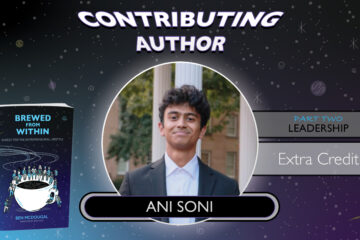
    Extra Credit

    As a high school student interested in business, extra effort was required to first find and then get involved with the local startup community.

    There are business and entrepreneurship classes at any school. Extracurricular programs and student-organized clubs also hint at what an entrepreneurship is about, but too often these insulated activities don’t paint the full picture. For students interested in understanding the realities of an entrepreneurial lifestyle, the assignment is to meet more entrepreneurs.

    EXTRA SHOT

    This contribution was written by Ani Soni. Ani is a student leader at the University of North Carolina.

    Finding entrepreneurial events was easy; showing up for the first time was not. As a student, an environment full of adults can be intimidating. My own ability to contribute felt unlikely, which fed more hesitations. Succumbing to unspoken fears would have been easier, but it was time to leave the training wheels behind.

    A willingness to show up paid off quick, as fellow attendees were welcoming and incredibly interesting. The early initiative I showed seemed to make more people eager to help. This made showing up again easy. After a few months, it was clear. Entrepreneurs sure like helping one another.

    Listening unlocked new learnings, but I was also able to contribute more than expected. There were opportunities to provide feedback, discuss trends, share a young person’s perspective, and even lend a helping hand. The more I gave, the more I received.

    This demonstrated how unconventional action shines bright when chill is status quo. Real-world extra credit was earned by expanding my network before it was needed. Awareness around non-student activities also fed increased curiosity, which can be combined with this type of initiative, more real skills, and vocational knowledge that can caffeinate whatever we care about. Embracing Playforce Principles built confidence to continue my education along with a readiness to make my mark within the realities of our time.

    Brewed From Within
    #60 📖 Leadership

    By Ben McDougal, ago

    Reluctance

    There’s an art to keeping the right people engaged for the right amount of time. When things feel stale, it’s a signal of disinclination. To infuse new energies into a group, create space by releasing the reluctant.

    Life happens, so it’s natural for interest and commitment levels to change over time. While engagement may expand, anyone’s ability to contribute can just as easily be reduced as transition occurs, missions evolve, and roles transform.

    The spiral of someone’s reluctance will soon create stress between others who are still devoted. The longer this misalignment lingers, the more tension it creates.

    Even so, people hold on too long, and most of us choose to avoid confrontation. This extends the pain for everyone. The reluctant feel guilty for not contributing while the zealous begin to resent the perceived lack of integrity. Stakeholders experience obscure toxicity and less dependably, which devolves into reduced trust, enthusiasm, and engagement.

    Extra Shot

    “Winners quit all the time. They just quit the right stuff at the right time.” –Seth Godin

    Keeping an eye on our personal bandwidth adds clarity for what and when to quit. This self-awareness helps leaders stay centered and motivated by the way we spend our time. It also helps maintain good relationships by avoiding the unnecessary roughness of dramatic encounters, even when it’s time to explore a new direction. When bridges don’t get burned, we can make a ruckus, move on, and actually expand our impact while still staying connected.

    For leaders dealing with lingering reluctance, let’s finish with a few friendly tactics to keep a group vibrant, while maintaining lasting loyalty from the departed.

    Start by respectfully inviting individuals who have written their story to graduate gracefully. Sometimes, good people simply don’t want to quit on the people or program they care about. If time has been committed or someone’s identity as a leader is closely connected to their position, the transitional period takes more time, and the group will need to show proactive initiative to prove they are ready to lead without the departing individual. Rarely is there a perfect time to step down, but when given a polite opportunity to exit with elegance, appreciation leads to smooth transitions.

    Another way is to ask everyone to do more. Inviting initiative provokes less committed members to bail. The danger is that you may lose others who may not like being asked to go beyond the original game plan.

    Lastly, recognize the end will always come. Be clear with expectations, transparent as things evolve, and keep succession a part of ongoing planning.

    Along with being open up front, complement internal clarity with external celebration. Acknowledge individuals who made a difference in the past, and praise those who are being generous now. This nurtures an environment where people are inspired to do their best when they’re involved, without feeling a sense of loss when it’s time to let go.

    Brewed From Within
    #54 📖 Leadership

    By Ben McDougal, ago