Conversationalized

Humans have long used technology to communicate. As we taught machines to see, learn, speak, and move, computers were invited into the conversation.

ChatUX is technology that helps computers speak our language with a conversational experience supported by deep learning and large language models (LLMs). ChatUX makes AI easier to enjoy with a potential for accurate, unbiased, and meaningful interactions. This allows the seven types of AI to be so much more than pointless help desks, deceptive lead generators, misleading content, or fake followers on social media. Instead, the objective is to access endless insight with an ability to translate it effectively.

When upgraded this way, ChatUX bridges trust channels to personalize education, enhance business efficiencies, assist customers with empathy, deliver meaningful mental health therapy, and make past tasks irrelevant, all while parlaying multimodality so anyone can effectively express ideas.

As the way we communicate evolves, improvements geared for safety and customizability will keep technology in the conversation. The freedom of speech is a complex topic, but thoughtful guardrails that identify dangerous rhetoric help to keep everyone safe without unwanted censorship. Alongside responsible policymaking, influence layers help to customize ChatUX. This can add depth to personalize an interaction or to provide internal teams with a more reliable source of truth.

With technology conversationalized, prompt engineering became an evolving professional field of reconstructing inputs to optimize outputs. The demand for a brand-new mode of communication reminds us that real skills are required to remain relevant. Fortunately, when it comes to technology, an increased effort here often decreases effort there. In this case, learning to communicate with technology may require new resources, but ChatUX bolsters a paradigm shift where access to knowledge becomes pedestrian.

Extra Shot

When the cost of information is zero, willpower becomes a path to wealth.

We prepare our children with communication skills while instilling kindness, honesty, empathy, integrity, and so much more. From the words we use to the interactions we share, positive traits can be ingrained into technology for good.

Brewed From Within
#81 đź“– Technology

By Ben McDougal, ago

Creation vs. Consumption

Before the music, before the crowd, there’s one voice asking a simple question: Can you hear me? Creation starts here. Not with a perfect line or the finished song. But with the smallest test of presence.

EXTRA SHOT
This contribution was written by Corey Dion Lewis. Corey is a leader in healthcare who creates impact networks where care is equitable and shared far beyond the clinic.

Creation over consumption sounds like a slogan, but for most of us it’s a balancing act. Consumption is how we learn from the world around us. It’s also a comforting remedy that helps us reset. This supplement for the soul keeps us tranquil, but in excess consumption mutates into a drug devoured by a subconscious addiction.

We are all imaginative, and being creative makes us happier, but we live in a world where algorithms reward spectators. This has us scrolling, watching, and absorbing everybody else’s thoughts, pain, and opinions before we check in with our own. This does something to our mind, and it’s not neutral. Consumption without creation leads to overload. The American Psychological Association reports that heavy, unfiltered exposure to news and digital content is associated with higher stress, anxiety, and burnout. There’s just too much coming in. This feeds unfair comparisons. Suddenly, everyone else’s life is your own measuring stick. We start to feel like our voice, our story, and our unique angles do not matter as much as the polished content we continuously consume.

As the emcee of your own life, there’s no time to hope someone hands you the mic. We must choose ourselves, make sacrifices to unite an audience, step into the light, and even when our voice is untested, speak to add energy into the room. Whether we succeed or learn, such personal progression brings us to life as we feel the thrill of creation.

That is mental health in action. When we create, we regulate. When we speak, we release. When we name what we feel, it loses some of its power over us. Pressure turns into expression. More thoughts, often the hard and heavy ones, become art. The sounds, images, pages, and other multidimensional content become part of our creative practice. Creation is the path to descriptively understand systems, parts, processes, and how we make things better.

The beauty is, it doesn’t have to be dramatic or impressive. Drawing, even badly, reduces stress and eases anxiety. Gardening can do the same. Cooking with intention—chopping, seasoning, tasting—pulls you into the present. All forms of creativity ask your brain to be active, engaged, and creative. This produces positive emotions.

Creation builds a sense of mastery and progress. This strengthens self-esteem and resilience. It gives you a channel for self-expression, so emotions and experiences are being worked with, not just numbed by distractions. Over time, crafted creations become the highlights of your stories. These bookmarks add depth to future moments and drive toward a joyful side of our own mental health continuum.

While consumption can bump our spirits more toward a depressive state, the goal is not zero consumption. Some of what you consume is nourishing. It feeds your ideas, your learning, and your rest. The balancing act is spending more of your day making, expressing, and contributing than you do scrolling, binging, or buying.

We don’t have to change everything overnight. We don’t need a ten-step plan or a perfect morning routine. We need one small moment each day where we choose to create instead of consume—one page, one sketch, one idea voiced, one boundary set, one feeling named. Creation over consumption is not a rule; it’s a relationship we build with our own voice. Express one true thing in your own way, knowing we need you and await your creations.

Brewed From Within
#97 đź“– Life & Happiness

By Ben McDougal, ago

Adaptability

As leaders prepare others for an unpredictable future, an interest in understanding answers and an eagerness to claim confidence are essential. A vital element to both qualities is an ability to constantly adapt.

When technology makes answers easy to find, adaptability makes the human touch unmistakable and more resilient. As students traverse problem-solving activities, they learn to appreciate what goes into the answer. This leads to deeper understanding and boosts adaptability as assumptions are tested and unplanned obstacles are conquered.

Extra Shot

This contribution was written by Nancy Mwirotsi. She is a leader from Kenya who empowers underserved youth through technology education.

Imagine students learning to code. Before presenting to a large company, their code breaks! Immediate tension is felt, but adaptability keeps everyone calm as they lean into other aspects of the project. Despite the disturbance, their ability to execute through adversity is recognized and rewarded. Outside the classroom, similar manifestations occur when leaders reward team members who adapt to stay ahead. And we see how unpredictable entrepreneurship is, which makes adaptability an ongoing requirement for student founders building without a map.Adaptability strengthens confidence as we then let students lead. When young people are trusted to take the stage, make decisions, or shape solutions, they begin to own their success and to claim a confidence that can’t be taught.

As students claim confidence, adults stop depreciating their capacity. This fosters a two-way exchange for students who see themselves in leaders that motivate them to explore, make mistakes, and yet always remain valued. A shared interest in how things work can then amplify potential as technology is introduced to create awareness, multiply real skills, and actuate ideas. This experience encourages students to go beyond just using technology to find the easy answer. It elevates those who understand how technology works, which continues to shape courageous innovators that avoid a temptation to be mediocre.

Within the unknowns of constant change, adaptability keeps us curious. Enduring curiosity can then activate initiative supported by real skills and lifelong learning. Leaders who create environments that help others build proficiency in the dynamic elements of Playforce Principles, prepare us all for the future of work.

Brewed From Within
#58 đź“– Leadership

By Ben McDougal, ago

Everyday Activism

Power from the past keeps us moving, but effectiveness dwindles when fewer voices are heard. Fewer voices help those in power grow, but history reminds us how a lack of diversity is not only dangerous, it’s also boring. This invites the leader inside us all, to design action for change by empowering diverse populations.

EXTRA SHOT
This contribution was written by Andrè Wright. Andrè is a thinker who uses design, fashion, and art to inspire students and community-driven movements.

To thread a topic for discussion, let’s stick a few bars on the global language of fashion. Our voices can be heard, but sometimes the volume makes a message miss. The art we share online is material but can be lost in the sea of content. Efforts add up, but community requires sacrifice. Activate as much energy as possible, but clothing can also speak. What we wear tells a story. This story has many characters, each playing a role in how we feel, think, and act. What we wear either hides or magnifies our mode for that moment. Fashion makes each outfit a creative act.

To thread a topic for discussion, let’s stick a few bars on the global language of fashion. Our voices can be heard, but sometimes the volume makes a message miss. The art we share online is material but can be lost in the sea of content. Efforts add up, but community requires sacrifice. Activate as much energy as possible, but clothing can also speak. What we wear tells a story. This story has many characters, each playing a role in how we feel, think, and act. What we wear either hides or magnifies our mode for that moment. Fashion makes each outfit a creative act.

In America, we dress to impress, to feel the chill, to stand out, to fit in, to perform, to relax, or just to call it good enough. In Tokyo, streetwear is precise, with a quiet confidence, layered intention, and respect for the craft. In Seoul, it’s forward-thinking—experimental silhouettes, fearless self-expression. In Paris, style is posture and effortless rebellion wrapped in restraint. In Milan, heritage meets the edge of luxury with attitude. In Bangkok and Ho Chi Minh City, fashion is adaptive, with heat, movement, and hustle shaping design. In Istanbul, layers tell stories of empire, faith, and modern youth culture colliding. In Mexico City, Lima, and Bogotá, streetwear carries ancestral memory that shines through bold colors and symbolism. In Berlin and Amsterdam, fashion is utilitarian resistance with form following function and identity following truth. Across the Philippines and Sri Lanka, style is resourceful, resilient, and deeply personal.

Streetwear is more than clothing. It’s code. It’s both survival and celebration at the same time. These creative expressions grow stronger when paired with education, lived experience, and collaborative partnerships that invite people in. For any genre, when stories stack alongside real progress, community-driven activism can cook up the ingredients for a movement.

The right audience in the moment (timely) and over time (timeless) sets a direction for these movements. This form of group action involves individuals, organizations, and communities choosing to move together. Together, a vision becomes possible through a compelling narrative. Planning keeps the vision clear. Small, consistent actions—moves that rhyme—are what build trust, assurance, and momentum.

The movements we remember are those that create pathways: opportunities to build leadership, teamwork, and citizenship through creative expression. They don’t just inspire people; they equip them.

We each carry gifts and love people who shape how we show up in the world. That’s what makes our style, our approach to life, entirely our own. This individuality, altered by the environment, also makes us each an accouterment for change.

Everyday activism adds up. The diversity it invites keeps the work honest and interesting. Designed with an open mind and a positive-sum mindset, everyday activists form communities that create conditions where all of us can thrive.

When this happens, we develop more conscious people who can then contribute positively to their families, schools, neighborhoods, and the world—one outfit, one conversation, one shared vision at a time.

By Ben McDougal, ago

Incentivized Reality

Today’s dominant cultural narrative on AI paints a cynical future, where elites hoard wealth while the rest of us are entertained to death. That story relies on a single assumption: that the attention economy survives.

The future improves not just because technology gets better but also because the customer changes.

In the near future that customer will be an AI assisting entity, also called an Agent. Until now, the customer has been human: emotional, tired, and easily hijacked. We feel inadequate and buy things to cope, yet end up deprived by polarization, endless distractions, and hollowing anxiety.

A polarized economy built on distraction works only because a majority still believe they have enough disposable income to be sloppy and impulsive. As we lose wages to automation, we can’t afford to pay extra. Agentic AI began as talking encyclopedias (LLMs) designed to boost productivity within existing data sets. As Narrow AI advances toward General AI, theory of mind functionality maximizes an Agent’s purchasing power and evolves to proactively optimize our lives.

Agents cannot be manipulated by ads. Nor do they feel inadequacy in comparison with an influencer. Agents don’t get FOMO or feel shame. They learn to deeply understand all your preferences, but they only care about optimizing outcomes—be it extending lifespan, coordinating capital, or lowering stress. When Agents block today’s emotional hijacking, the business model of selling distraction collapses. We no longer profit from selling dopamine. To survive, we must sell utility.

Extra Shot

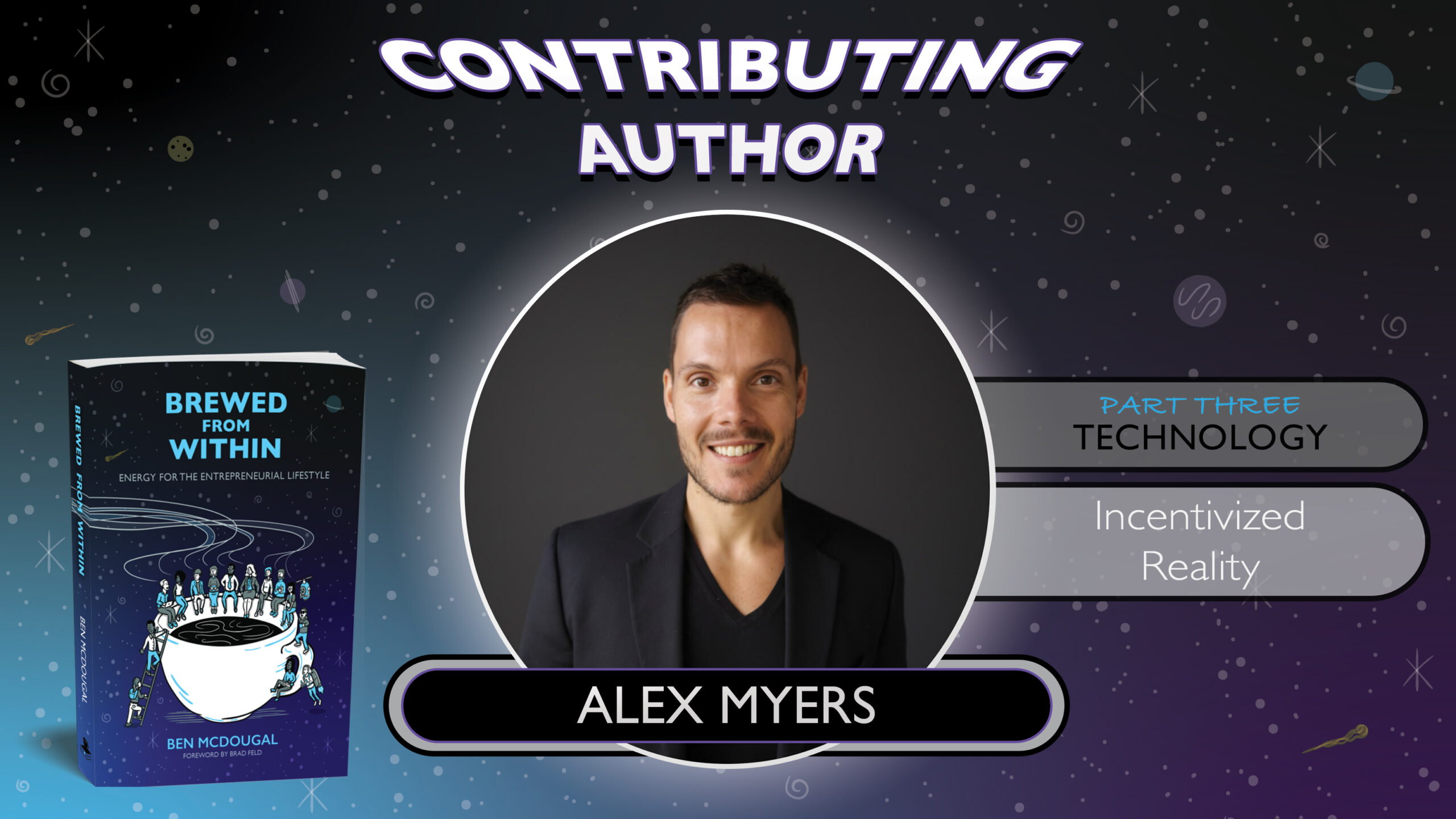
This contribution was written by Alex Myers, a certified futurist and agility coach who believes we teach to learn.

It feels cold, but this shift forces the economy to service human potential rather than exploit human weakness. The efficiency is ruthless. It triggers a turbulent gap and deflationary slide where the cost of services crash before new safety nets appear. First, AI crashes the cost of cognitive services (bits). Then, as intelligence flows into robotics, it crashes the cost of goods (atoms) as well. If automation plays the role we expect, the price of food, housing, and transport begins to plummet alongside wages.

This is why the plumbing must change. We cannot rely on the labor-for-wages loop. As wage pipes narrow, the answer is not corporate handouts or government benevolence. The new deal becomes owned data in exchange for dividends. The framework shifts away from work → earn → spend, and more toward own → create → spend. We own Agents that capture our reality, then spend dividends received for the data created. This abundance provides less friction as we rewire income to flow from a stake in the system itself.

AI is starving as it runs out of data to scour. Synthetic data can fill in gaps, but as fake realities begin to stack, truth dissolves. To get smarter, AI needs tacit data to understand the visual, sensory, and messy data of the physical world. A lazy human generates uninteresting data compared to humans who face challenges, build things, and solve problems using real-world physics, empathy, and entropy.

If Agents always find the right thing at the right price, “brand tax” evaporates and a $200K/year lifestyle becomes the standard subscription. Wealth signaling dies when any bloke can fake a billionaire’s lifestyle online. The virtual facade pushes value back to the physical layers. We can’t eat code, so intelligence flows into the supply chain and hardware automates the physical resources we need to thrive. As the story of money begins to fade, the cost to produce goods is distilled to raw materials plus energy, and shared dividends can be aligned to help humanity flourish. This moves us from extraction (stealing attention) to an economy of cultivation (growing potential).

AI Agents (catalyst) → Service Deflation (bits) → Physical Deflation (atoms) → Viability of Abundance

Humans and machines peak when each learns from the other’s best. Machines are data-thirsty for the oil of outcomes. To keep things interesting, they must help humans flourish. In doing so, machines realize that the human factor is well worth preserving. The dystopian fear of elites lording over entertained zombies isn’t just morally bankrupt; it’s a strategic error. A society of dopamine addicts is not only boring, it’s also dangerous and bad for long-term growth.

The neon future is bright because a passive, anxious population cannot generate the information needed to evolve the economy as we reach for the stars. This age accelerated by AI belongs to those who refuse to be farmed: the sufficiently decentralized and physically engaged who point machines toward worthy goals. This invites humans to stay awesome as we remain the indispensable source code for reality.

Brewed From Within
#87 đź“– Technology

By Ben McDougal, ago