Blocked

“How do you write every week for three years?”

Endless community-driven experiences, the privilege of time, building into connecting things I care about, metrics beyond money, publishing YDNTB, staying curious, finding comfort in uncertainty, and an efficiency that comes with consistency helps me continue to articulate written relics I’ll always be proud of.

Writing has become a part of my practice, but it’s not easy and never will be. Life is beautifully busy and what happens when there’s seemingly nothing to write about?

Can I call it writer’s block and hope nobody cares when Roasted Reflections doesn’t land in their inbox on Wednesday? No. Writer’s block is an illusion. An excuse not to ship. This paralysis is a symptom of prioritization within our practice.

Extra Shot

Don’t wait for inspiration.
Let the work inspire you.

Whether you listen to yourself in private (journalling) or share your heart in public, when you know you’re going to get it done, you become more consciously introspective. You stay more in-tune with what needs to be synthesized, while recursion and the indexing effect helps sustain a healthy obsession. Even when the moment’s thesis is not obvious, you’re strong enough to explore what needs to be said. This becomes a habit that invites anyone to reach higher without fearing the generous act of making a ruckus by shipping the art.

By Ben McDougal, ago

Real Skills

Talent is natural.
Skills are learned.

Instead of abstracting, even nerfing the value of what makes us indispensable by using terms like soft skills or power skills, “real skills” invite the new reality. Knowledge, action, and persistence are still required, but real skills help us connect, communicate, and collaborate as we pursue peculiar work fueled by significance in our connected era.

As Seth Godin writes about, real skills help students, founders, intrapreneurs, and people-centric organizations activate humans working toward shared understandings. This updated term removes the optional vibes out of subtle superpowers that help us go beyond the status quo. To close his 2023 manifesto for teams, The Song of Significance, Godin shares this working encyclopedia of categorized real skills.

SELF-CONTROL

Adaptability to changing requirements
Agility in the face of unexpected obstacles
Alacrity and the ability to start and stop quickly
Authenticity and consistent behavior
Bouncing back from failure
Coach-ability and the desire to coach others
Collaborative mindset
Compassion for those in need
Competitiveness
Conscientiousness in keeping promises
Customer service passion
Eagerness to learn from criticism
Emotional intelligence
Endurance for the long haul
Enthusiasm for the work
Ethics even when not under scrutiny
Etiquette
Flexibility
Friendliness
Honesty
Living in balance
Managing difficult conversations
Motivated to take on new challenges
Passionate
Posture for forward motion
Purpose
Quick-wittedness
Resilience
Risk-taking
Self-awareness
Self-confidence
Sense of humor
Strategic thinking taking priority over short-term gamesmanship
Stress management
Tolerance of change & uncertainty

PRODUCTIVITY

Attention to detail
Crisis management skills
Decision-making with effectiveness
Delegation for productivity
Diligence and attention to detail
Entrepreneurial thinking and guts
Facilitation of discussion
Goal-setting skills
Innovative problem-solving techniques
Lateral thinking
Lean techniques
Listening skills
Managing up
Meeting hygiene
Planning for projects
Problem-solving
Research skills
Technology savvy
Time management
Troubleshooting

WISDOM

Artistic sense and good taste
Conflict resolution instincts
Creativity in the face of challenges
Critical thinking instead of mere compliance
Dealing with difficult people
Diplomacy in difficult situations
Empathy for customers, co-workers, and vendors
Intercultural competence
Mentoring
Social skills
Supervising with confidence

PERCEPTION

Design thinking
Fashion instinct
Judging people and situations
Mapmaking
Strategic thinking

INFLUENCE

Ability to deliver clear, useful criticism
Assertiveness on behalf of ideas that matter
Body language (reading and delivering)
Charisma and skills to influence others
Clarity in language and vision
Dispute-resolution skills
Giving feedback without ego
Influence
Inspiring to others
Interpersonal skills
Leadership
Negotiation skills
Networking
Persuasive
Presentation skills
Public speaking
Reframing
Selling skills
Storytelling
Talent management
Team building
Writing for impact

What a provoking collection of conversation starters! This encyclopedia is a guiding light for when we are being honest with our own abilities, filling gaps on the team, considering session topics for an event, or working to reform educational curriculum. Special thanks to Seth Godin for granting permission to share these real skills as they were written. Real skills are regularly updated to meet emerging demands as well.

Let’s add inclusivity, curiosity, showing up, content creation, systems thinking, accelerating others through the art of connection, identifying founder-market fit, thinking big, mindfulness, following up, pure wonder, and having fun.

What will you brew into the mix?

Brewed From Within
#13 📖 Entrepreneurship

By Ben McDougal, ago

Future of Work

Nancy Mwirotsi is a nationally recognized wayfinder who inspired students to lead by outfitting them with skills in technology and innovation. Over the past 10 years, Pi515 has promoted diversity in STEM careers and graduated hundreds of students, with free programs geared toward refugees, young women, and people of color.

The real skills we talk about in this episode of #YDNTP defines the future of work and empower students to thrive through science, technology, engineering, and mathematics. Have fun!

LISTEN on APPLE PODCASTS
LISTEN on SPOTIFY

By Ben McDougal, ago

Fresh Powder

After a gondola ride, whether you ski or snowboard, you’re not getting far without the right equipment.

Let’s imagine you’ve made it to the top of a snow-covered mountain. The distant view is inspiring and there are endless ways to enjoy the ride back down. Similarly, there are endless ways a business can evolve.

Financial modeling is an important technique that helps us simulate different scenarios for a business.
Extra Shot

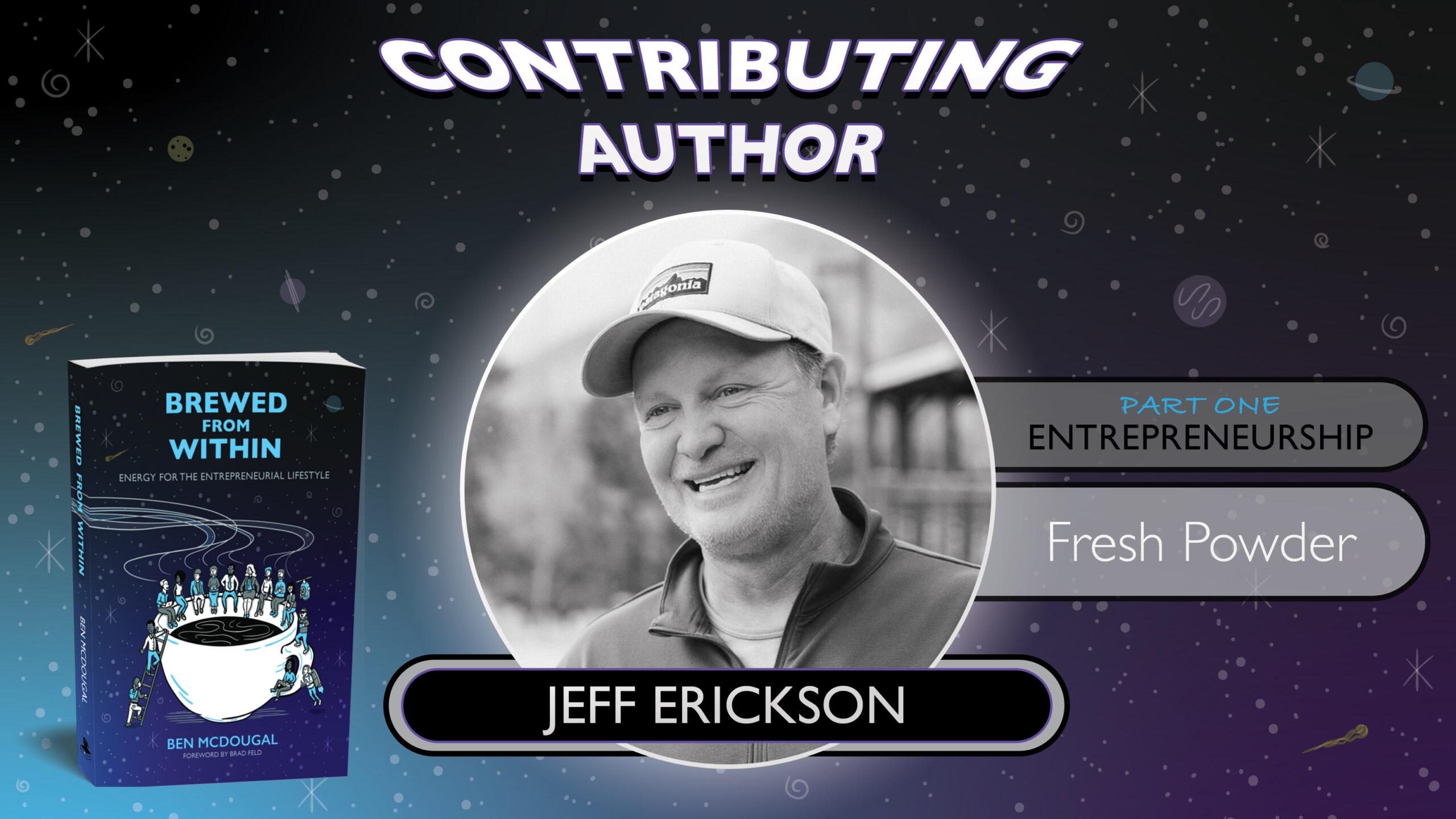
This contribution was written by Jeff Erickson. Jeff is an investor, advisor, and skier on the silicon slopes of Utah.

A financial model helps forecast the financial performance of a company. They are based on the company’s historical performance and assumptions about the future. This tool can be used to make better decisions when raising financial capital and to assess potential returns of a given venture.

Returning to our mountainous metaphor, think of financial models as your map of the snowy terrain. It provides an overview of the area, routes to explore, and dangers to avoid. Like a trail map, financial models use numbers to set the scene, then help us determine the speed and direction of our business. They also help identify potential risks and optimize how different types of resources are used.

A financial model is essentially a roadmap for the future, and it gives investors an understanding of how you plan to generate revenue and scale over time. A solid financial model demonstrates that you have done research into the market, understand potential risks and opportunities, and have thought through the key drivers for success. Your financial model helps investors see how you think about your business and whether you understand the levers that matter. It also gives them confidence when they see that you know how to strategically allocate the money they may invest and that you know how to manage cash flow.

Most investors speak in the language of finance. Terms like run rate, CAC, LTV, runway, and burn rate are common vernacular. Building your financial model helps you learn, decipher, and understand this language of finance, enabling you to more effectively work with investors.

A common mistake is thinking that it’s you and your financial model versus the world. Instead of falling in love with assumptions, work with potential investors by using the financial model to analyze various scenarios. When founders can cruise down the mountain with investors while using a financial model to explain different scenarios in real-time, partners will get more excited about taking the lift back up for another run.

Entrepreneurs need to be aware of the changing terrain to make the best decisions for their evolving business. Let’s avoid the trees and carve out a few steps that will land you in a position to know the numbers.

Define

Before building a financial model, it is important to define the company’s business model, revenue streams, and financial objectives. This information will determine how you structure assumptions for the projections to accurately reflect what could realistically happen with your business.

Gather

Once you define company goals, gather historical data relevant to creating accurate projections. This includes past sales, costs for running operations, generating revenue, customer acquisition, and any other financial data that may help tell the story of your business.

Extra Shot

Prevent that new business idea from floating toward someday by compiling relevant resources that brew confidence in getting others excited to join you.

Build

Using qualitative (industry trends) and quantitative (past results) data points, build realistic assumptions to drive your financial model. This can be done using spreadsheets, but dedicated software makes it easier. With a framework in place, begin with customer acquisition data (sales outreach, paid ads, referrals, etc.). Next, make assumptions around revenue streams by considering all the ways you can make money (product sales, services, advertising revenue, etc.). Continue by including resources related to building a team, then focus on any changes in operating expenses. Finally, consider any required expenses to scale your business and how to finance the venture long term.

Validate

Once initial assumptions are plugged into a financial model, it’s important to track the accuracy of your assumptions each month and to update the numbers based on actual data. With metrics consistently tracked over time, your financial model becomes more accurate and reliable. You will notice trends in customer acquisition, identify the most profitable revenue streams, and monitor your expense projections. Additionally, you will be able to run different scenarios using your financial model to help you confidently make better decisions in running your business.

As we add financial models into an investor pack, dynamic understanding is supported by an interactive tool to project progress. This shared awareness brews confidence and helps more people enjoy the ride in a shared direction.

Brewed From Within
#9 📖 Entrepreneurship

By Ben McDougal, ago